


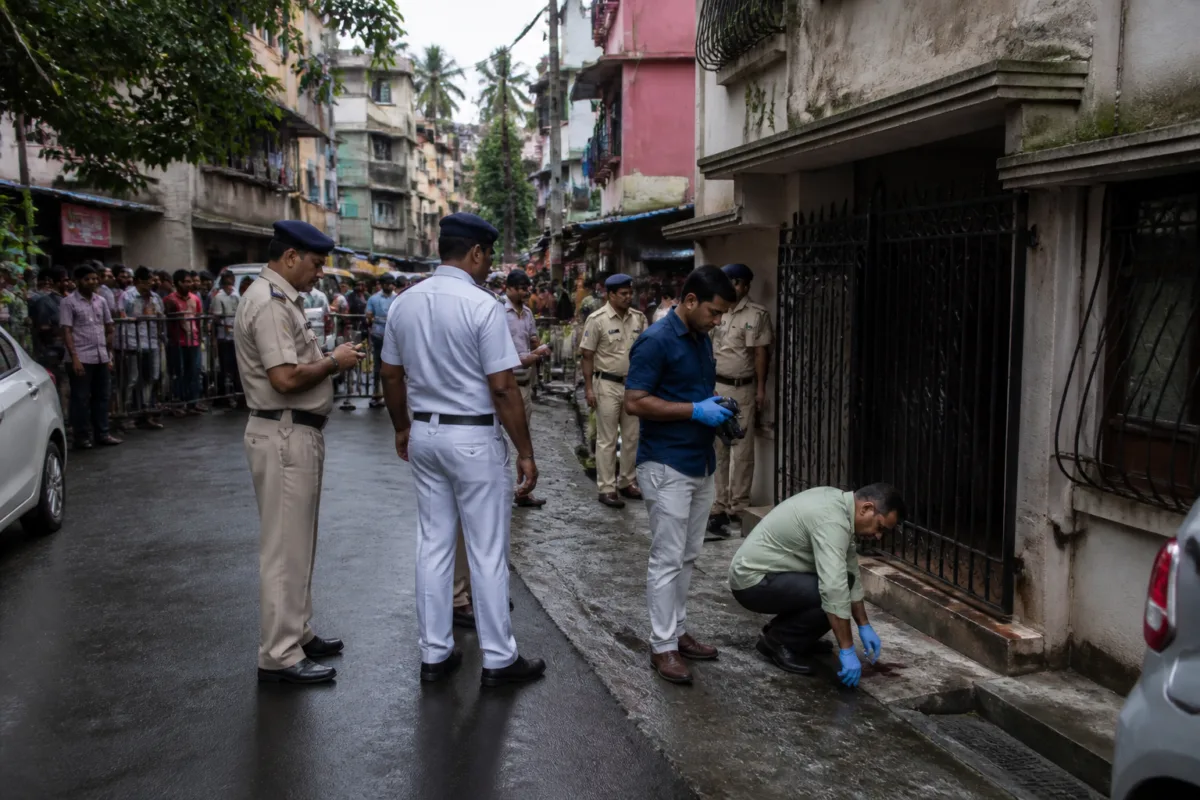
The Kolkata Police detective department’s takeover of the investigation into clashes near Abhishek Banerjee’s Kalighat residence places the city’s policing system at the centre of a wider test: whether a politically charged street incident can be investigated through a transparent, evidence-led process rather than competing allegations. The reported reconstruction of the scene with three arrested men has established an investigative step, but the available account does not yet establish the full sequence of events or responsibility for the violence.
According to the Times of India report, officers brought Mohammad Tauqir Alam, Mohammad Irshad and Srideep Das to 121 Kalighat Road, where the police questioned them and asked them to recreate the sequence of events. The reconstruction was conducted under four separate FIRs, according to Additional Commissioner of Police (Crime) Kunal Aggarwal. The investigation had been taken over by the detective department after clashes and an alleged mob attack linked to the residence.
That detail matters because scene reconstruction is not itself a finding of guilt. It is an investigative method intended to help officers examine movement, timing, location and the relationship between statements and physical surroundings. In a case involving several FIRs, multiple alleged participants and competing political claims, the credibility of the eventual investigation will depend on how carefully those strands are separated and documented.
The location adds another layer of complexity. Kalighat is not only a politically significant part of Kolkata but also a dense urban neighbourhood where residential activity, local commerce, religious and cultural movement, political mobilisation and police operations can overlap. A disturbance on its streets can affect more than the immediate parties to a dispute. It can disrupt access, alter the experience of public space and place residents, workers and small businesses in the position of navigating a security response.
The report also links the incident to concerns raised by chief minister Suvendu Adhikari about disorder in the area and the effect of alleged intimidation on Patuapara’s idol-makers. Adhikari alleged that hooliganism had been allowed to continue and said that people causing inconvenience to ordinary residents would not be spared. These are political statements, not independently established findings in the material available for this report. They nevertheless point to an important governance question: whether the administration treats neighbourhood disruption as a public-order issue affecting all users of the city, or primarily as an extension of political conflict.
Abhishek Banerjee offered a counter-allegation, claiming that the person who allegedly slapped a police officer was a BJP supporter. In a post on X, he named the individual as Ratikanta Behuria and questioned why he had not been arrested. That claim is also not independently established in the supplied report. The competing versions show how quickly an investigation into a street incident can become a test of police neutrality, especially when allegations concern both political supporters and an officer in plain clothes.
For Kolkata Police, the institutional challenge is therefore broader than identifying those who were present. The force must establish what happened, which acts correspond to which FIRs, whether officers were assaulted or obstructed, and whether political affiliation influenced conduct or subsequent action. Those questions require a record that can withstand scrutiny from courts, affected residents and the wider public. Arrests and reconstruction are visible steps, but they do not by themselves answer those questions.
The four-FIR structure is significant because it suggests that the incident is being examined through more than one complaint or alleged episode. However, the supplied report does not provide the contents of the FIRs, the charges invoked, the precise timing of each alleged offence or the evidence collected at the site. Without those details, it would be unsafe to treat the reported arrests as a complete account of the violence or to draw conclusions about the culpability of any individual.
The episode also exposes a recurring weakness in urban public-order reporting: the street is often described as the setting for political confrontation, while the everyday users of that street disappear from the account. The Times of India report refers to the difficulties faced by idol-makers in Patuapara, but does not quantify losses, closures, injuries, traffic restrictions or disruptions to local services. Those details would be necessary to measure the wider civic impact of the incident rather than viewing it only through the statements of political actors.
A credible policing process must connect the investigation to that wider civic impact. This includes establishing whether access to homes and businesses was obstructed, whether public movement was restricted, whether property was damaged and whether emergency or routine services were affected. It also requires clarity about the deployment of heavy security and the operational decisions taken after the clashes. The supplied material confirms heavy security but does not specify its duration, scale or cost.
The case illustrates the division of responsibilities within urban governance. The police are responsible for investigation, public order and protection of people and property. Political leaders shape the public narrative but cannot substitute allegations for evidence. Residents and local workers experience the consequences directly, while the judicial process ultimately tests the sufficiency of the evidence. When these roles blur, a local incident can become harder to investigate and easier to politicise.
The available numbers are limited but still relevant: three arrests, four FIRs and one reconstructed location at 121 Kalighat Road. These figures indicate an investigation with multiple legal strands, not a settled account of a single act. They also underline why the next stages matter more than the initial political exchanges. The police will need to establish whether the physical reconstruction is consistent with witness statements, video footage, medical evidence and other material evidence. The report does not say what such evidence has shown.
The central urban question is whether Kolkata’s public spaces can remain governed by predictable rules when political tensions rise. That question is not answered by the statements exchanged between Adhikari and Banerjee. It depends on whether the police investigation is conducted consistently, whether allegations against all sides are examined, and whether the eventual legal record explains the effect on residents and local livelihoods.
At this stage, the confirmed development is that the detective department has taken over the probe and reconstructed the reported crime scene with three arrested men. The wider allegations remain contested, and the supplied report does not establish the complete sequence of events. The next points to monitor are the evidence placed before the court, any further arrests, the police account of the alleged assault on an officer and whether authorities publish a clearer account of the disruption in Kalighat.

