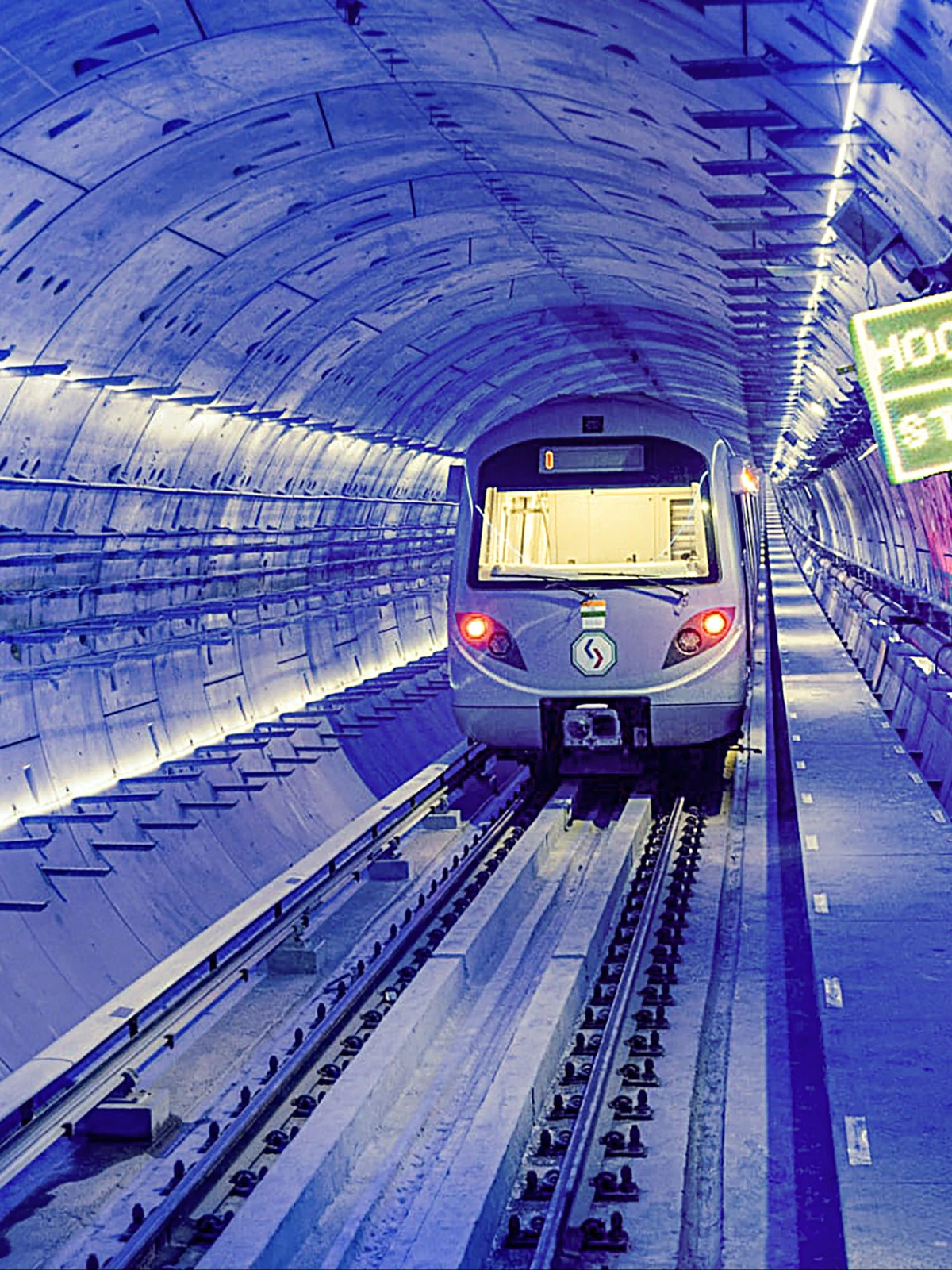
The long-delayed Baranagar–Barrackpore Metro corridor has moved closer to construction after the Kolkata Municipal Corporation (KMC) cleared a critical utility issue along Barrackpore Trunk Road. The 12.5-km elevated Pink Line could strengthen public transport in Kolkata’s northern suburbs, but its execution now depends on managing essential water infrastructure without disrupting supplies to residents.
The civic clearance allows an existing 48-inch water transmission pipeline beneath BT Road to be closed to facilitate metro construction. At the same time, KMC has approved a replacement 72-inch pipeline between the Palta water treatment plant and the Talla pumping station. The arrangement is intended to protect the city’s drinking-water network while creating space for metro foundations.The issue is significant because BT Road carries several large underground water mains. Earlier plans for the Metro corridor became stalled for years amid disagreements over relocating these utilities. The project was sanctioned more than a decade ago, but construction could not progress as planned, highlighting a wider challenge facing Indian cities: transport expansion often has to compete for space with ageing and strategically important underground infrastructure.The latest clearance follows a tender of about ₹1,587 crore for the elevated viaduct and 10 stations.
The proposed corridor will run from Baranagar towards Barrackpore, with stations serving densely populated areas including Kamarhati, Agarpara, Panihati, Sodepur, Khardaha, Titagarh and Talpukur. Baranagar will provide an interchange with the existing Blue Line network.For commuters, the Pink Line could offer an alternative to heavily congested road corridors and crowded suburban rail services. Travel between Baranagar and Barrackpore is expected to become faster, while improved interchange with the wider Metro system could make employment, education and essential services more accessible across the northern metropolitan region.Yet the immediate test is not simply whether construction can begin. Urban planners say utility relocation must be sequenced carefully, particularly because the water network serves large sections of Kolkata. Any gap between shutting the existing pipeline and commissioning its replacement could create avoidable pressure on household water supplies.
The Kolkata Pink Line therefore represents more than a transport expansion. Its success will depend on whether the city can coordinate mass transit construction with reliable water, traffic management and public safety. As work progresses, protecting essential services alongside new infrastructure will be central to ensuring that connectivity gains translate into a more resilient and liveable northern Kolkata.