


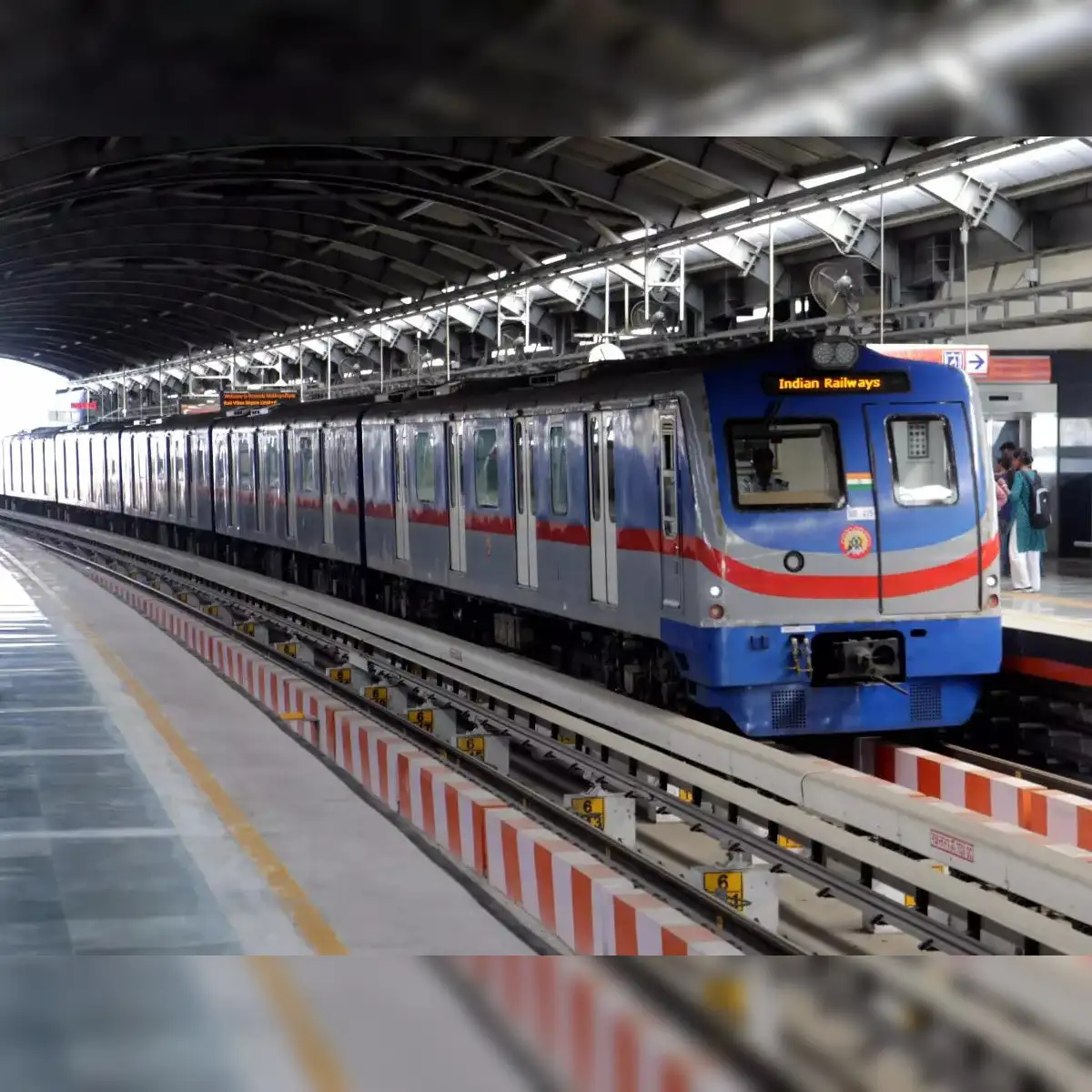
Commuters in Kolkata faced disruptions in their daily routines as Kolkata Metro services were scaled down across multiple corridors, affecting peak-hour mobility in one of India’s most transit-dependent urban centres. The temporary reduction in train frequency highlights the fragile balance between infrastructure capacity and operational resilience in rapidly growing cities.
Authorities indicated that the curtailed schedule was linked to technical and operational adjustments, though the immediate impact was felt by thousands of office-goers and students who rely heavily on metro connectivity. In a city where public transport forms the backbone of daily movement, even short-term service reductions can cascade into overcrowding, longer travel times, and increased reliance on road-based alternatives.Urban mobility experts note that Kolkata Metro services play a crucial role in maintaining low-carbon transit options in the city. Reduced operations risk pushing commuters towards private vehicles and intermediate public transport, which can exacerbate congestion and emissions. This underscores the importance of building redundancy and flexibility into mass transit systems, particularly in older networks that are undergoing expansion and modernisation simultaneously.The disruption also sheds light on the challenges of maintaining legacy infrastructure while integrating new corridors.
As Kolkata expands its metro footprint, ensuring seamless coordination between operational lines becomes critical. Industry observers point out that planned maintenance, signalling upgrades, or staffing constraints often require temporary service adjustments, but these need to be communicated effectively to minimise commuter inconvenience.For daily passengers, the experience reflects a broader issue of reliability in urban public transport. Consistency in service frequency is essential not only for convenience but also for sustaining trust in mass transit systems.When reliability dips, even temporarily, it can influence long-term commuter behaviour, potentially shifting preferences away from public transport.From a planning perspective, such incidents reinforce the need for multimodal integration.Strengthening last-mile connectivity, improving bus network coordination, and enhancing real-time passenger information systems can help cities absorb shocks in metro operations.
Experts argue that resilient urban mobility depends not just on expanding infrastructure but on ensuring operational continuity and user-centric planning.As Kolkata continues to invest in expanding its metro network, the focus is likely to shift towards improving service reliability alongside capacity growth. Ensuring that Kolkata Metro services remain dependable will be key to sustaining the city’s transition towards cleaner, more efficient urban transport systems.
Also Read:
