


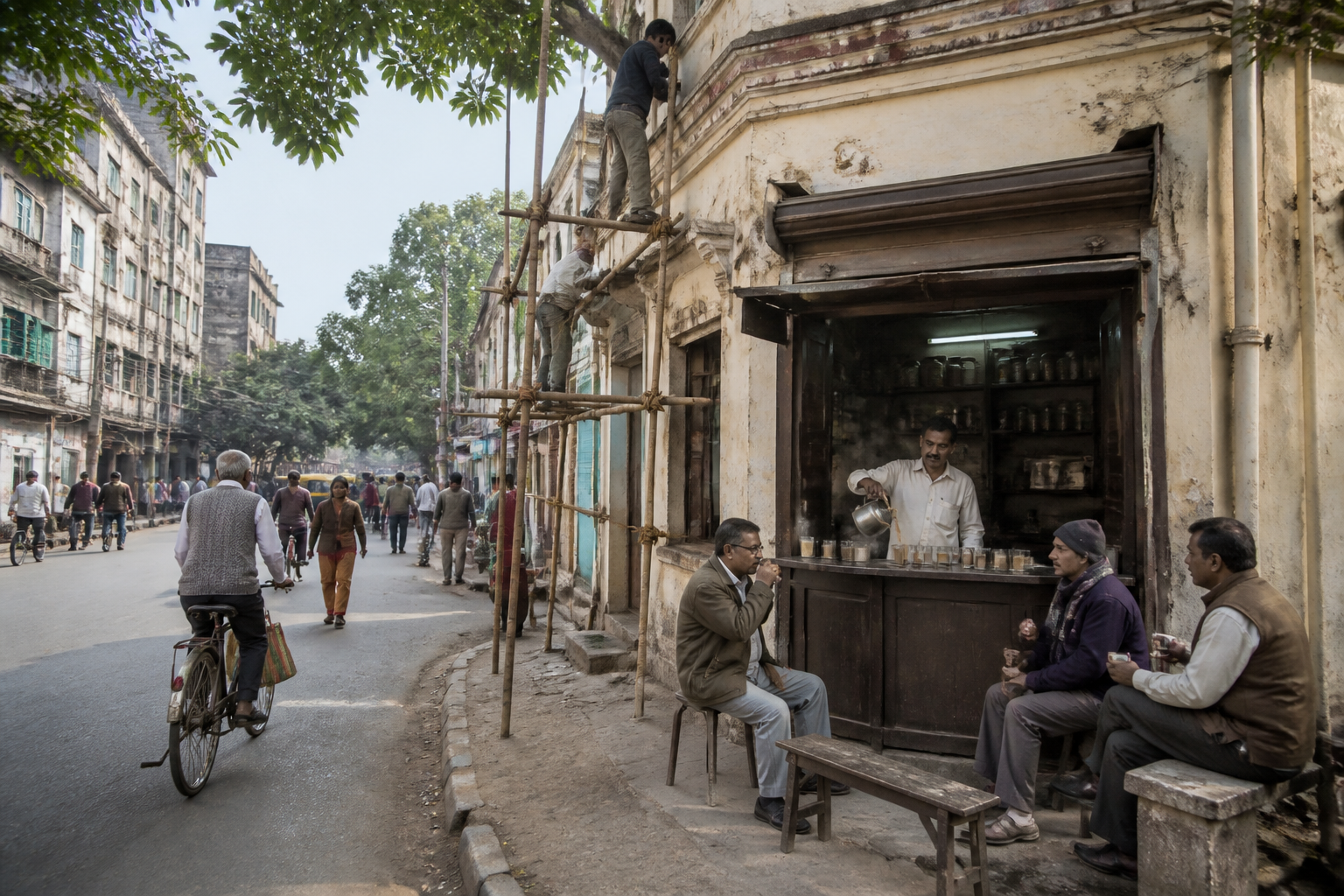
Kolkata’s heritage tea shops are set for a proposed makeover after the Tea Board identified seven century-old establishments in the city for possible beautification. The initiative is intended to preserve the character of long-running tea businesses while improving their appearance, according to Tea Board chairman C. Murugan.
Speaking on Monday, Murugan said the Tea Board wanted to beautify heritage shops and would undertake the work if shop owners agreed. He also said several other tea shops in Kolkata were under consideration and that the search for more establishments was continuing.
The seven Kolkata shops identified so far are Balwant Singh Dhaba, Chittobabur Dokan, Kona Dokan and National Economic Restaurant, along with other century-old establishments whose names were not specified in the report. The Tea Board has also included Naresh Babu’s Tea Stall in Srirampur on its list of shops more than 100 years old.
The announcement places small, long-running tea shops within a wider question of how cities retain everyday commercial spaces that carry local history. Unlike formal monuments, such establishments function as working businesses, serving customers while remaining part of neighbourhood streets and urban routines. The Tea Board’s proposal, however, does not yet specify the design changes, conservation standards, costs or implementation schedule for the planned beautification.
The initiative was discussed alongside a Tea Board seminar on tea auctions. At the seminar, the Board outlined plans to reform and improve the electronic auction system, with greater emphasis on online auctions to make tea sales more transparent. It also indicated that tea-business licences and certificates should increasingly be issued online.
The Board said it was working to connect small tea growers with factories so that they could receive a fair price for their leaves. These measures link the proposed shop improvements to a broader effort involving tea retail, auction systems, licensing and the position of smaller producers in the supply chain.
For the identified shops, participation will depend on the consent of individual owners, based on the chairman’s statement. The Board has not announced a completion date or released details of the proposed work. Its next steps are expected to involve identifying additional heritage tea shops and discussing the makeover with owners who choose to take part.
