


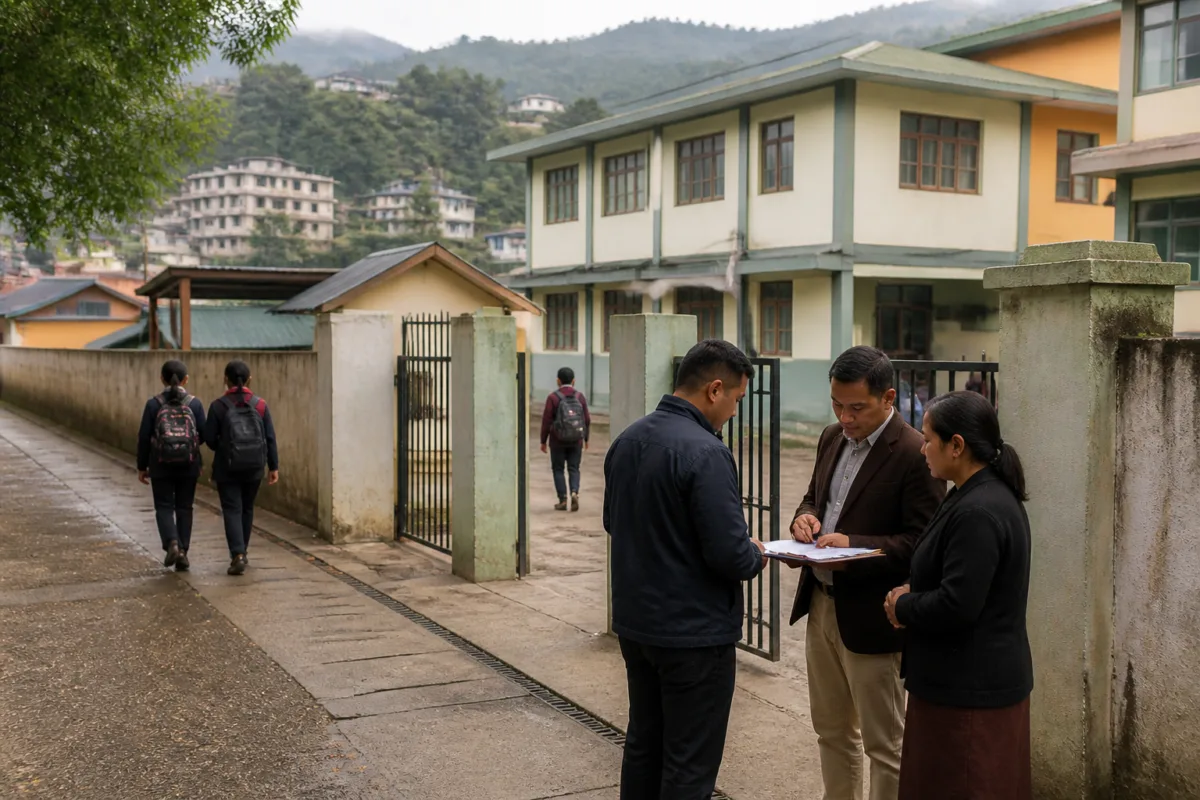
Eight schools in Kohima district have been declared tobacco-free as authorities consider tighter controls on tobacco sales near educational institutions and a new approach to vendor licensing.
The announcement was made at the third quarterly meeting of the Kohima District Level Coordination Committee on Tobacco Control, held at the deputy commissioner’s office on Wednesday. The schools are Government Middle School, CWSN, Lerie; Government High School, Rusoma; Living Tree Pre-School and Living Tree School, Kohima; Government Middle School, Tsiesema; Government Middle School, Nerhema; Government High School, Nerhema Model; and Christian Welfare School, Khonoma.
Kohima deputy commissioner B Henok Buchem asked officials to consider the proximity of schools while issuing tobacco-vendor licences. The proposal places the location of vendors at the centre of enforcement discussions, rather than treating licensing as a separate commercial process.
Buchem also proposed a sub-committee involving the Kohima Municipal Council, Kohima Chamber of Commerce and Industry, food-safety and health authorities, among other departments, to frame licensing guidelines. Committee members suggested that distributors should also be brought under the licensing regime. These measures were discussed as proposals; the report does not indicate that new guidelines or an expanded licensing system have been formally approved.
The district education officer, Emilo Patton, said all schools had been directed to appoint internal enforcement officers and submit monthly reports to the District Tobacco Control Cell. The reporting requirement creates a recurring institutional mechanism for monitoring tobacco-control measures within schools, although the report does not provide details of the officers’ powers, the reporting format or how non-compliance will be handled.
The committee cited a figure of 43.3% for adult tobacco use in Nagaland and said teenage consumption was also among the highest in the country. Members raised concerns about suspected cancers linked to smokeless tobacco and the social acceptance of tobacco use. The committee also said nearly five lakh tobacco users spend crores of rupees on the habit, in addition to the treatment burden associated with tobacco-related diseases.
The figures and concerns were presented during the committee meeting and were not accompanied in the report by a cited survey, administrative dataset or health assessment. They therefore provide the policy context for the district’s action but do not, on their own, establish the impact of the newly declared tobacco-free status at the eight schools.
Legal experts are expected to explain the penalty provisions under the Cigarettes and Other Tobacco Products Act at the committee’s next meeting, including the scope for flexibility in applying those provisions. That discussion could clarify how school-area vendors, distributors and institutions are expected to comply. For now, the declared status of the eight schools is supported by internal enforcement appointments and monthly reporting, while the wider licensing framework remains under consideration.

