


The BJP’s candidate screening for the upcoming KMC elections is placing electoral winnability above party loyalty, signalling that the contest for Kolkata’s civic administration will be fought not only through organisational strength but also through local profiles, personal popularity and ward-level calculations. The party has begun accepting applications and is preparing to select candidates for the Kolkata and Howrah municipal corporations, with the elections likely to be held in late November or December.
The immediate decision is organisational, but its consequences are civic. The Kolkata Municipal Corporation is not merely another electoral unit: it is the institution responsible for governing a city whose wards, neighbourhoods and local political networks shape how residents encounter municipal power. The BJP’s effort to identify candidates across the corporation therefore offers an early view of how parties are preparing for a contest in which control of the city’s civic machinery is a central objective.
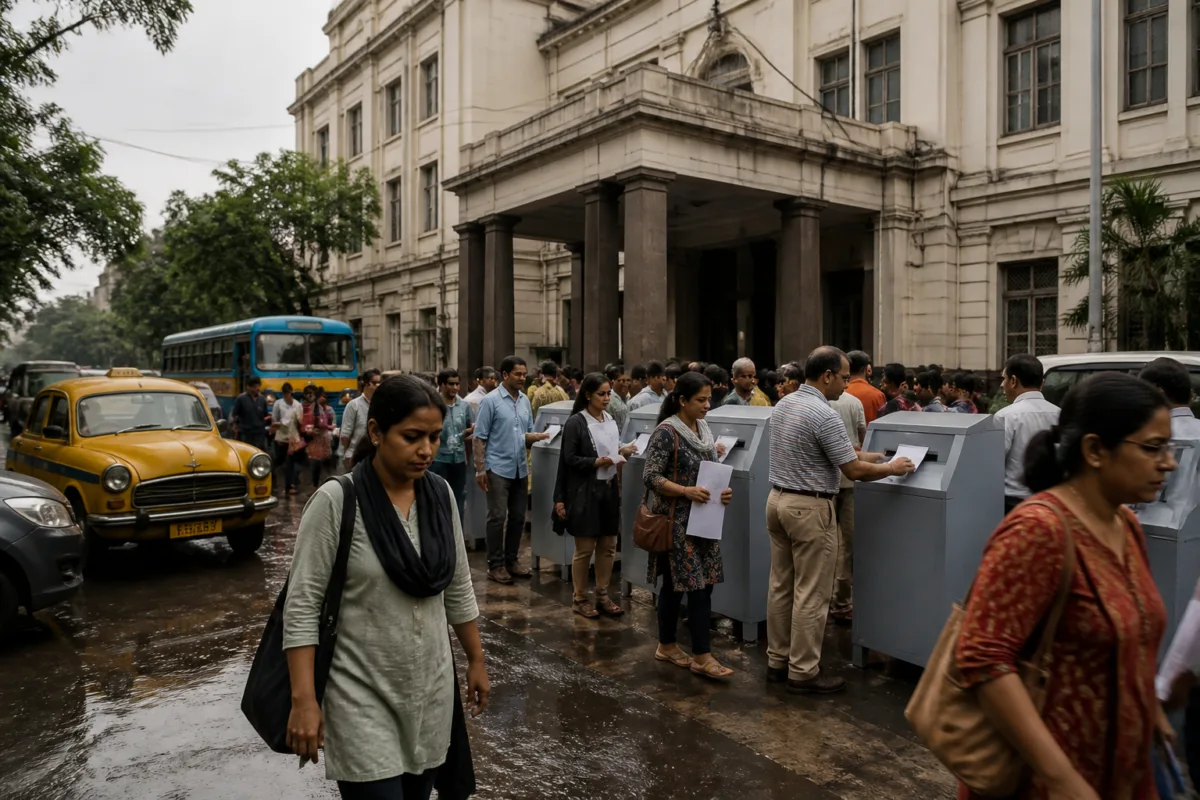
Union minister of state Sukanta Majumdar, who is in charge of the BJP’s KMC election preparations, told The Telegraph that the party was screening applications and proposals submitted by aspiring candidates. He said “winnability” would be the most important consideration and indicated that the candidates would be selected next month. The party has already installed drop boxes to invite applications before the final selection process.
That process marks a distinction between selecting people for party organisation and selecting people for public office. Majumdar said party connections might be important when organisational posts were being filled, but that municipal elections required a greater emphasis on whether a candidate could win. BJP sources said the party would examine applicants’ profiles, backgrounds and popularity alongside their relationship with the party.
The approach reflects the ward-based character of municipal elections. A party may have a strong citywide message, but councillor contests are also shaped by local visibility and networks. The supplied report does not provide ward-wise polling data, past vote shares or a detailed assessment of candidate strength. It does, however, show that the BJP is attempting to build a selection process around those local variables rather than relying exclusively on internal seniority or long-term party association.
The scale of the coming contest is also changing. The KMC currently has 144 wards, but that number is expected to rise to 209 after delimitation. The expansion will alter the map through which candidates are selected and voters are represented. It will increase the number of ward-level contests and require parties to identify viable nominees across a larger civic geography. The report does not specify the final boundaries, the timetable for delimitation or how the new wards will affect existing councillors.
That missing detail is important because delimitation is not simply an administrative adjustment. It determines which communities are grouped together, how local political bases are reconfigured and where candidates must build support. Until the boundaries and election schedule are formally settled, parties are screening candidates against a political map that may still be changing. The BJP’s decision to begin the process now suggests that it wants to establish a pipeline of applicants before the final electoral arrangements are known.
The party’s preparations are taking place alongside a larger political objective. A senior BJP leader described the KMC as “Chhoto Lalbari”, contrasting it with Writers’ Buildings, the former state secretariat, which was known as “Boro Lalbari”. The remark places municipal control within the party’s broader effort to consolidate its position in Bengal. Chief minister Suvendu Adhikari has already urged voters in Calcutta to support the BJP in all wards.
The significance of this strategy lies in the relationship between state-level political power and city-level administration. Winning a municipal corporation gives a party control over a local political structure with direct visibility in neighbourhoods. It also creates an elected base through which the party can engage with residents, local issues and civic institutions. The supplied material does not establish how a change in political control would alter municipal policy or service delivery, but it makes clear that the BJP views the KMC as a strategically important institution rather than a secondary electoral arena.
Candidate selection is also exposing the uncertainty around political movement before the polls. There had been speculation that around 20 Trinamool Congress councillors had contacted the BJP for tickets. State BJP president Samik Bhattacharya dismissed that possibility, according to the report. The conflicting signals show that candidate choice is being discussed not only as an internal party exercise but also as a potential vehicle for attracting established local figures.
The possible role of the NCPI adds another layer to the contest. The party, which was formed after 20 Trinamool Congress MPs joined it following the BJP’s rise to power in Bengal, had expressed a desire to contest the KMC elections as a BJP ally. The BJP ruled out that arrangement. On Thursday, Trinamool Congress MLA Kunal Ghosh claimed that some Trinamool councillors would meet members of the rebel Ritabrata Banerjee faction to explore contesting the civic polls as NCPI candidates with BJP support. These claims and political possibilities remain attributed positions rather than confirmed alliance arrangements.
For the KMC, the immediate institutional question is how the enlarged ward structure will translate into representation. The report confirms the proposed increase from 144 to 209 wards, but it does not provide the legal notification, boundary maps or implementation details. Those documents will be necessary to understand how the corporation’s new structure is being created and how incumbent councillors, prospective candidates and residents will be affected.
The election timetable is similarly not final in the supplied material. The polls are described as likely to take place in late November or December, while the BJP expects to select its candidates next month. The timing means the parties are moving into formal preparation even as important electoral details remain to be completed. The distinction between what has been announced and what is only expected will matter for residents trying to understand when campaigning, nominations and voting will begin.
The BJP’s emphasis on winnability therefore reveals three connected features of the approaching KMC contest. First, the party is treating ward-level candidate quality as a central electoral instrument. Second, it is preparing for a larger corporation following delimitation. Third, it is linking control of Kolkata’s civic body to its wider political expansion in Bengal. None of these factors by itself establishes the outcome of the election, but together they explain why candidate screening has begun before the full contest is formally underway.
The evidence currently confirms a selection process, not a completed candidate list or a settled alliance structure. The next milestones are the BJP’s expected candidate selection next month, the reported meeting involving Bengal BJP leaders and the KMC election committee, and the formal details governing the 209-ward structure. Those developments will determine whether the party’s stated preference for winnability produces a genuinely broader local search or remains primarily a political strategy for the municipal election.

