


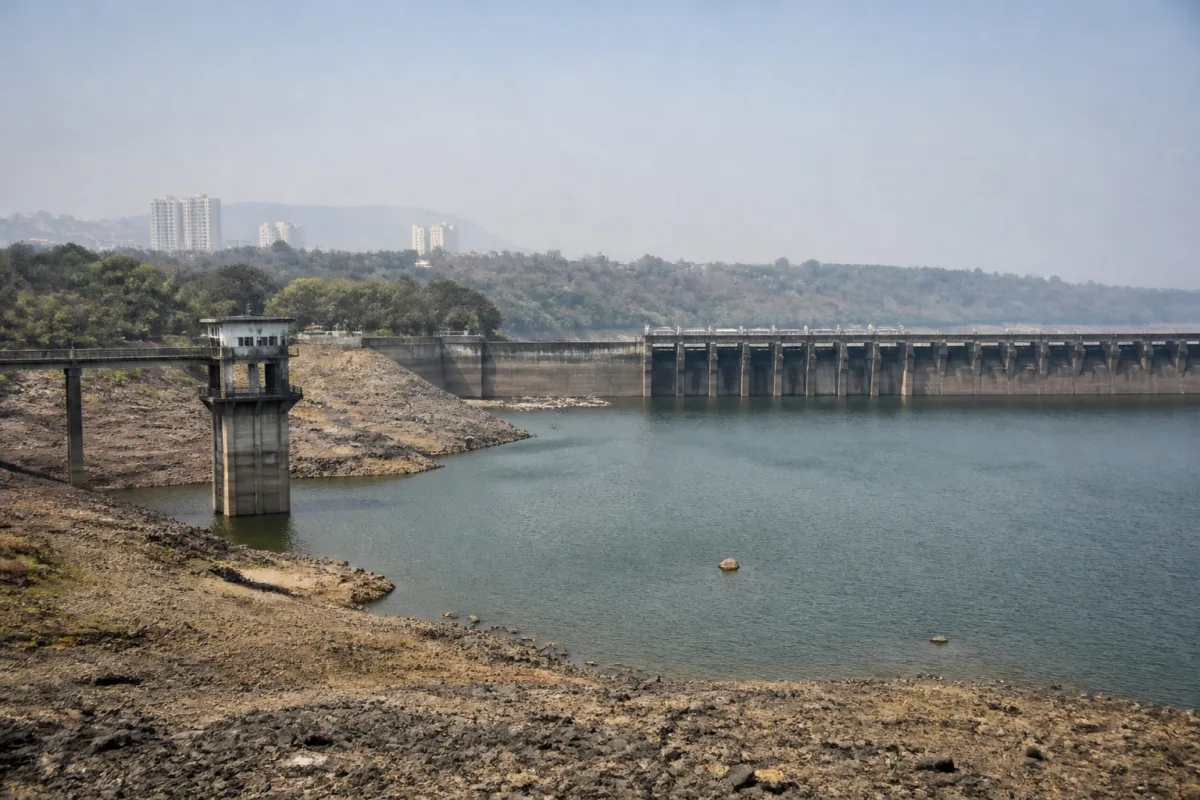
Pune’s Khadakwasla Dam water plan has come under strain, with the Water Resources Department planning to continue the ongoing rabi rotation only until November 15 and warning that water may not be available for a regular summer irrigation rotation. The decision follows a canal advisory committee meeting that reviewed limited storage, rural drinking water needs, farming demand and livestock requirements.
The rabi rotation began on September 25. By October 29, 3.12 TMC of water had been used, while the department estimates that another approximately 1.25 TMC will be required during the remaining period. The total water planned for the rabi rotation is therefore around 4.5 TMC.
The meeting was informed that approximately 24 TMC of water was currently available in the reservoirs. Pune Municipal Corporation had sought 21 TMC, but discussions focused on planning 13 TMC for the city until next August after taking the available storage into account. This allocation would also have to cover the remaining rabi rotation, drinking water requirements in rural and urban areas, and losses caused by evaporation.
Water Resources Minister Radhakrishna Vikhe Patil provided information on the water planning at the canal advisory committee meeting. Participants said the available storage would have to be managed carefully because of drought-like conditions. The discussion included the need to prioritise domestic drinking water while also accounting for agricultural and livestock needs in rural areas.
Officials and participants also discussed controlling water use in Pune city. The meeting called for coordination between urban and rural areas rather than disputes over allocations, with drinking water to receive priority in the planning process. Residents and farmers were urged to use the available water carefully because of the limited reservoir storage.
The uncertainty is most immediate for the summer agricultural season. At one stage, the meeting was told that a summer rotation might not be possible after the rabi rotation was completed because sufficient water would not remain. Officials, however, indicated that a small summer rotation could become possible if water savings were achieved. The eventual decision will depend on the remaining storage in each project and water use over the coming months.
Earlier in the year, the first rotation for the annual pilgrimage was provided from July 7 to July 15. A subsequent rotation for the kharif season and drinking water continued from July 16 to September 24. The Irrigation Department said that 6.38 TMC was used during this period, drawing on overflow water and reservoir storage.
The department’s present plan places the remaining rabi supply, Pune’s drinking water allocation and any possible summer irrigation within the same constrained storage assessment. Further decisions on summer water availability will depend on conservation and the reservoir position after the rabi rotation ends.

