


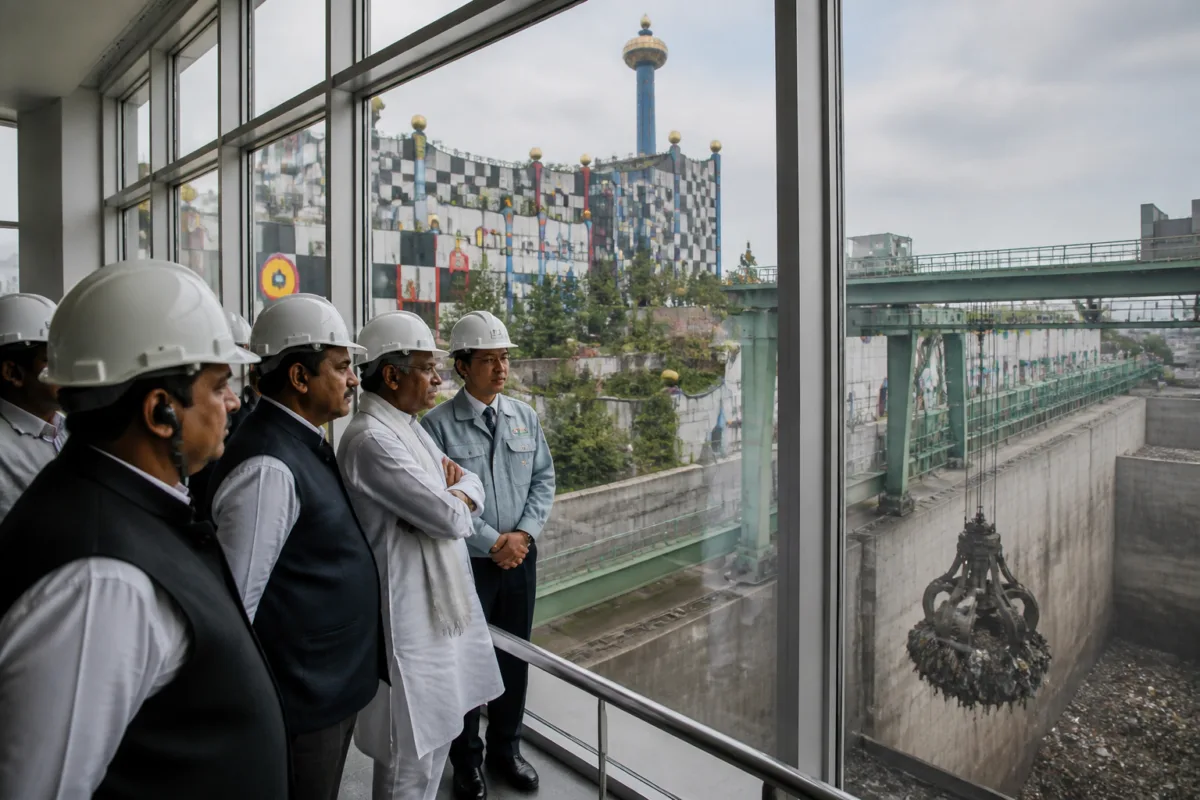
Karnataka is examining Japan’s municipal waste-processing and urban infrastructure models as the state considers ways to improve waste management and mobility in its cities. Chief Minister DK Shivakumar and a state delegation visited the Maishima Incineration Plant in Osaka, which converts municipal solid waste into electricity.
Located on Maishima Island, the facility has operated since 2001 and can process up to 900 tonnes of municipal waste a day through two incinerators. It has an installed power-generation capacity of 32 MW, enough to meet its own energy requirements while supplying surplus electricity to the power grid, according to the report.
The plant uses combustion-control systems, continuous emissions monitoring and pollution-control equipment. These features are central to the model Karnataka is studying as it explores more scientific waste disposal, higher waste-processing capacity and possible waste-to-energy options for its cities.
The visit, however, was described as an examination of international practices and does not establish a final decision to build or adopt a similar facility in Karnataka. The report does not specify a proposed site, investment amount, technology-selection process or implementation schedule.
The Maishima facility also has an unusual architectural identity. Designed by Austrian artist Friedensreich Hundertwasser, it combines a colourful exterior and unconventional forms with extensive greenery, making the plant a prominent part of the island’s built environment.
The delegation also examined transport and public-realm solutions in Japan. Shivakumar took interest in Toyota’s JPN TAXI, an LPG-hybrid vehicle with a spacious interior, wide sliding doors, low-floor access and wheelchair-friendly features. The report said he expressed interest in exploring its introduction in Karnataka and possible manufacturing opportunities in the state.
In Nagoya, the delegation visited the Sakae underground network, which links metro stations, commercial centres and major buildings through underground passages and shopping areas. Shivakumar examined how the network supports connectivity, reduces reliance on surface-level infrastructure and uses valuable urban space more efficiently.
For Bengaluru and other rapidly expanding Karnataka cities, the three examples point to different infrastructure questions: how waste can be processed with tighter environmental controls, how public transport can become more accessible, and how pedestrian and commercial movement can be integrated around mass-transit systems. Any adoption would require local feasibility studies, regulatory clearances and decisions on cost, land, operations and public accountability, none of which were detailed in the report.

