


Karnataka’s Forest Department on Tuesday said Operation Gaja, launched to guide wild elephants from conflict-prone areas of Hassan towards suitable forest habitat, was not intended to transfer the conflict to Chikkamagaluru district.
The clarification came amid opposition from Congress MLA Nayana Motamma, who submitted her resignation on Monday over the alleged movement of elephants towards her Mudigere constituency. Her resignation has not been accepted.
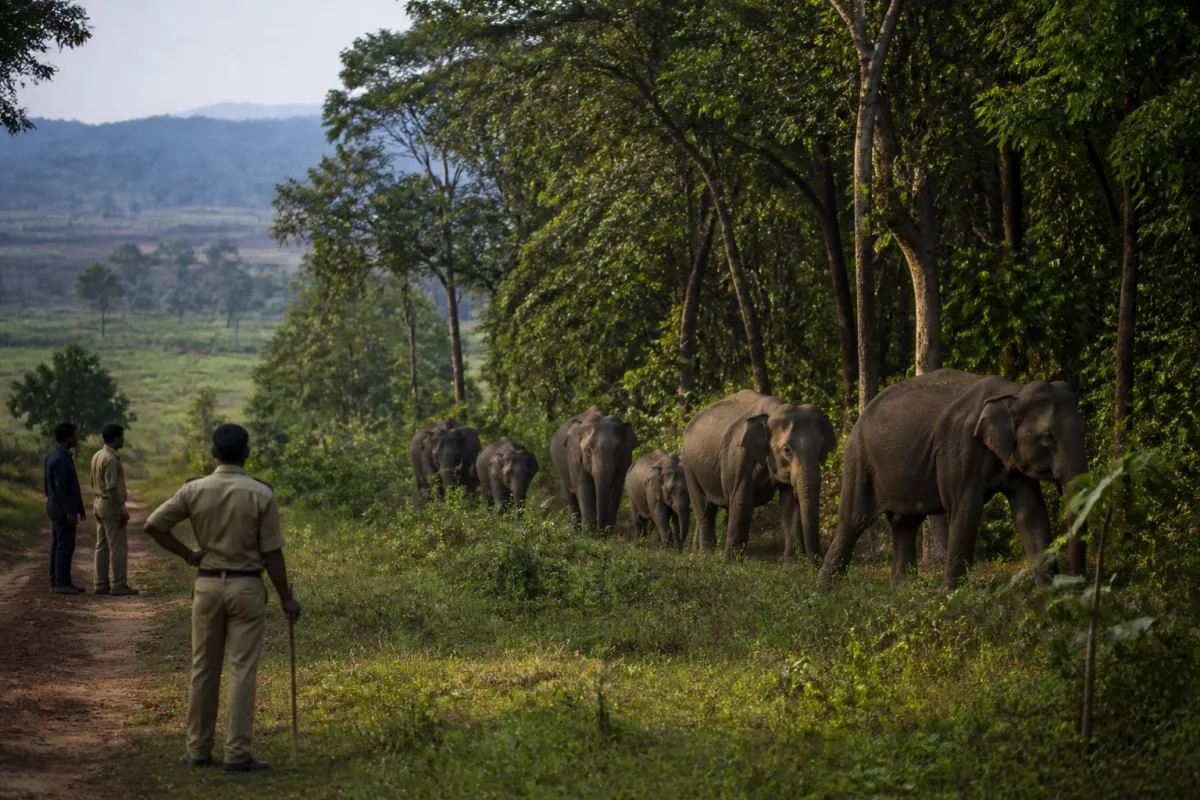
Additional Principal Chief Conservator of Forests, Project Elephant, Manoj Rajan said four identified herds had regrouped overnight into a single congregation of 39 elephants, located about 3.5 km by aerial distance from Tatkola Reserve Forest. The herds had repeatedly dispersed, regrouped and moved back and forth during the night, he said in a morning update.
The elephants had nevertheless moved about 2.5 km further towards the forest, Rajan said. Field teams were monitoring them closely and facilitating natural movement without aggressive driving, he added.
Rajan said the operation was not intended to shift Hassan’s elephant problem to Chikkamagaluru or any other district. Elephants do not recognise administrative boundaries, and the department’s objective was to guide them towards suitable forest habitat while protecting people across affected areas, he said.
A consolidated status report submitted on Monday night said three operational groups were being monitored. These included two major herds comprising about 35 elephants, elephants in the Bikkodu landscape and solitary male elephants moving independently.
Rajan also inspected Tatkola Reserve Forest to assess potential elephant entry points, nearby forest patches, terrain and corridors. He visited the Koppa Division and reviewed operational preparedness with the Conservator of Forests and Deputy Conservator of Forests.
The department was examining possible scenarios in which the herds could change direction, enter farmland or human habitations, stop in fragmented forest patches, return towards Hassan, Belur or Mudigere, or split into smaller groups.
Contingency measures under consideration included repairing or strengthening elephant-proof trenches, restoring non-functional solar fencing, energising existing barriers and assessing whether railway barricades would be suitable at vulnerable locations. The department was also examining the possibility of a temporary kumki elephant camp supported by trained elephants, experienced mahouts, veterinary services and monitoring teams.
The report clarified that these measures were proposed or at the feasibility stage and had not been completed installations.
Rajan briefed the media in Chikkamagaluru on the operation’s scientific basis and strategy, including historical elephant movements, traditional routes and habitat connectivity between Hassan, Mudigere, Chikkamagaluru and Bhadra.
The department had planned village-level early warnings, public announcements, enhanced patrolling and round-the-clock communication between monitoring teams and territorial forest officials. It cautioned residents against crowding, chasing elephants or bursting firecrackers, which could trigger unpredictable movement.
The department said the operation aimed to help the elephants move into suitable habitats while preventing their return to agricultural and residential areas where conflict had occurred.
Motamma alleged that forest officials had begun the operation without consulting elected representatives from affected areas. A meeting with legislators scheduled for November 25 had been postponed to November 30, she said. Chikkamagaluru MLA T D Thammaiah and Sringeri MLA T D Rajegowda also opposed the proposed movement, citing potential risks to lives, crops and livelihoods. Congress state president B K Hariprasad described the issue as sensitive.

