


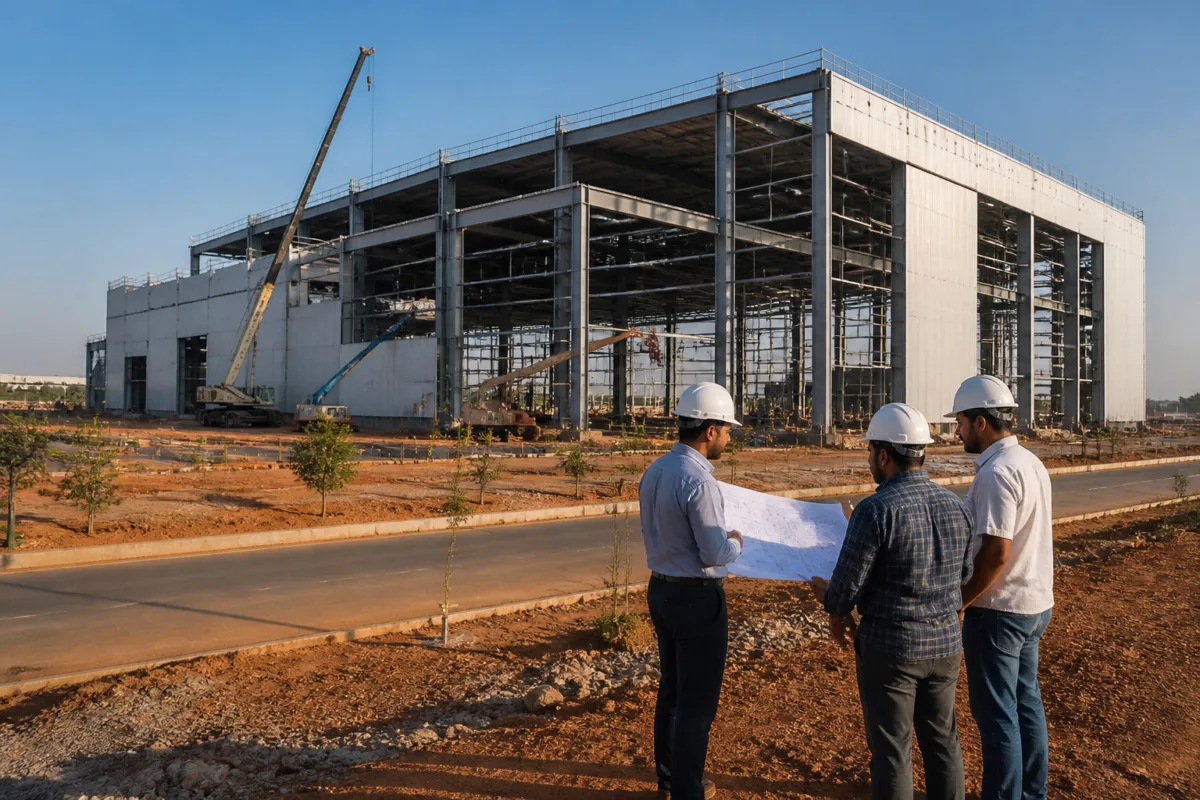
Karnataka is set to receive a proposed ₹500 crore investment from space-tech company Astrobase for a rocket engine manufacturing facility at the Adinarayana Hosahalli Industrial Area, a project the state government says will create more than 1,250 jobs and produce up to 40 rocket engines annually.
Karnataka Industries Minister MB Patil announced the proposal after discussions involving Astrobase co-founder Neeraj Khandelwal, chief financial officer Nishant Jain and head of business and strategy Puneet Balasubramanian. The proposed facility would be developed on 10 acres and is intended to support the company’s work on medium-lift launch vehicles, reusable launch systems and indigenous rocket propulsion technologies.
Patil said Astrobase is targeting annual payload delivery capacity of 100 tonnes by 2032 and 1,000 tonnes by 2040. The minister described the proposed investment as a positive development for Karnataka, citing growing global demand for launch vehicles. He also said the company is led by professionals with extensive experience in India’s space programme, including former Indian Space Research Organisation scientists.
The facility would add a specialised manufacturing activity to Karnataka’s industrial base, but the announcement does not yet specify the project’s construction schedule, production start date, land-allocation process or the approvals required before operations can begin. The stated annual capacity is therefore a proposed output target rather than an operating figure.
The Astrobase announcement was made alongside a separate investment proposal from Bayer, the Netherlands-based agricultural and life sciences company. Bayer plans to invest ₹200 crore to establish a Global Capability Centre in Bengaluru, which is expected to create 220 jobs, according to Patil. Together, the two proposals represent ₹700 crore in announced investment and more than 1,470 expected jobs, based on the figures provided by the minister.
Patil said Bayer is keen to hold the groundbreaking ceremony for the Bengaluru centre before the Global Investors Meet scheduled for April 2027 and begin operations at the earliest. He recalled meeting Bayer’s leadership in Amsterdam during a recent visit aimed at attracting investment to Karnataka.
Bayer already operates a service and innovation hub in Bengaluru and a crop research centre in Chamarajanagar. The company has been operating in India for 125 years and employs around 11,000 people, with seven manufacturing plants and three Global Engineering Centres in its Indian operations, Patil said. Himanshu Patel represented Bayer in the discussions on the proposed Bengaluru centre.
The two proposals reflect different parts of Karnataka’s investment strategy: advanced industrial manufacturing outside the core Bengaluru office market and a knowledge-intensive corporate centre within the city. Their eventual impact will depend on the next stages, including project approvals, site development, construction and the companies’ formal implementation plans. The state government’s immediate milestone is Bayer’s proposed groundbreaking ceremony ahead of the April 2027 Global Investors Meet.

