


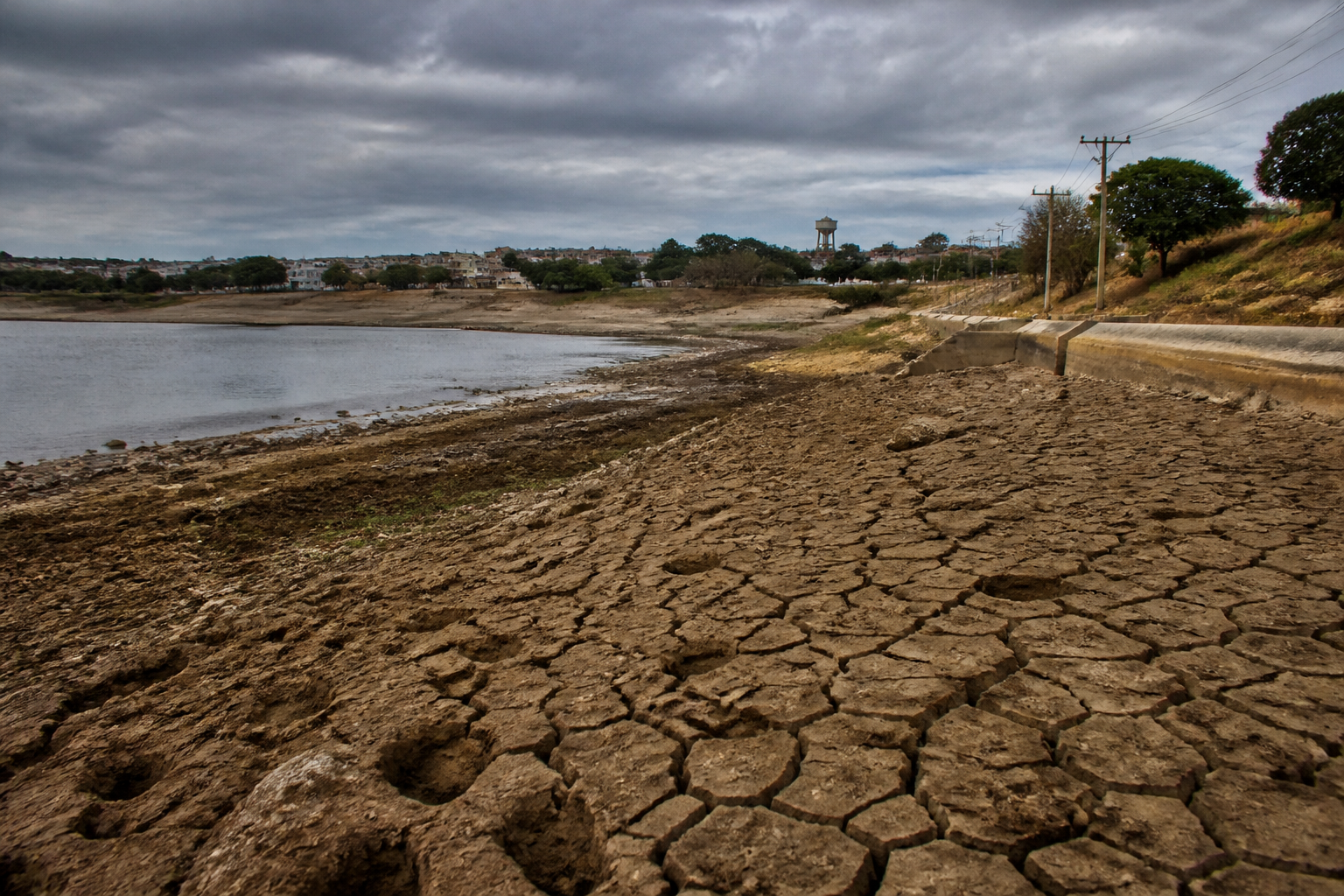
Karnataka’s rainfall deficit has widened at the point when the southwest monsoon is ending and the state is preparing for the northeast monsoon, with six districts recording no rain between October 1 and 8 and 13 others reporting severe deficiency. The pattern is more than a short spell of dry weather: it shows how uneven rainfall is becoming a planning problem for farms, reservoirs, towns and cities that depend on a narrow seasonal window for water security.
Data cited by Prajavani from the Indian Meteorological Department and information available with the Karnataka State Disaster Management Centre show that only Bengaluru Urban and Kolar received normal rainfall during the first eight days of October. Ten districts recorded deficient rainfall, while 13 districts were classified as having severe deficiency. The report also states that most parts of Karnataka experienced a deficit over the four-month monsoon period.
The sharpest gap was recorded in north Karnataka. Bidar, Kalaburagi, Yadgir, Raichur, Vijayapura and Bagalkot received no rainfall during the period under review, resulting in a reported deficiency of 100 per cent. The absence of rain in these districts matters because the end of the monsoon is also a point at which authorities assess the water available for the coming dry months. The supplied report does not provide reservoir-storage figures or groundwater measurements, but the rainfall data identifies where water-management pressure is likely to require closer monitoring.
The district-level numbers show how uneven the situation was. Bengaluru Urban received 53 mm and Kolar 39 mm, both described as normal. In contrast, Mandya recorded 10 mm, Tumakuru 17 mm, Chitradurga 6 mm, Davanagere 4 mm, Shivamogga 11 mm, Haveri 8 mm and Uttara Kannada 7 mm. Vijayanagara recorded 5 mm, Ballari 4 mm, Koppal 5 mm, Gadag 4 mm, Dharwad 13 mm and Belagavi 5 mm; these districts were listed in the severe-deficiency category.
The coastal and southern districts did not escape the deficit, although some received more rain than the northern interior. Udupi recorded 42 mm, Dakshina Kannada 69 mm, Chikkamagaluru 27 mm, Hassan 21 mm and Chikkaballapur 29 mm. Bengaluru Rural received 32 mm, Bengaluru South 29 mm, Kodagu 32 mm, Mysuru 21 mm and Chamarajanagar 20 mm. The report classified all these districts as receiving less rainfall than normal for the period.
This distribution is important for urban Karnataka because cities do not experience rainfall only as a daily weather event. Rainfall is converted into water security through reservoirs, local tanks, groundwater recharge, distribution networks and institutional decisions about allocation. When rain is concentrated in a few districts while large parts of the state remain dry, the resulting administrative challenge is not simply to record the deficit. Authorities must understand how much of the rainfall has entered storage, how much has supported recharge and how much demand can be met during the next dry period. The supplied report does not establish the condition of each of these systems, but it provides the first warning signal: rainfall has not been distributed evenly enough to offer a uniform basis for planning.
Bengaluru’s normal rainfall in the first week of October also needs to be read carefully. The city recorded 53 mm, while Kolar recorded 39 mm, but the report does not say that this rainfall has resolved local water-security concerns or replenished all sources. A normal district-level rainfall classification is a comparison with the expected amount for that period; it does not, by itself, reveal storage levels, groundwater recovery or neighbourhood-level distribution. This distinction is significant for cities, where rainfall can be intense in some locations and still fail to translate into dependable supply across the entire urban system.
The figures also underline the limits of state-wide averages. A single number for Karnataka could conceal a completely different situation in the north interior, the coast, the Bengaluru region and the southern districts. The report’s district breakdown makes that variation visible. Six districts had no rainfall, while coastal Dakshina Kannada recorded 69 mm. Bengaluru Urban’s 53 mm was described as normal, but several districts with lower totals were placed in different deficiency categories depending on their expected rainfall. The same measured amount therefore cannot be interpreted without its local baseline.
For disaster-management and municipal agencies, this creates a coordination question. Rainfall information is collected through weather monitoring, while water supply is managed through separate systems involving local bodies, water utilities, irrigation authorities and state agencies. The report identifies the Karnataka State Disaster Management Centre as holding the information, but it does not detail any new intervention, relief package or operational directive. The immediate institutional task, therefore, remains assessment: linking rainfall deficiency with reservoirs, tanks, groundwater, crop conditions and drinking-water demand before the dry season advances.
The timing adds to the importance of that assessment. The report says the state is approaching the beginning of the northeast monsoon and that the likelihood of substantial rainfall in October is low. It also notes that some areas received rain during the first week, followed by a possible reduction. This is a source-attributed outlook rather than a guarantee of conditions across every district. Still, it places the first week’s figures in a wider seasonal transition, when authorities have less time to depend on future rainfall as a solution to accumulated deficits.
The urban dimension extends beyond Bengaluru. Districts surrounding major towns and cities may face competing demands from households, agriculture, industry and public institutions if dry conditions persist. The supplied material does not quantify those demands or report shortages, and it would be inaccurate to claim that every deficient district is already facing an urban water crisis. What the evidence does establish is a highly uneven rainfall pattern that makes local planning more important than a broad state-level assessment.
The report also points to a recurring weakness in how weather information reaches public decision-making. Rainfall totals are immediate and easy to communicate, but they are only one part of water resilience. To understand the implications for cities, the rainfall record needs to be read alongside storage data, groundwater levels, tank capacity, supply schedules and demand. None of those additional indicators is included in the supplied report. Their absence does not reduce the significance of the rainfall deficit; it defines what must be examined next before the data can support a fuller assessment of urban water risk.
Karnataka’s October rainfall figures therefore represent an early warning about uneven seasonal reliability rather than a complete account of water availability. The evidence confirms that six districts received no rain from October 1 to 8, that 13 districts were classified as severely deficient and that only Bengaluru Urban and Kolar recorded normal rainfall during the period. The next developments to monitor are the state’s reservoir and groundwater position, district-level drinking-water preparedness and whether the expected reduction in October rainfall materialises as reported.
