


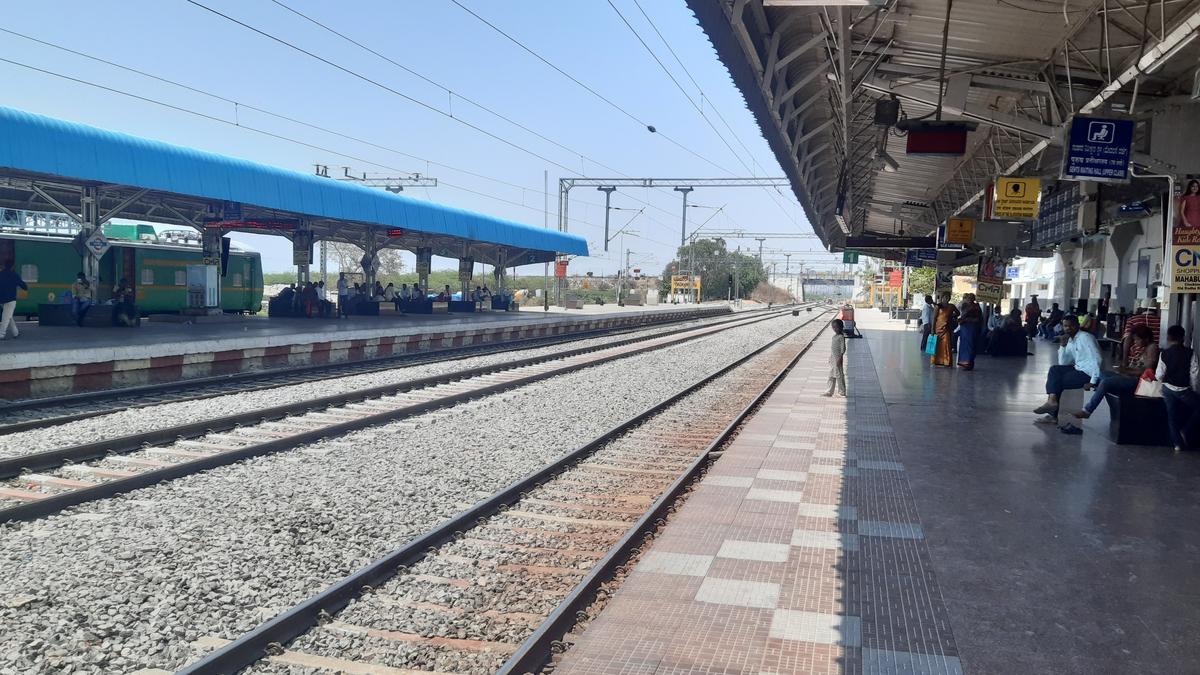
The Railway Board has sanctioned the Final Location Survey (FLS) for two new railway lines under the South Western Railway (SWR) zone.
These corridors—spanning underserved and industrially significant belts—are expected to fuel both freight and passenger mobility while reinforcing India’s larger goals of sustainable and inclusive development. The first proposed line stretches 162 kilometres from Almatti to Yadgir and has received a sanctioned survey budget of ₹4.05 crore. The second, a 73-kilometre track connecting Bhadravati to Chikjajur via Channagiri, has been greenlit with a survey cost of ₹1.825 crore. These approvals mark a significant shift in rail infrastructure planning, focused not merely on expansion but on strategic socio-economic integration.
The Almatti–Yadgir rail corridor is poised to unlock new opportunities for northern Karnataka, a region often overshadowed by its southern counterparts in terms of infrastructure investment. Almatti, home to the iconic dam and a major hydroelectric power generator, stands as a symbol of agricultural and water sustainability. Yadgir, on the other hand, is a critical node in the Hyderabad–Mumbai railway corridor. Connecting these two points promises to spur agricultural logistics, decentralise industrial growth, and strengthen rural-urban linkages. Railway experts suggest that the corridor could particularly benefit the agrarian economy by ensuring faster, more reliable access to national markets, enabling better price realisation for farmers and cooperatives. As rail is one of the most energy-efficient modes of transport, this development could also help reduce the carbon footprint associated with conventional road freight in the region.
Equally impactful is the Bhadravati–Chikjajur line, which aims to improve rail access in central Karnataka. Bhadravati, with its legacy steel and paper industries, has long awaited direct access to strategic railway junctions. Chikjajur, known for its dense network connectivity, will serve as a logistical backbone, helping redistribute industrial activity and attract new investments to lesser-developed towns. The proposed line could also create a viable passenger corridor for daily commuters and local businesses that rely on time-sensitive travel. Transport economists highlight that regional rail lines like these are crucial for reducing socio-economic disparities, especially when designed with climate-consciousness. By potentially reducing reliance on diesel-heavy road transport, the new lines align with India’s commitment to achieving net-zero emissions by 2070.
Stakeholders across sectors—from agro-industry operators to policy planners—have welcomed the Railway Board’s decision. While these projects are still in the survey phase, early-stage stakeholder engagement and public consultations are expected to shape their final alignment and funding models. As India’s railway infrastructure increasingly becomes a lever for sustainable development, these two Karnataka corridors reflect a welcome shift towards decentralised growth and greener transit systems. Though the long road to execution lies ahead, the journey towards more equitable, climate-resilient connectivity has undeniably begun.
Also Read: Greater Noida Unveils New Railway Terminal
