


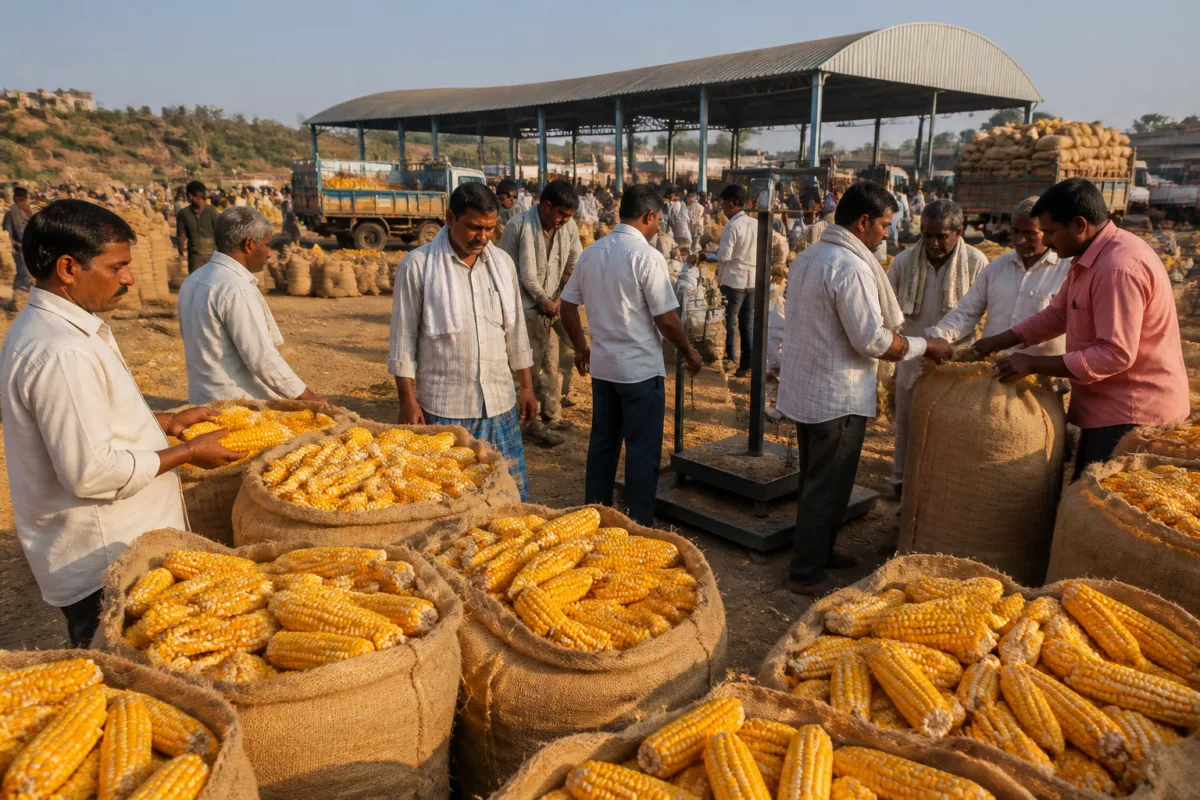
Maize prices have crossed ₹3,000 per quintal in Bagalkot and several other agricultural markets in Karnataka, giving higher returns to farmers who managed to harvest the crop despite drought-driven losses. The price rise has been linked to reduced production and increased use of maize for ethanol manufacturing.
In Bagalkot, maize is being sold at ₹3,100 to ₹3,300 per quintal, while prices in Hirekerur have ranged from ₹2,500 to ₹3,400. Markets in Haveri and Honnali have recorded prices between ₹2,500 and ₹3,300 per quintal, according to the report by Prajavani.
The increase comes as the area under maize cultivation in Bagalkot district has fallen sharply. Maize was grown on 80,000 hectares in the district last year, but the area has declined to 40,165 hectares this year. Much of the remaining crop has also been damaged by inadequate rainfall, reducing the quantity arriving at agricultural produce market committees, or APMCs.
The Centre has announced a support price of ₹2,410 per quintal for maize. Farmers have regularly demanded procurement at the support price, but current market rates are above that level. The higher prices have brought relief to farmers with adequate output, although the benefits have not been evenly distributed across rainfed and irrigated areas.
The reported increase in ethanol demand is another factor behind the price movement. The source said the Centre had instructed that ethanol should not be produced from sugarcane this season. As a result, maize is being used for ethanol production, adding to demand at a time when drought has reduced supply.
The economics of cultivation remain challenging for farmers whose fields depend on rainfall. Growing maize on one acre of dry land costs more than ₹20,000, with an expected yield of 15 to 20 quintals. In irrigated areas, the cost is about ₹25,000 per acre. The higher market rate can therefore generate a return for farmers with a reasonable harvest, but it cannot offset crop failure in fields affected by drought.
Y. Mahantesh, a farmer from Hoolageri, told Prajavani that the drought had left farmers without much produce, even as prices rose. He said farmers who cultivated maize in irrigated areas were benefiting, while those farming on dry land had suffered losses.
V.D. Patil, secretary of the APMC, attributed the price rise to lower arrivals. He said drought had reduced the quantity of maize reaching the market and that the smaller supply was resulting in higher prices. The current movement will depend on how much maize remains available for sale across Karnataka markets and how demand from ethanol production develops.

