


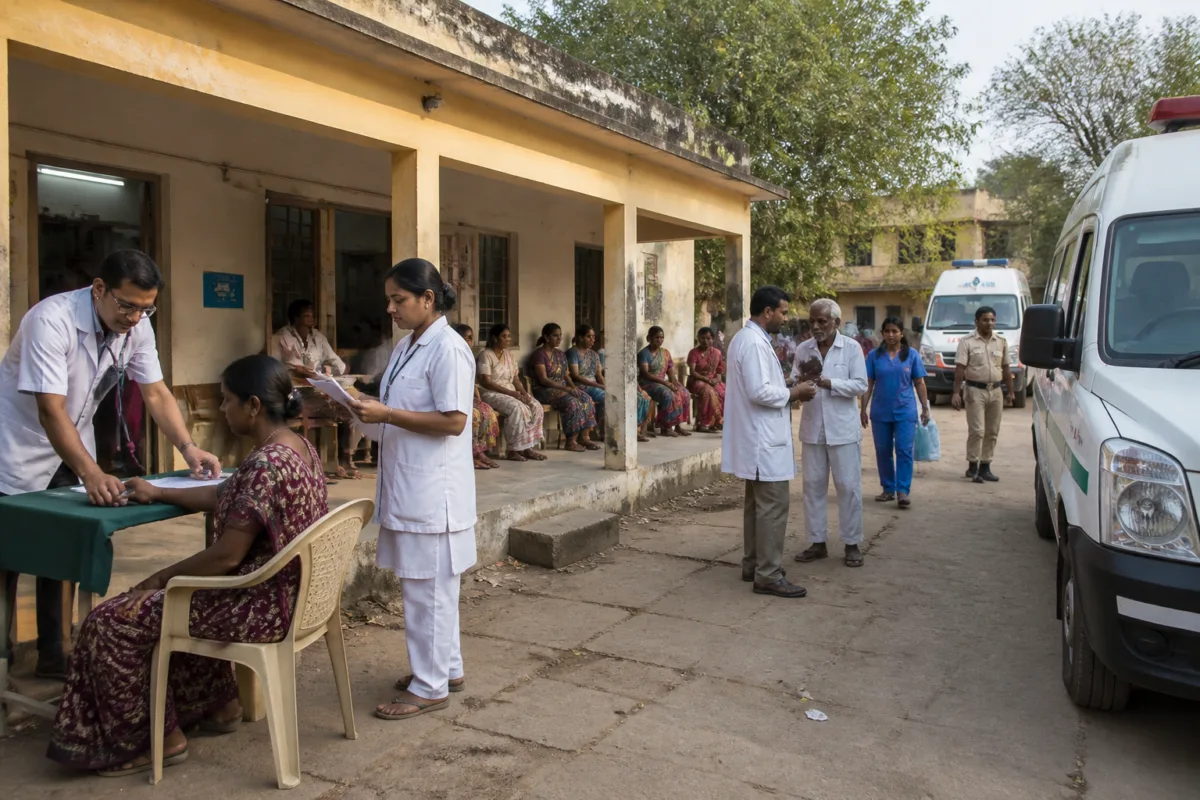
The Karnataka Cabinet has approved the recruitment of 1,000 doctors for the state, Health Minister UT Khader said at a press conference in Ballari on Sunday, in a decision aimed at strengthening staffing across the public healthcare system. The government has also permitted districts to hire doctors and other staff on an outsourced basis until the direct recruitment process is completed.
Khader said 250 doctors had already been appointed through direct recruitment. He also stated that all staff at Primary Health Centres must be mandatorily present and on duty, placing attendance and staffing at the centre of the state’s immediate healthcare administration measures.
The permission for outsourced appointments will allow individual districts to recruit personnel according to their requirements while the wider recruitment exercise proceeds. The minister did not provide a district-wise breakdown of the 1,000 posts or specify a completion timeline for the direct recruitment process in the statement reported by ANI.
The announcement addresses two linked operational issues in the public health system: the availability of medical personnel and the functioning of facilities at the primary-care level. Primary Health Centres are the first formal point of contact for many residents seeking government healthcare, and the government’s instruction makes staff presence a mandatory administrative requirement.
Khader also said the issue of medicine shortages would be resolved within two months. The statement did not specify the medicines affected, the districts facing shortages or the procurement mechanism that would be used to replenish supplies.
Alongside staffing and medicines, the state is taking steps to purchase 350 new ambulances, according to the minister. Details such as the procurement value, deployment plan and delivery schedule were not provided in the reported announcement.
The measures bring recruitment, outsourced staffing, medicine availability and emergency transport under the same immediate healthcare strengthening agenda. Their implementation will depend on how quickly the recruitment process advances, how districts use the outsourcing permission and when the proposed ambulances are procured and deployed. The government’s stated near-term milestone is to resolve the medicine shortage within two months.

