


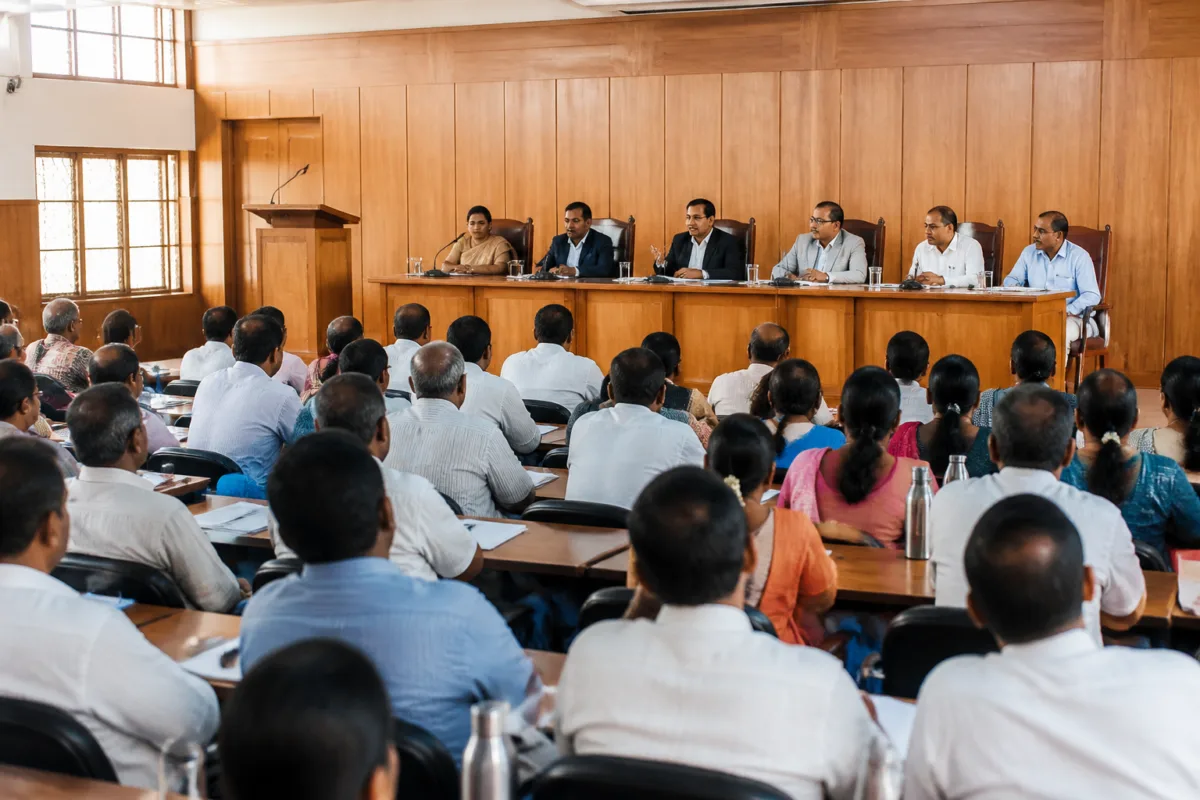
Karnataka Deputy Lokayukta K.N. Phaneendra has called for greater transparency, accountability and humane public service in government offices, saying the Lokayukta received 30,000 cases in one year and disposed of 22,000 of them. He was speaking at a Corruption Awareness Week programme held at the Zilla Panchayat auditorium in Mysuru.
Phaneendra said integrity in public administration should extend beyond refusing or not offering bribes. Government officers and employees must also perform their responsibilities carefully, assist vulnerable people and ensure that public services are delivered with a sense of human values, he said.
“Not accepting or offering a bribe alone is not the complete meaning of integrity,” Phaneendra said, according to the report. He added that merely arriving at the office on time and carrying out routine duties was also not enough, arguing that officials should be willing to devote additional time when necessary to complete their responsibilities.
The deputy Lokayukta said corruption had not been completely eliminated even after four decades of the institution’s existence. He described a reported ranking that placed Karnataka third in the country for corruption as a matter of concern, without further details in the report about the source, methodology or period covered by the ranking.
The figures cited at the Mysuru programme indicate the scale of complaints handled by the anti-corruption institution. Phaneendra said the Lokayukta had earlier received fewer cases, but that resolving them still required a specified amount of time. The report does not provide a category-wise breakdown of the 30,000 cases, the districts involved, or the outcomes of the 22,000 cases said to have been disposed of.
The programme was organised as part of the annual awareness week observed from the last week of October to the first week of November. This year’s theme was “Integrity for Prosperity”. Phaneendra said integrity should be understood not only as personal honesty but also as the diligent discharge of official duties and responsibilities.
The remarks place administrative conduct at the centre of the public-service experience. For citizens, delays, demands for unofficial payments and the failure to assist people who need support can affect access to government schemes and essential services. The speech, however, focused on ethical conduct and awareness rather than announcing a new enforcement measure, complaint mechanism or administrative order.
Mysuru Deputy Commissioner G. Lakshmikanth Reddy, City Police Commissioner Seema Latkar, Zilla Panchayat Chief Executive Officer S. Yukesh Kumar, Lokayukta Superintendent of Police T.J. Udesh and Deputy Commissioner of Police Dr Harshapriyambda attended the programme. Participants also took an integrity pledge during the event.

