


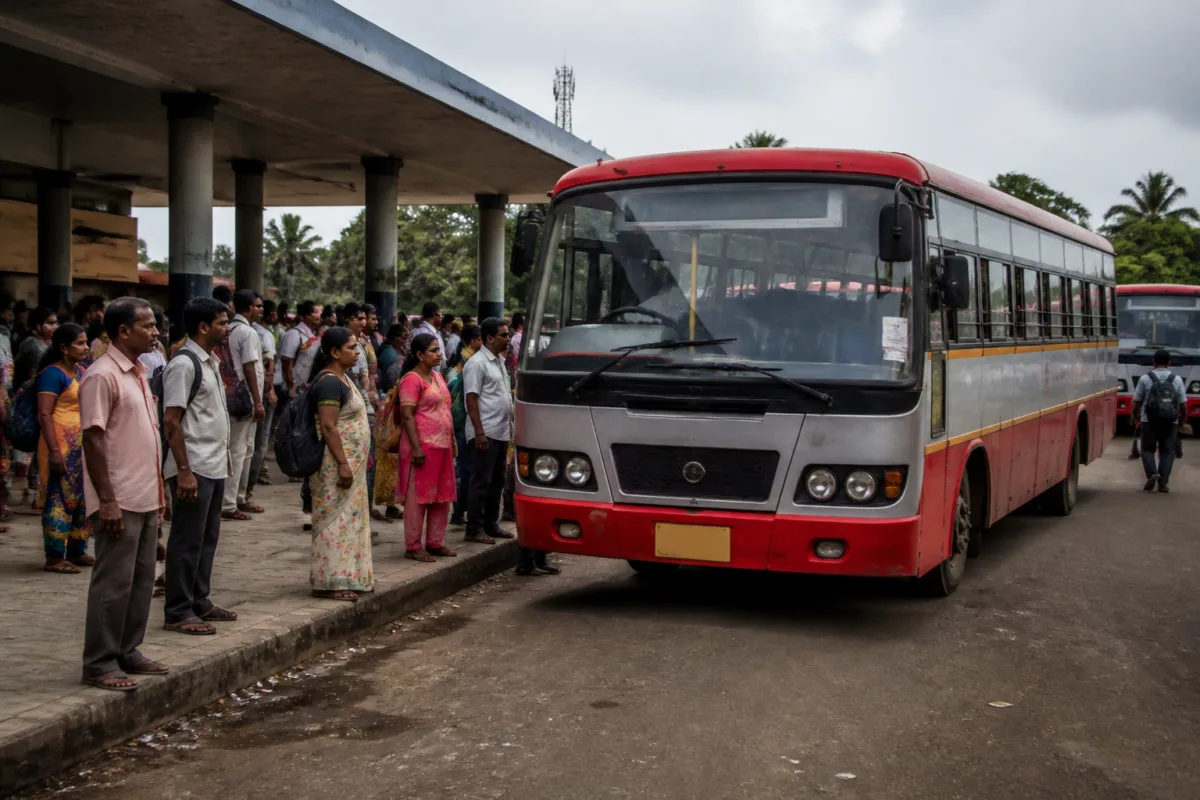
Karnataka bus fares will increase from November 5, Transport Minister Bairathi Suresh said, with the exact quantum of the hike expected to be decided after a meeting with transport department and corporation officials on November 4.
Speaking to reporters in Chikkaballapur on Sunday, Suresh said the fare increase had become unavoidable because rising diesel costs were placing pressure on the state’s four transport corporations. He said the corporations were facing an annual loss of around ₹2,000 crore because of diesel price increases and were already carrying cumulative losses of ₹9,000 crore.
The minister attributed the diesel price increases to the BJP-led central government, saying prices had been raised five times in the past year. The statement, as reported by Prajavani, did not specify the current fare structure or indicate how much passengers would pay after November 5.
Suresh said the issue had been discussed at a recent state Cabinet meeting. The responsibility for deciding the fare increase had been assigned to Chief Minister D K Shivakumar and the Transport Department, according to his statement.
A meeting involving officials from the Transport Department and the four transport corporations is scheduled for November 4. The meeting will determine the extent of the increase before the revised fares take effect the following day.
The announcement places the financial condition of Karnataka’s public bus operators at the centre of the fare decision. The figures cited by the minister indicate a reported annual loss of ₹2,000 crore across the four corporations and accumulated losses of ₹9,000 crore. However, the statement did not provide a corporation-wise breakdown, identify the share of fuel costs in the losses or detail any other financial measures being considered.
For passengers, the immediate issue is the timing of the change and the absence of a publicly specified fare table in the announcement. The final increase will determine how the decision affects daily commuters, inter-city travellers and households that depend on state-run buses for access to work, education and essential services. The minister’s statement did not provide details of exemptions, concessions or any proposed protection for particular passenger categories.
The fare decision also comes with an operational question for the corporations: how much of the reported losses can be addressed through passenger fares, and what part will require other forms of support or cost management. No such funding or restructuring measures were outlined in the statement.
The Transport Department and the four corporations are expected to meet on November 4 to finalise the revised fare amount. The new bus fares are scheduled to come into force on November 5.

