


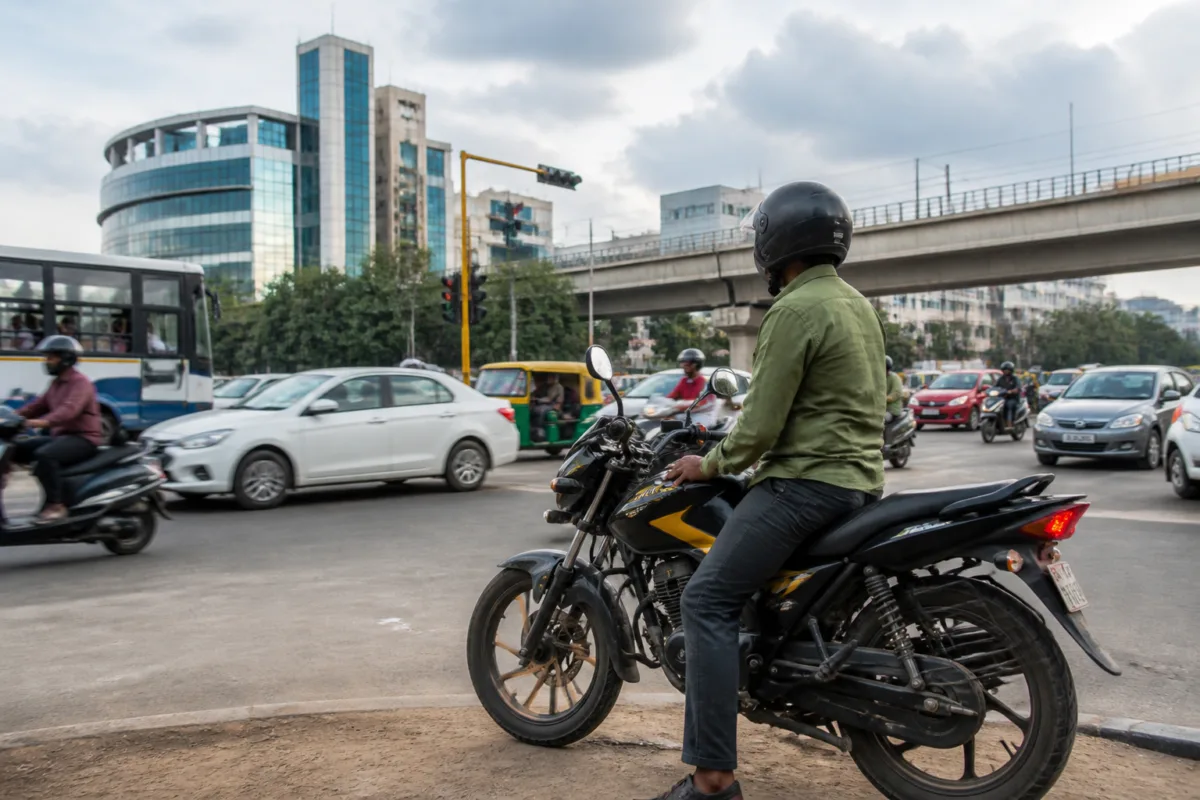
The Karnataka bike taxi case has moved to the Supreme Court after the state government challenged a High Court order that directed authorities to consider registering two-wheelers as transport vehicles and processing applications for bike taxi permits.
Solicitor General Tushar Mehta appeared virtually for the Karnataka government before a bench comprising Justices Satish Chandra Sharma and N. Kotiswar Singh on Monday. He sought time to submit additional documents in the case. The bench allowed the request and directed that the matter be listed during the week beginning November 16.
The proceedings concern the legality and regulatory treatment of bike taxis in Karnataka, a service used by app-based mobility platforms to provide two-wheeler rides to passengers. The High Court had issued its direction on January 23, asking officials to consider applications for registering motorcycles as transport vehicles and granting licences for their use as bike taxis.
The state government has now appealed that order in the Supreme Court and has appointed Mehta to argue its case. The latest hearing did not decide whether bike taxi operations can continue or whether the vehicles must be licensed under a specific regulatory framework. Instead, the court granted the state additional time to place documents on record before the matter is taken up again.
The Bike Taxi Riders’ Association was represented by senior advocate Shashank Garg. He told the bench that the Union government had issued circulars supporting bike taxi riders. In response, the bench observed that Mehta could also appear for the Union government and present the appropriate position before the court.
Senior advocate Abhishek Manu Singhvi, appearing for Uber, said the Union government’s circulars supported bike taxi drivers and suggested that Mehta could represent Karnataka alone. Singhvi also clarified that Uber had no objection to Mehta appearing in the matter.
The state government had earlier appointed senior advocate Kapil Sibal to argue the case. During the previous hearing, lawyers pointed out that Sibal had provided a legal opinion for Rapido. Sibal subsequently withdrew from the case.
The Supreme Court proceedings place Karnataka’s bike taxi policy within a wider question of how motorcycles used for passenger transport should be classified and regulated. The immediate issues before the court include the state’s challenge to the High Court direction, the relevance of Union government circulars cited by the riders’ association and the process for considering vehicle registration and permit applications.
The case is expected to return before the Supreme Court during the week beginning November 16, when the state’s additional documents and the parties’ positions can be considered further.

