


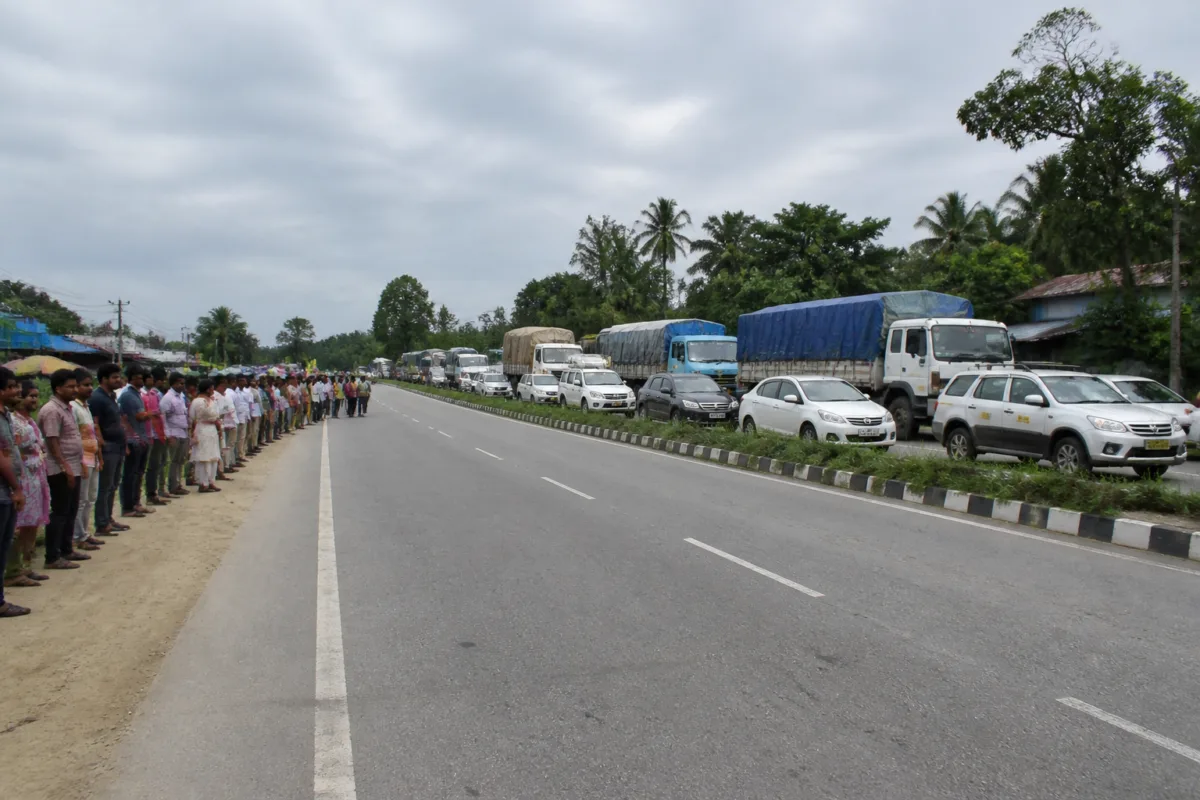
A protest by the Kamtapur State Demand Council (Democratic) blocked NH-31 at Serfanguri in Assam’s Kokrajhar district for more than an hour on Wednesday, disrupting traffic before the blockade was withdrawn following an assurance of a proposed meeting with Chief Minister Himanta Biswa Sarma on November 28.
The KSDC-D is seeking Scheduled Tribe status for the Koch-Rajbongshi community, the creation of a separate Kamtapur state under the Constitution of India, and official recognition and constitutional protection for the Koch-Rajbongshi language. The three demands were at the centre of the protest on the national highway.
The blockade affected movement along NH-31, a key road corridor serving western Assam and connecting communities and commercial centres across the region. The protest was lifted after the district administration communicated that representatives of the organisation would be able to meet the chief minister later this month.
KSDC-D secretary Baniram Barman told protesters that the community had pursued the demands for years but successive governments had not resolved them. He said the organisation would continue its democratic movement until the demands were addressed.
“We have taken to the streets because our three fundamental demands remain unfulfilled despite years of democratic struggle,” Barman said. He described the demands as matters concerning the community’s identity, rights and existence, and urged the government to take them up with a concrete solution.
According to the report, the Kokrajhar district administration communicated with KSDC-D through an official letter regarding the proposed meeting. The November 28 discussion is expected to cover all three demands, including the request for ST status, the separate-state proposal and constitutional protection for the Koch-Rajbongshi language.
The protest highlights how unresolved questions of community recognition and political representation can quickly affect the operation of vital transport corridors. Blocking a national highway brings an identity-based political demand into the daily experience of residents, freight operators and other road users, while also placing responsibility on district authorities to manage traffic and maintain public order.
The proposed meeting has raised expectations among members of the Koch-Rajbongshi community that the state government may take steps on the long-pending issues. The administration’s engagement with the organisation and the chief minister’s scheduled meeting on November 28 are the next official milestones in the matter.

