


The Jogighat project has reopened a difficult land-use question in the Darjeeling hills: whether a government site earmarked for Darjeeling Hills University’s permanent campus should instead host a Patanjali unit. The renewed push by Gorkha Janmukti Morcha president Bimal Gurung has brought the competing claims over higher education, industrial employment and cinchona plantation land back into public view.
According to a report by Telegraph India – West Bengal, Gurung told a public meeting at Mungpoo that he would meet chief minister Suvendu Adhikari between November 20 and 23 to discuss the Patanjali proposal and other issues. Gurung said the Patanjali Yogpeeth had been approached to establish a unit at Jogighat and that the government was considering permission for the project. He said the company could create thousands of jobs.
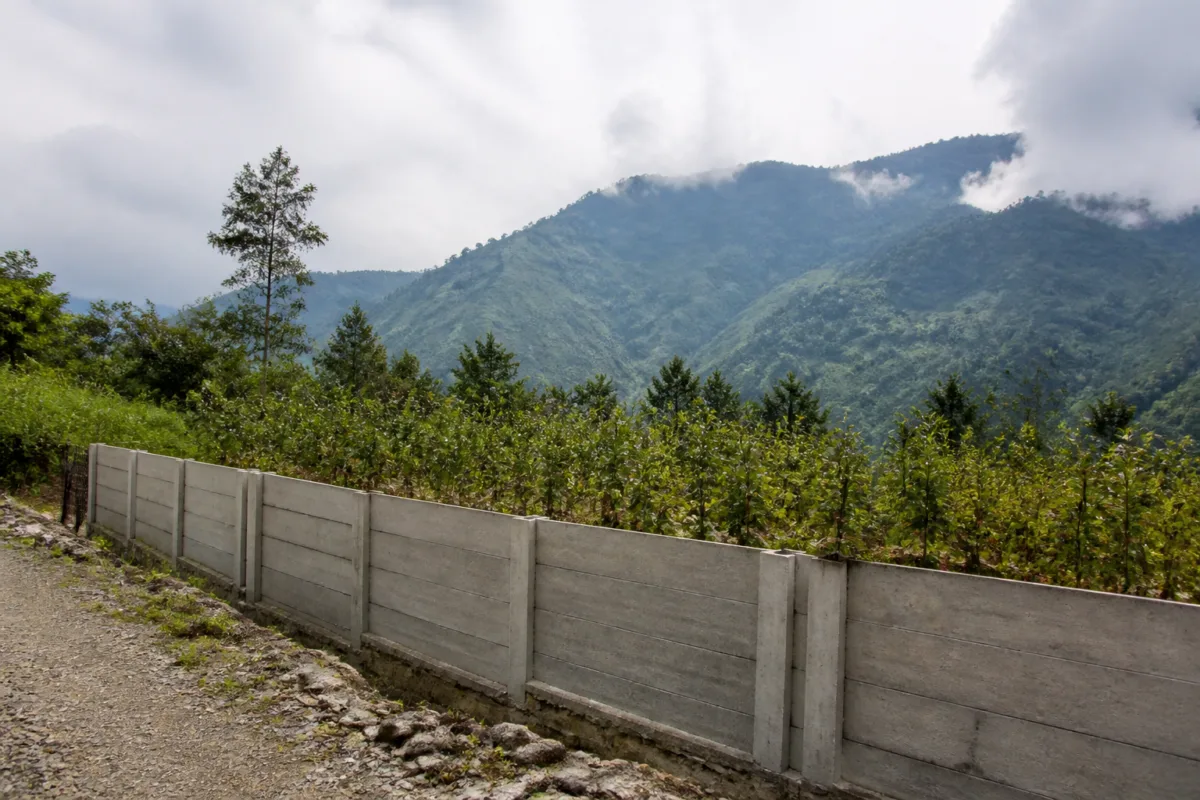
The immediate concern among residents is not simply whether a factory will come to Mungpoo. It is whether the industrial proposal could displace the planned permanent campus of Darjeeling Hills University, which currently operates from a government building in Mungpoo. The boundary wall at the site earmarked for the university at Jogighat has already been completed, making the question more concrete than a purely conceptual land-use dispute.
The competing claims also reveal how limited public land in the hills can be asked to serve multiple institutional purposes at once. Jogighat is part of the government-run cinchona plantation system, but the identified land has also been set aside for a university campus. A decision over the site would therefore affect not only one proposed project, but the location of a higher-education institution and the future use of a longstanding public-sector plantation estate.
Telegraph India reported that Gurung had renewed his effort in August to secure a Patanjali Ayurved factory on cinchona plantation land. He visited the Mungpoo headquarters of the directorate of cinchona plantation and other medicinal plants with ministers, the Darjeeling BJP MP and hill legislators. Gurung said at the time that a foundation stone for the unit had been laid in 2014 and that a detailed project report worth ₹5,000 crore had been prepared.
That earlier proposal envisaged more than a factory. The plan was to encourage the cinchona plantations to grow medicinal plants for sale to Patanjali. In this formulation, the industrial project was linked to a possible restructuring of the plantation economy: land and agricultural production would support a private manufacturing unit, while the company could potentially provide a market for medicinal crops.
The proposal did not move forward because, according to the report, the then Mamata Banerjee-led Trinamool Congress government did not hand over the land to Patanjali. The same land was identified for the permanent campus of Darjeeling Hills University. That history explains why the present push has generated renewed anxiety: the site is not vacant government land awaiting a first allocation, but land already associated with a public educational purpose.
The university’s current circumstances add another layer to the dispute. DHU is operating from a government building in Mungpoo, while a nearly completed building at Kurseong has been handed over to Presidency University. The availability of that infrastructure has prompted speculation that DHU could be shifted to Kurseong, freeing the Jogighat site for another use.
Kurseong BJP MLA Sonam Lama rejected that interpretation, saying there was no proposal at present to shift DHU from Jogighat to Kurseong. He said the infrastructure at Kurseong had been handed over to Presidency University and that no proposal existed to move the DHU site. The statement is significant because it provides an on-record position against the immediate relocation claim, but it does not settle the broader question of what will happen to the Patanjali proposal or the Jogighat land.
The institutional responsibilities are also divided. Gurung is advocating for the industrial project and has indicated that he plans to raise it with the chief minister. The land falls within the government-controlled cinchona plantation system. The university’s campus plan represents a higher-education decision, while local political representatives are responding to concerns about both employment and the institution’s location. The available material does not establish that any final government approval has been granted for the Patanjali unit, nor does it document a formal change to the university’s campus plan.
The economic argument for the factory rests on the condition of the cinchona plantations. The plantation, established in 1862 and spread across 26,000 acres, is described in the report as one of the largest public-sector undertakings in the Darjeeling hills. It grows cinchona, rubber, ipecac, cardamom and coffee, but is running at an annual loss of around ₹60 crore. The scale of the land and the continuing losses create pressure for a new economic rationale for the estate.
That pressure, however, does not automatically resolve the question of land allocation. A loss-making public plantation can be viewed as an underperforming asset requiring a new production or commercial model. It can also be viewed as a public institution whose future must be settled through a transparent administrative process rather than through the urgency of attracting a private unit. The supplied evidence confirms the financial difficulty of the plantation, but it does not establish whether the proposed Patanjali project has a current financial assessment, an approved land-use plan or a completed environmental and administrative clearance process.
The Jogighat dispute therefore illustrates a recurring governance problem in the built environment: one parcel of public land is expected to solve several development deficits at once. The Patanjali proposal is presented as a route to industrial activity and thousands of jobs. The university campus is intended to provide a permanent institutional base for higher education. The plantation estate carries an existing agricultural and public-sector function. These objectives may be compatible only if the land, operating model and institutional responsibilities are clearly separated. The material available in the report does not show that such a framework has been announced.
The question of location matters as much as the question of investment. DHU’s operation from a government building indicates that the university does not yet have the permanent campus originally envisaged at Jogighat. Moving it elsewhere could provide a different institutional setting, but it would also change the relationship between the university and Mungpoo. Residents’ objections show that the campus is understood locally as part of the area’s future, not merely as a construction project that can be transferred between towns.
For the plantation, the numbers point to a structural challenge rather than a one-time project gap. A 26,000-acre estate established in the nineteenth century and losing around ₹60 crore each year requires a clear policy on what it is meant to produce, whom it is meant to serve and how its land should be governed. The Patanjali proposal may offer one possible commercial direction, but the report does not establish that it is the only option or that its earlier ₹5,000-crore plan remains current in the same form.
The next stage is therefore administrative and documentary. Gurung has indicated that he will discuss the matter with the chief minister between November 20 and 23. The key public questions are whether the government will formally confirm the status of the proposal, whether Jogighat remains reserved for DHU’s permanent campus, and whether any alternative land-use decision has been issued for the cinchona plantation. Until those positions are clarified, the dispute remains a conflict between a proposed industrial revival and an already earmarked university campus rather than a confirmed change in the site’s use.

