


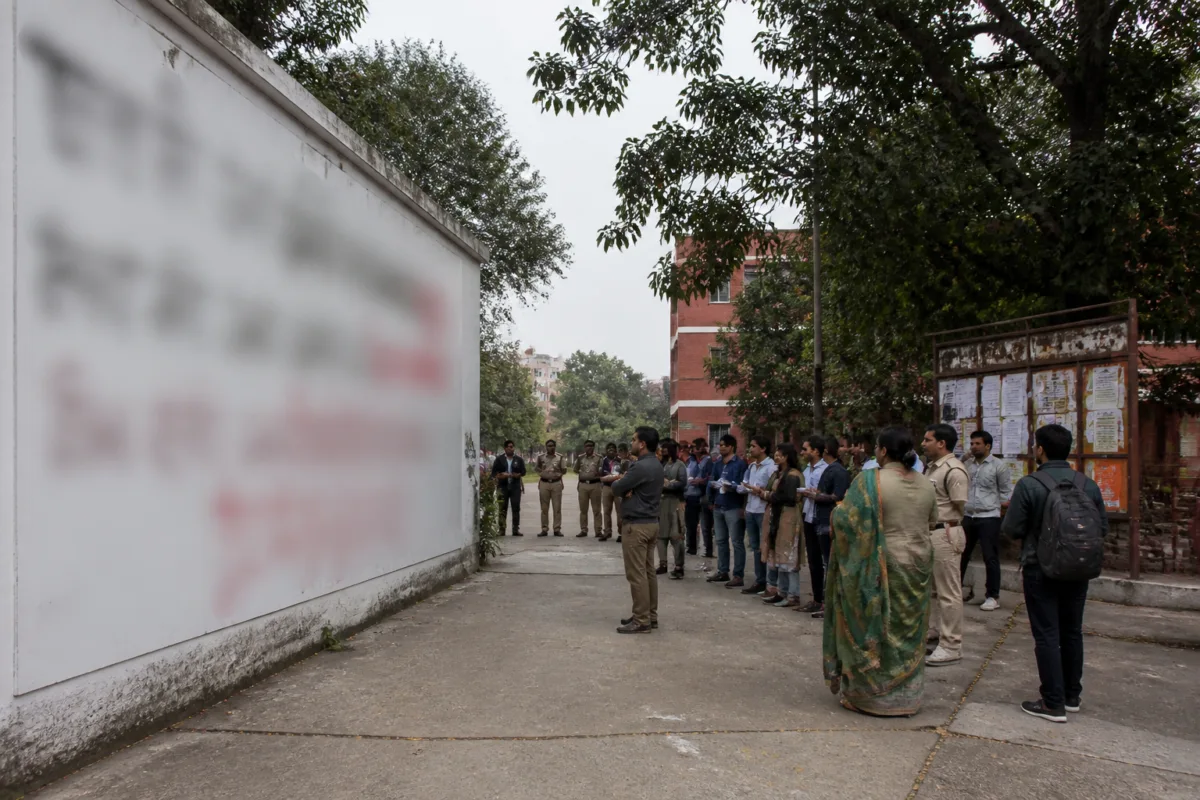
JNU wall slogans supporting the release of Umar Khalid and praising Naxalbari have triggered a fresh dispute on the Jawaharlal Nehru University campus, with the Akhil Bharatiya Vidyarthi Parishad and Vishwa Hindu Parishad demanding action against those responsible. The report also says that objectionable remarks were written near a portrait of freedom fighter Vinayak Damodar Savarkar.
The reported writings include the phrases “Release Umar Khalid” and “Long live Naxalbari”. The incident has become a new point of confrontation between political organisations on the campus, where disputes over slogans, wall writing and the boundaries of political expression have repeatedly shaped the public image of the university.
The JNU unit of ABVP alleged that activists associated with left student organisations wrote the slogans to damage the academic atmosphere. The organisation demanded that the university administration identify those responsible and take appropriate action. The report did not provide an administrative statement confirming whether an inquiry had been opened or whether any individuals had been identified.
Mayank Panchal, ABVP’s JNU president, said freedom of expression did not give anyone the right to express opposition to ideas through what he described as disrespect towards national figures. He alleged that writing objectionable comments near Savarkar’s picture and placing political slogans on campus walls amounted to an attempt to disturb the university environment.
The dispute has also drawn a response from the VHP. Vinod Bansal, the organisation’s national spokesperson, objected to the reported slogans and called for strict action by the university administration. In a post on X, Bansal said similar slogans had been written on the walls of Jamia Millia Islamia before the reported incident at JNU. He also referred to the remarks near Savarkar’s portrait.
Bansal described the alleged activity as the work of what he called an “anti-national gang” involving Congress, communist and extremist elements. That characterisation is the VHP spokesperson’s claim and was not independently established in the supplied report. The report also did not include a response from the organisations accused by ABVP or from the JNU administration.
The immediate issue for the university is therefore not only the content of the writings but also the process for establishing responsibility and deciding what action, if any, follows. Campus walls are part of the university’s shared physical environment, and disputes over their use can quickly become institutional conflicts involving student groups, political organisations and administrators.
ABVP and VHP have called on JNU authorities to identify the writers and initiate action. Further developments will depend on whether the administration confirms the writings, begins an inquiry, removes the material or announces disciplinary steps.

