


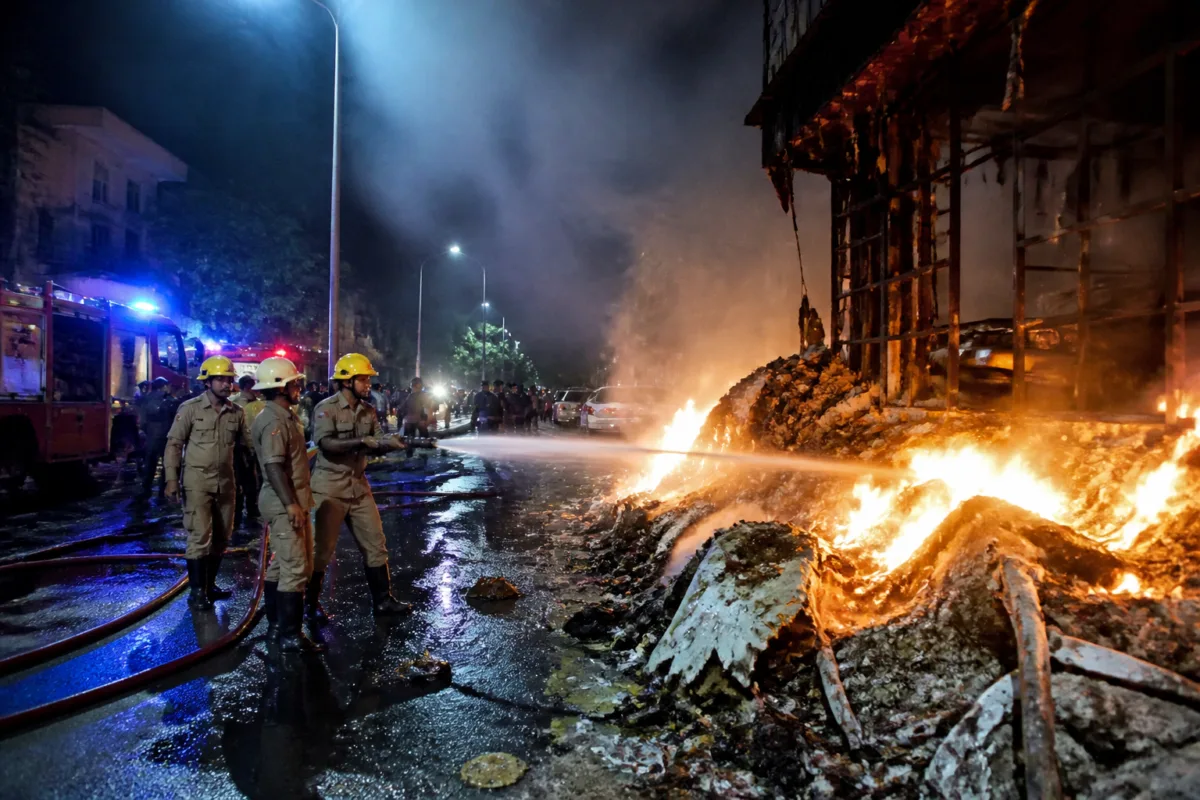
Jaipur recorded 82 fire incidents on Diwali night, with garbage and dry-waste piles accounting for more than half of the emergencies and fires also damaging warehouses, shops, houses and commercial premises across the city. The incidents kept firefighters deployed through the night and into Monday morning.
Chief fire officer Gautam Lal told the Times of India that personnel from all 12 fire stations were assigned to round-the-clock operations. Fire tenders were positioned at 15 locations across Jaipur to reduce response times and prevent flames from spreading to neighbouring properties.
Data from the Jaipur Municipal Corporation’s fire department showed that garbage and dry-waste piles were involved in 54 of the 82 incidents. Nine warehouses, nine shops and six houses also caught fire. Three incidents involved electricity meters, while firefighters responded to one vehicle fire. Several vacant plots where rubbish had been dumped also caught fire, threatening nearby homes.
The distribution of incidents placed waste management alongside fireworks and electrical faults at the centre of the city’s Diwali fire risk. Officials said electrical short circuits triggered several major fires. In Vaishali Nagar, a firecracker allegedly caused a blaze inside an apartment. Firecrackers also set parked cars and motorcycles on fire at several locations.
One of the largest fires began at about 11.25 pm in a sprawling showroom in Khatipura, Jhotwara. The blaze engulfed stocks including sarees, bedsheets, mattresses, cushions, wooden furniture, Rajput poshaks and air-conditioners. Firefighters continued operations until around 7 am before bringing the fire under control.
A separate major fire damaged the premises of an online retail and export company in Sitapura. The flames affected inventory, furniture and machinery, as well as the building. A large warehouse in Murlipura also caught fire, destroying wooden articles and furniture.
The emergency response extended beyond Jaipur city. In Govindgarh and other outskirts, fires destroyed makeshift animal shelters and spare rooms, adding to the workload for the fire department on one of the busiest nights of the year.
The incident pattern highlights the operational challenge created when combustible waste accumulates in vacant plots and open areas near homes and commercial properties. Fire tenders had to move between scattered locations while responding to incidents involving residential buildings, warehouses, vehicles and waste piles. The municipal fire department’s recorded breakdown identifies garbage and dry waste as the largest category among the reported fires, ahead of the individual counts for warehouses, shops and houses.
The department’s immediate response involved staffing all 12 fire stations and deploying tenders at 15 strategic locations. The reported fires included incidents within the city as well as in surrounding areas, with officials continuing operations into the following morning.

