


IRCTC travel insurance is a small but consequential layer of financial protection attached to railway ticketing. For a premium of 45 paise per passenger, including tax, eligible passengers booking online can receive cover of up to ₹10 lakh for accidental death or permanent total disability. The arrangement also provides benefits for permanent partial disability, hospital treatment and transportation of a deceased passenger’s body, subject to the policy’s conditions.
The significance of the scheme lies less in the price of the premium than in the way railway passengers access protection. At present, the insurance option is offered during online ticket booking through the IRCTC app or website. According to the report by Aaj Tak Business, the Supreme Court has directed the Railway Board to extend this insurance protection to passengers who purchase reserved tickets from railway station reservation counters from 27 October 2026. That proposed expansion addresses a basic access divide within the railway ticketing system: passengers using different booking channels should not necessarily face different opportunities to obtain travel cover.
The scheme also shows how passenger protection is being integrated into a wider digital transaction. When an online ticket is booked, the traveller can choose whether to add the insurance. It is not mandatory. The choice is therefore made at the point of purchase, alongside the decision to complete the ticket transaction. The available information states that the premium is 45 paise per passenger, including tax, while the maximum cover can reach ₹10 lakh. These figures describe the upper limits of the policy and not an assured payment in every accident.
That distinction is central to understanding the product. Selecting insurance does not automatically establish eligibility for every incident during a journey. Payment depends on the nature of the event, the extent of the loss and compliance with the applicable terms and conditions. The reported cover includes up to ₹10 lakh for accidental death and permanent total disability, up to ₹7.5 lakh for permanent partial disability, up to ₹2 lakh for hospital expenses following an accident, and up to ₹10,000 for transporting the body of a deceased passenger.
The difference between a maximum benefit and a guaranteed payout is especially important in public-facing insurance products. A passenger may see the ₹10 lakh figure while booking a ticket, but the final claim depends on the category of injury or loss and the policy provisions governing that claim. The report also notes that certain circumstances can fall outside the cover, including deliberate self-harm, suicide or attempted suicide, some incidents linked to intoxication, events occurring while crossing railway tracks, specified risky activities, incidents outside the policy period, failure to board the train and certain issues involving invalid or unconfirmed tickets, subject to the applicable eligibility conditions.
This makes the terms of the insurance as important as the low premium. The option is presented during a routine booking process, but the eventual claim may require evidence from several institutions. In the case of a passenger’s death, a nominee or eligible legal heir may be able to claim the benefit. The documents that may be required include a claim form, a railway authority’s accident report, an identification report for the deceased passenger, the nominee’s identity documents, bank account details and a cancelled cheque.
Where a nominee has not been recorded, the claimant may need to establish legal-heir status through succession-related orders or other documents proving eligibility. This introduces an administrative dimension that is easy to overlook at the time of booking. The initial transaction may take only a small additional amount, but a later claim can depend on accurate passenger and nominee information, official accident records and documentation acceptable to the insurance company.
Claims relating to disability involve another layer of verification. The report states that railway records, a doctor’s report, a disability certificate, a copy of the first information report and relevant medical records may be sought for a permanent disability claim. For hospital treatment, the documentation can include the railway authority’s report, hospital discharge summary, original treatment bills, payment receipts, prescriptions and diagnostic reports. The final list may vary according to the insurance company and the nature of the claim.
The time limit reported for presenting a claim under the existing IRCTC e-ticket insurance policy is four months from the insured event. The passenger, nominee or legal heir is expected to submit a written claim to the insurance company’s nearest office within that period. The reported process involves notifying the insurer, collecting railway and medical records, preparing the relevant proof, submitting the claim form and retaining copies of the documents and acknowledgement.
For railway governance, this process highlights the division of responsibility between the railway system and the insurer. Railway authorities may provide accident-related records, while the insurance company assesses the claim against the policy. Passengers and families therefore have to navigate both the incident-reporting system and the insurance documentation process. The reported requirement to confirm the final document list with the concerned insurer reflects that the initial ticket transaction does not, by itself, settle the later claims procedure.
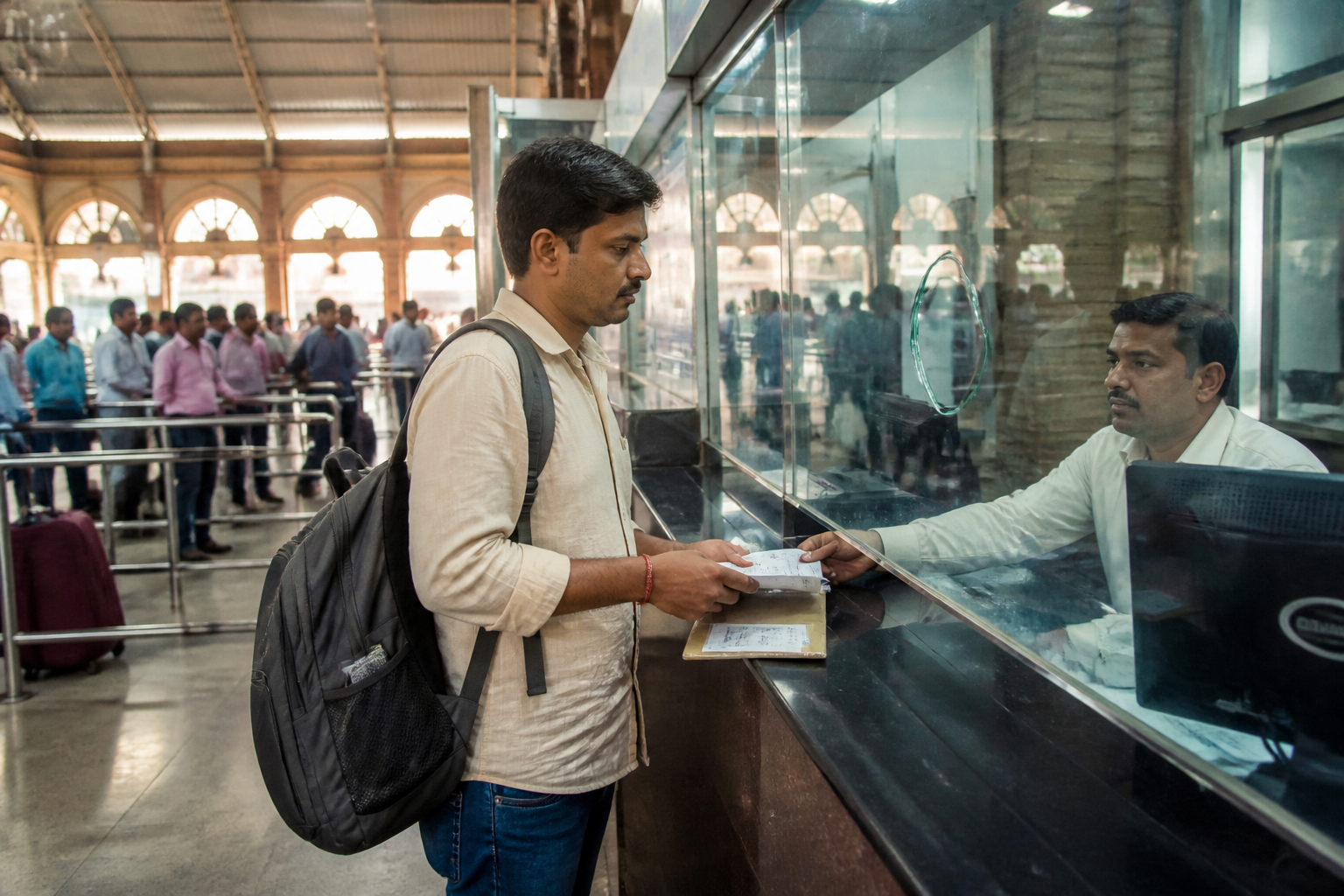
The proposed extension to reservation counters raises a related implementation question. Online passengers encounter the insurance option as part of the digital booking flow. Counter passengers, by contrast, depend on the information and process available at a physical reservation facility. Extending the benefit to them will require the insurance choice, eligibility conditions, nominee information and relevant policy terms to be communicated through the counter-booking system. The supplied report confirms the court’s direction and the 27 October 2026 date, but it does not provide further operational details about how the expansion will be implemented.
That gap matters because access is not the same as availability. A facility can be formally offered while remaining difficult to understand or use if its terms are not clearly communicated. In this case, passengers need to know that the insurance is optional, that the premium is charged per passenger, that the benefit has different ceilings for different types of loss and that exclusions apply. They also need to understand how nominee details are recorded and where claims must be filed.
The railway ticket is therefore more than a transport document in this context. It can also become the entry point for a financial-protection arrangement whose usefulness is realised only after an accident. The quality of that arrangement depends on the connection between booking data, railway incident records, medical documentation and the insurer’s claims process. The proposed inclusion of counter-ticket passengers makes that institutional connection more visible because it brings a largely digital facility into the physical railway network.
The available evidence confirms the structure of the reported scheme but does not establish how many passengers currently select the insurance option, how many claims have been filed or settled, which insurers handle the policy, or whether the counter-ticket expansion will use the same terms and premium. Those details would be necessary to assess the scheme’s reach and performance. For now, the clearest conclusion is that the 45-paise premium represents an optional gateway to defined benefits, not an unconditional promise of compensation.
The next stated milestone is 27 October 2026, when the Railway Board has been directed to extend the insurance protection to passengers buying reserved tickets at railway reservation counters. The practical effect of that direction will depend on the booking process, passenger communication, policy terms and claims support provided across both online and physical ticketing channels.

