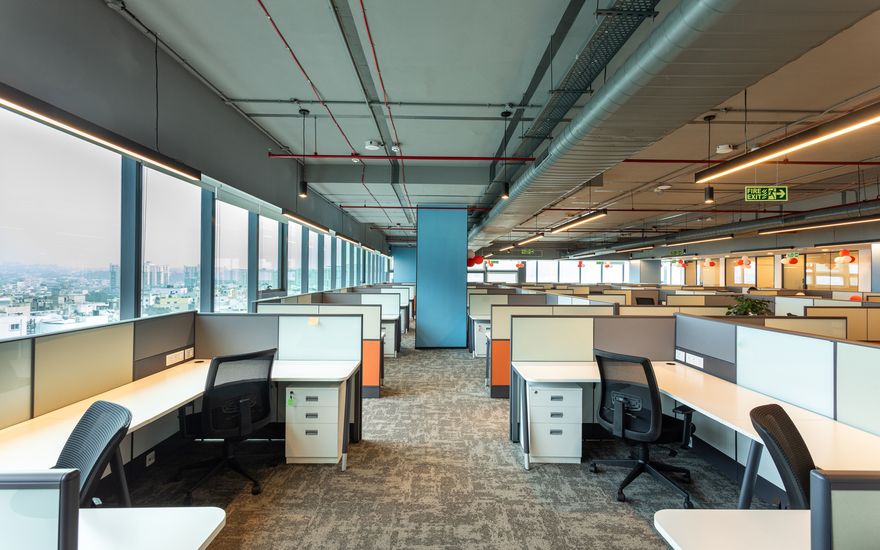
A major office leasing transaction in Hyderabad’s western corridor is drawing attention to the city’s evolving commercial real estate landscape, where large-scale corporate occupancies continue to reshape urban growth patterns. A global asset management firm has secured over 2.2 lakh sq ft of workspace in Khajaguda, committing to a multi-year lease that reflects both confidence in the city’s office market and the ongoing decentralisation of business districts.
The lease, spread across multiple floors within a premium business park, signals sustained demand for Grade A office space in Hyderabad. With a monthly rental commitment exceeding ₹1.5 crore and a structured annual escalation, the agreement underscores how institutional occupiers are willing to lock in long-term capacity despite global uncertainties around hybrid work models. Urban planners note that Hyderabad office leasing activity has remained resilient due to relatively lower occupancy costs compared to cities like Bengaluru or Mumbai, combined with robust infrastructure expansion in areas such as the IT corridor and Financial District. However, this growth is also raising questions about transport connectivity, congestion, and the environmental footprint of large commercial clusters.
The Khajaguda–Hitec City belt, where this transaction is located, has witnessed a steady influx of multinational firms across technology, finance, and media sectors. Recent deals involving global streaming platforms, social media companies, and technology manufacturers indicate that Hyderabad office leasing is increasingly being driven by global capability centres and back-end operations rather than traditional headquarters.While such investments boost employment opportunities and local economic activity, urban experts caution that rapid commercial expansion must be aligned with sustainable planning. Increased office density places pressure on water resources, mobility networks, and energy consumption key concerns for a city already grappling with climate variability and uneven infrastructure distribution. There is also a growing emphasis on how these office developments integrate with surrounding residential zones. Mixed-use planning, last-mile connectivity, and inclusive public spaces are becoming critical factors in determining whether such growth translates into improved quality of life for residents or exacerbates urban inequality.
Notably, lease structures in recent Hyderabad office leasing deals reveal a trend of higher security deposits and periodic rent escalations, reflecting landlord confidence in long-term demand. At the same time, occupiers are prioritising larger, consolidated spaces, possibly to optimise operations and reduce fragmentation across multiple locations. As Hyderabad continues to attract institutional tenants, the challenge for policymakers will be to ensure that commercial growth aligns with broader sustainability goals. Balancing economic expansion with resource efficiency, equitable access, and climate resilience will define the next phase of the city’s urban transformation.