


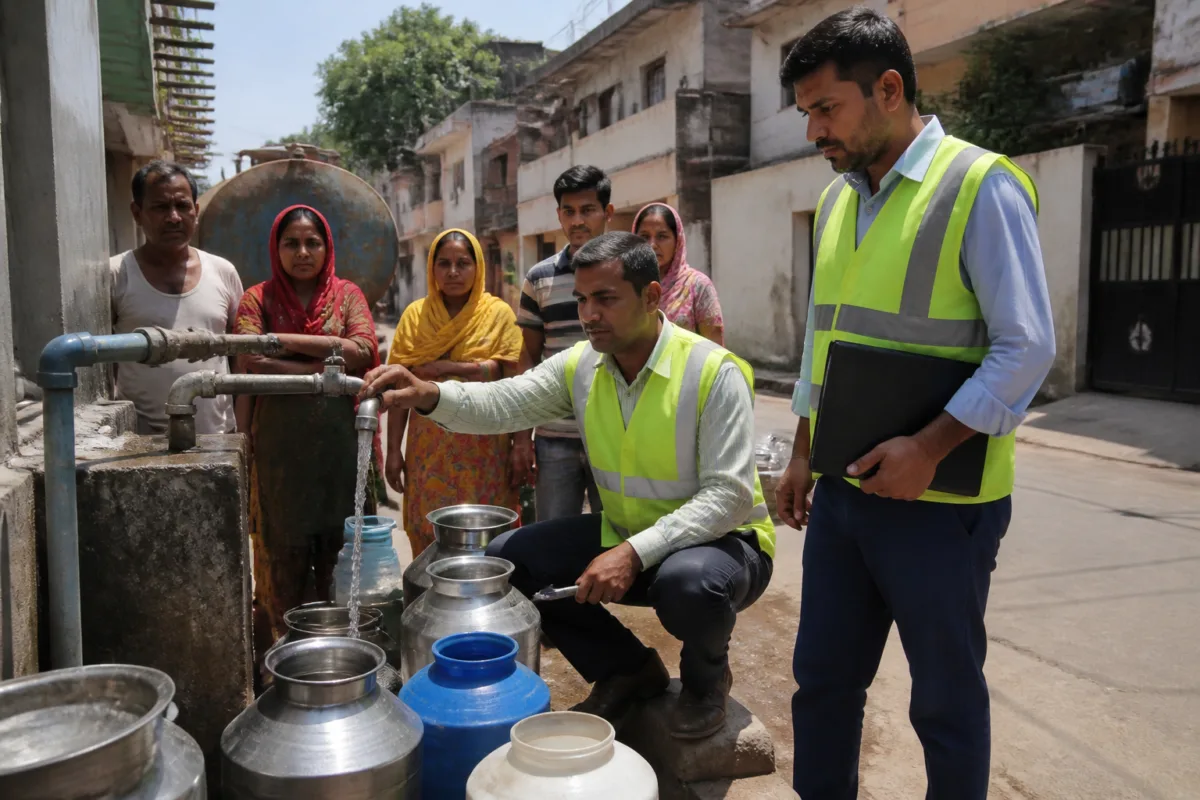
Indore Municipal Corporation will seize motors fitted to household taps and act against encroachments on government borewells as part of a city-wide drive to curb water wastage and strengthen water distribution ahead of a possible summer crisis.
The decisions were taken at a high-level meeting held at the corporation headquarters on Monday under Mayor Pushyamitra Bhargava. The meeting focused on water supply, conservation and measures to prepare the city for potential shortages. The civic body’s actions will combine enforcement with public awareness, including counselling residents before penalties are imposed.
According to the Times of India report, residents using motors to draw water through taps will initially be warned. If they continue, the motors will be seized. The corporation also plans to take challan action against residents who continue to violate water-use rules after being counselled three or four times.
The proposed awareness campaign will be conducted door to door with the help of non-governmental organisations. Residents will be encouraged to ensure that taps are fitted with spouts so that water does not flow wastefully. The civic body will also ask people not to use drinking water unnecessarily for washing vehicles and other purposes.
The enforcement plan places household-level water use alongside wider questions of access and distribution. The corporation will identify government borewells that have been illegally occupied and take steps to get them vacated. It will also examine whether supply lines can be laid from these borewells to provide water to more households.
Officials have been asked to identify areas that repeatedly face water shortages and prepare separate action plans for them. This indicates that the corporation intends to map recurring supply problems rather than rely only on city-wide conservation messaging. The report did not specify the number of affected areas, the proposed supply-line capacity or the implementation schedule.
The civic body is also planning public water access points across the city. Sites will be identified for at least one water kiosk, or pyau, in each of Indore’s 85 wards. Locations for new hydrants will also be marked around the city’s ponds. The report did not provide details on the number, capacity or operating arrangements of the proposed kiosks and hydrants.
Alongside the water measures, officials were directed to complete the city’s cleaning before Diwali. The corporation has not publicly detailed in the reported meeting the penalties applicable to different violations, the number of motors expected to be seized or the timeline for action against borewell encroachments. The next steps will depend on ward-level identification, public counselling and the corporation’s enforcement process.

