


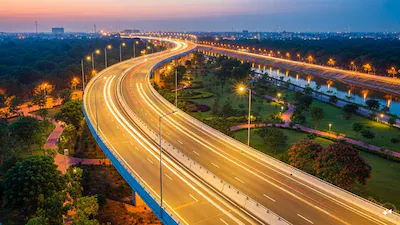
The proposed expansion of the Indore metropolitan region to include Ujjain is facing delays, raising concerns over coordinated urban planning and the pace of regional development in central India. The plan, aimed at creating a larger integrated urban zone, is yet to move forward due to administrative and planning hurdles, even as both cities continue to grow independently. The Indore metropolitan region expansion is envisioned as a strategic step to manage urban sprawl, improve infrastructure alignment, and unlock economic synergies between Indore’s commercial base and Ujjain’s cultural and tourism-driven economy.
However, delays in approvals and coordination between multiple agencies have slowed progress, leaving the proposal in a prolonged state of uncertainty. Urban planners argue that such regional frameworks are critical as cities expand beyond municipal boundaries. Without integrated governance, infrastructure development often becomes fragmented—resulting in mismatched transport systems, uneven land use patterns, and inefficient service delivery. In the case of the Indore metropolitan region expansion, the absence of a unified planning authority is seen as a key bottleneck. The delay also has implications for real estate and investment. Developers and businesses typically rely on clear regional plans to guide long-term decisions on land acquisition, housing, and industrial projects. Uncertainty around the expansion can slow private investment and limit the potential for planned urban growth across the Indore-Ujjain corridor. From a sustainability perspective, the integration of neighbouring urban centres offers an opportunity to design climate-resilient infrastructure at scale. Coordinated transport networks, shared water management systems, and regional green buffers can help reduce environmental stress. Experts note that without such planning, rapid urbanisation risks exacerbating congestion, pollution, and resource depletion. Residents in peri-urban areas between the two cities are particularly affected by the lack of clarity. These zones often experience rapid but unregulated development, with limited access to basic services such as water supply, waste management, and public transport. A well-executed Indore metropolitan region expansion could bring these areas under structured planning frameworks, improving both liveability and governance. Officials suggest that technical evaluations and administrative processes are ongoing, but timelines remain uncertain. Analysts point out that delays in such projects are not uncommon, often arising from land-use complexities, institutional overlaps, and funding considerations. However, prolonged inaction can increase costs and reduce the eventual effectiveness of the plan.
As Indore and Ujjain continue to expand, the need for a cohesive regional strategy is becoming more urgent. The future of the Indore metropolitan region expansion will depend on how quickly authorities can align policies, streamline decision-making, and prioritise long-term urban resilience over short-term administrative constraints.
ALSO READ – Indore University Rebuild Focuses On Future Ready Research
Indore Metropolitan Region Expansion Faces Planning Delays
