


India’s crude oil imports reportedly reached a record level in September even as global fuel markets faced supply disruptions, higher prices and rising geopolitical tension. The increase offers short-term support to fuel availability, but the import pattern also exposes how strongly India’s transport system and urban economy remain tied to overseas suppliers.
According to a report by Aaj Tak Business, India imported crude at an average rate of 5.26 million barrels per day in September. The report, citing Kpler data, said supplies from major Gulf producers increased sharply during the month. Russia remained the largest supplier, while Iraq, Saudi Arabia, the United Arab Emirates, Kuwait, Oman and Qatar together accounted for 39% of India’s total crude imports.
The numbers point to two simultaneous developments. India was able to secure larger volumes at a time when the international oil market was under pressure. At the same time, a substantial share of the country’s supply continued to come through a concentrated group of Gulf producers. That combination strengthens immediate supply security but leaves the cost and reliability of fuel exposed to events beyond India’s control.
The September import figure is significant because crude oil is not an isolated industrial input. It feeds the country’s entire mobility system, including private vehicles, buses, freight transport, construction equipment and industrial logistics. Any sustained movement in international crude prices can therefore affect the cost of moving people, food, building materials and consumer goods through cities.
The Aaj Tak Business report linked the higher supply to wider disruption in global fuel markets. It said fuel prices in the United States had reached record levels, China had restricted fuel exports and tensions around the Strait of Hormuz had intensified. It also reported that crude oil prices had moved above $100 a barrel. These claims are presented in the source report and are important to the analysis because they describe the external conditions under which India increased its purchases.
Kpler’s supplier-level figures cited by the report show the scale of India’s sourcing pattern. Russia supplied 1.872 million barrels of crude per day, according to the report. Iraq supplied 525,000 barrels per day, followed by Saudi Arabia at 517,000 barrels, the United Arab Emirates at 438,000 barrels and Kuwait at 335,000 barrels. The report also listed the United States, Venezuela, Nigeria and Oman among India’s suppliers.
The distribution matters more than any single monthly record. A large import volume can reduce the risk of immediate shortages, but it does not remove exposure to international prices. India still has to purchase crude in global markets, transport it across long maritime routes and refine it before distributing petrol, diesel and other products. The country’s ability to buy more oil is therefore not the same as insulation from an international price shock.
The data also show why supplier diversification has become a central part of India’s energy strategy. The presence of Russia, Gulf producers, the United States, Venezuela and Nigeria gives refiners access to multiple origins. Diversification can help refiners respond when one route becomes more expensive or difficult to use. However, the figures cited by Kpler also show that the Gulf remains structurally important, with six Gulf countries accounting for 39% of total crude imports in September.
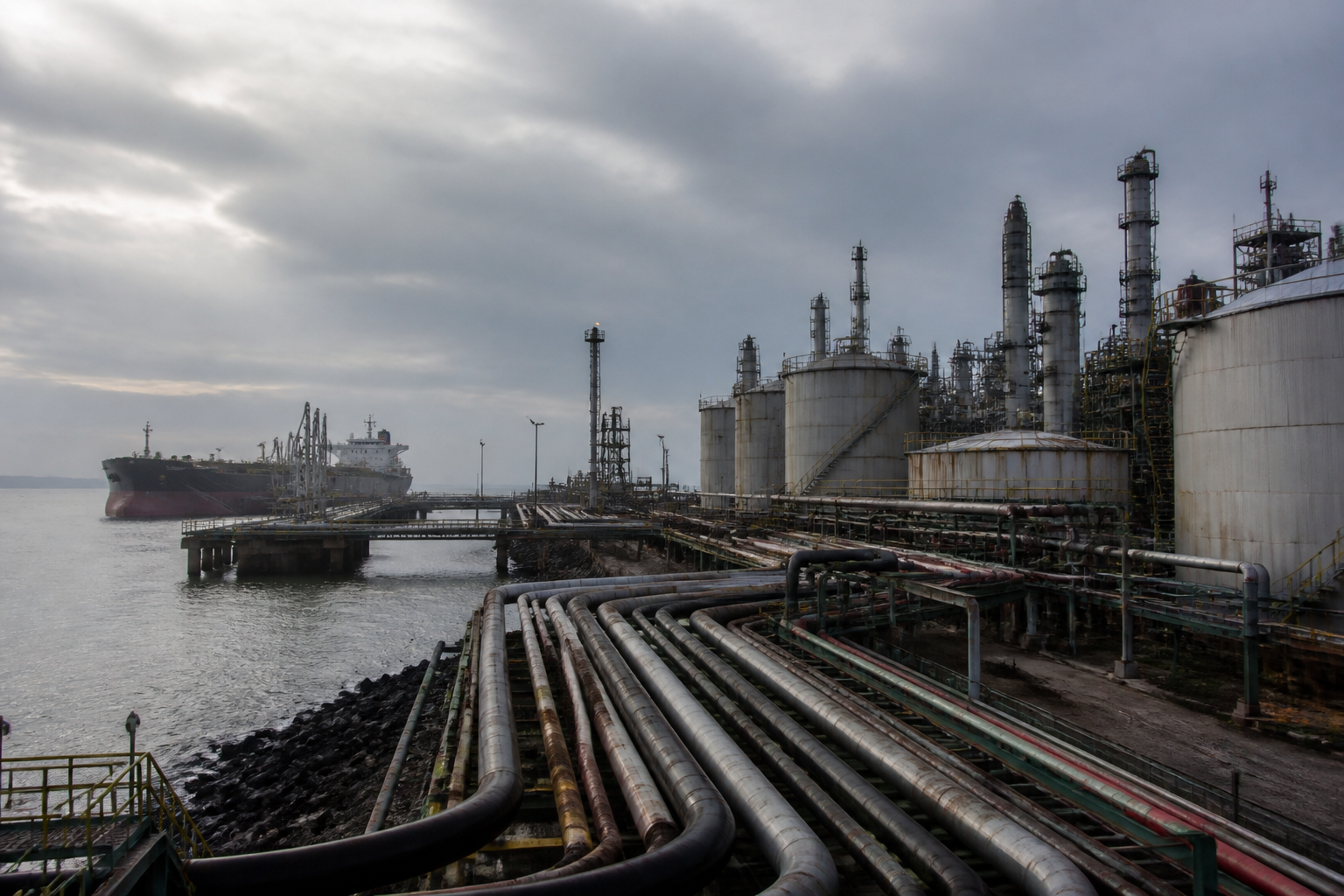
That dependence has a direct geographical dimension. Much of India’s refining capacity and import infrastructure is located along the coast, where crude arrives through ports and is transferred to refineries, storage facilities and distribution networks. From there, refined products travel inland by pipelines, rail, road tankers and other logistics systems. A disruption at sea can therefore move through the infrastructure chain before it becomes visible to consumers at a fuel station.
For cities, the most immediate connection is transport. Urban residents experience crude price changes through petrol and diesel, but the impact extends beyond the price displayed at a pump. Bus operators, delivery companies, taxis, auto-rickshaws, construction contractors and municipal service providers all depend on fuel or on goods transported using fuel-intensive systems. Higher operating costs can affect fares, delivery charges, construction budgets and the price of essential commodities.
Diesel exposure is especially important for the built environment. Construction sites use diesel-powered machinery, generators and transport vehicles. Trucks move cement, steel, aggregates, tiles and other materials between factories, ports, warehouses and project sites. If fuel prices remain elevated, the pressure may appear in project logistics and operating costs even when the original price increase occurs in an international commodity market.
The same transmission applies to public services. Urban bus fleets, waste collection vehicles, water tankers, emergency services and backup generators may face higher operating costs when diesel prices rise. The extent of the impact depends on how fuel prices are passed through contracts, subsidies, municipal budgets and fares. The supplied report does not provide details on these mechanisms, but the import data underline the exposure of these systems to energy-market movements.
The source report said experts had warned that crude prices remaining above $100 a barrel for a prolonged period could eventually push up petrol and diesel prices in India and add to inflationary pressure. No individual experts were named in the supplied material, so that warning should be treated as an attributed but unquantified assessment rather than a verified forecast.
This distinction is important. A record import month does not automatically mean lower fuel prices. Import volumes and retail prices are related through several intervening factors, including the price paid for crude, refinery margins, exchange rates, taxes, freight costs and the pricing decisions of oil marketing companies. The source material establishes the reported increase in imports and the supplier pattern, but it does not establish how much of the international price movement will be passed on to Indian consumers.
The report also describes a wider geopolitical shift affecting oil flows. It said that after conflict between Iran and the United States began in February, Russia became India’s largest supplier and Iraq emerged as the second-largest supplier. The wording and geopolitical description in the source are not independently documented in the supplied material, but the supplier figures separately cited from Kpler identify Russia as the largest source and Iraq as a major supplier.
For policymakers, the central challenge is therefore not simply securing a high volume of crude. It is managing the relationship between import dependence, strategic storage, refinery flexibility and the final cost of energy. Import diversification can improve resilience, but it must be supported by ports, pipelines, storage facilities, refining capacity and transport links capable of handling changing supply routes.
India’s urban growth makes this question more urgent. Cities are expanding their road networks, housing construction, logistics systems and mobility services. Even as public transport and electric mobility develop, petrol and diesel continue to support a large part of daily urban movement and construction activity. A change in crude prices can therefore affect both household budgets and the cost of building and operating cities.
The September data also reveal the limits of viewing energy security only through the lens of availability. India appears to have secured record crude supplies during a period of international stress, which is a positive sign for physical supply continuity. But the same figures show continued dependence on maritime imports and a relatively concentrated set of exporting regions. Security of supply and affordability are connected, but they are not identical outcomes.
What the available evidence confirms is that India increased crude purchases to a reported record monthly rate of 5.26 million barrels per day, with Russia and Gulf producers accounting for a major share of supply. What remains uncertain is the duration of the trend, the precise effect of elevated crude prices on domestic fuel rates and the extent to which higher energy costs will reach transport, construction and municipal services.
The next developments to monitor are crude prices, the stability of Gulf shipping routes, the monthly origin of India’s imports and any change in petrol and diesel prices. Together, those indicators will show whether September’s record imports represented a temporary response to market stress or part of a longer-term restructuring of India’s energy supply network.
