


Indian refiners’ Russian crude trade is expanding in a form that exposes the limits of sanctions designed around the origin of finished fuel rather than the refinery that processed it. Refineries in India, Turkiye and Brunei shipped oil products worth 1 billion euros to countries imposing sanctions in September, a 43 per cent increase from August, according to the Centre for Research on Energy and Clean Air (CREA).
The figures point to a complex re-routing of energy trade rather than a simple rise in Indian crude consumption. India’s Russian crude imports fell 13 per cent in September, yet refineries operating with Russian feedstock continued to send substantial volumes of fuel to markets in the European Union, the United States, Australia and New Zealand. The central question is therefore not only how much Russian crude India buys, but how sanctions treat products after that crude has passed through a refinery.
The distinction matters because refining transforms the physical product while leaving the commercial and regulatory question of origin contested. The European Union banned imports of oil products refined from Russian crude in January 2026. However, the ban exempts net crude exporters. CREA argues that this exemption leaves a gap because a country’s net-exporter status does not prevent individual refineries within that country from processing Russian-origin crude.
The report recommends applying the restriction at the refinery level. Under that approach, oil products from any plant that had processed Russian crude during the previous six months would be barred, regardless of the declared origin of the specific cargo. This is a recommendation from an advocacy group, not an adopted policy, but it identifies the administrative problem at the heart of the trade: the difficulty of linking a finished fuel cargo to the crude feedstock used months earlier.
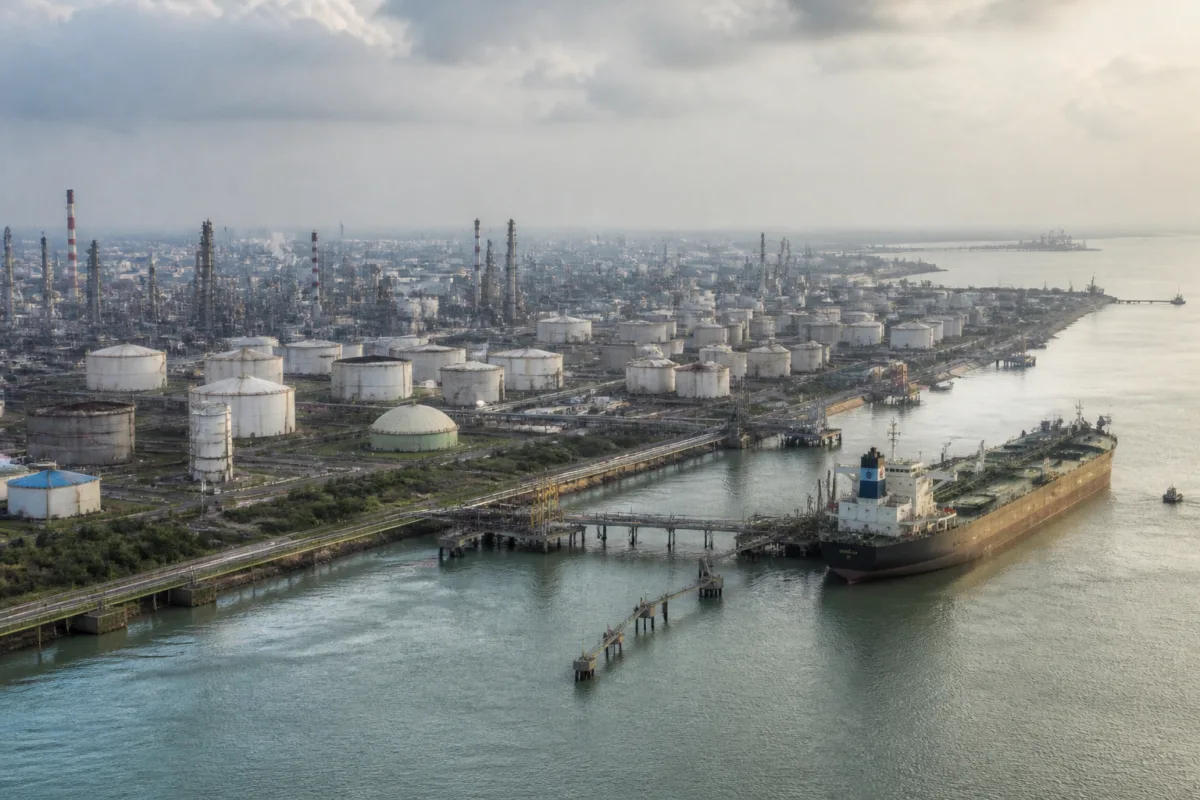
India’s refinery network sits at the centre of this issue. Reliance Industries’ Jamnagar refinery in Gujarat supplied six of the seven cargoes unloaded at European Union ports in September, CREA said. The refinery also supplied the group’s largest United States-bound exports, valued at 122 million euros. Russian crude accounted for 32 per cent of Jamnagar’s imports between July and September.
The EU received oil products worth 667 million euros from refineries in India, Turkiye and Brunei that process Russian crude. Australia received products worth 168 million euros, the United States 154 million euros and New Zealand 19 million euros. For the EU-bound shipments, Italy received three of the seven cargoes, Romania received two, and Spain and Cyprus received one each.
The value of exports destined for EU ports from refineries running on Russian crude rose 80 per cent, according to CREA. That figure included a 104,000-tonne gasoil cargo from Jamnagar that was still travelling to Rotterdam. The cargo illustrates the way sanctions enforcement must operate across multiple points: the refinery, the shipping route, the declared destination and the rules governing the receiving market.
At the same time, the volume of Russian crude entering India declined. CREA said imports fell for the second consecutive month and reached their lowest level since April. Intake dropped at India’s three largest Russian-crude-importing refineries: Jamnagar by 27 per cent, Indian Oil Corporation’s Paradip refinery by 21 per cent and Nayara Energy’s Vadinar refinery by 8 per cent.
Vadinar nevertheless overtook Jamnagar as India’s largest importer of Russian crude in September. The change shows why monthly national import figures do not fully explain how the market is being reorganised. A decline in total imports can coexist with shifts between individual facilities, changing cargo flows and continued exports of refined products to sanctioning countries.
Smaller installations also mostly reduced their intake. The HMEL Mundra Oil Terminal cut imports by 74 per cent month on month, while the Kochi refinery reduced them by 32 per cent. The main exception was Indian Oil Corporation’s Mundra Oil Terminal, which received 570,000 tonnes of Russian crude in September after receiving none in August.
India remained Russia’s second-largest fossil-fuel customer in September, buying 4.1 billion euros of Russian hydrocarbons, CREA said. Crude oil accounted for 88 per cent of that total, at 3.6 billion euros. Coal accounted for 309 million euros and oil products for 161 million euros. Only China bought more Russian fossil fuels during the month.
Since December 2022, India has taken 37 per cent of Russia’s crude exports, compared with China’s 50 per cent, according to the report. Before Russia’s invasion of Ukraine in 2022, India was a marginal buyer of Russian oil. Its position changed after Western buyers retreated and Russian crude became available at steep discounts.
The price difference remains an important part of the trade’s economics. Urals crude averaged 90.7 US dollars a barrel in September but remained 23 dollars below Brent, unchanged from August. The discount creates an incentive for refiners to continue assessing Russian crude as part of their feedstock mix, even as the compliance environment becomes more restrictive in some markets.
Kpler analysts attributed part of the September fall in Indian volumes to tighter supply and stronger Chinese competition for Russian barrels, rather than only to pressure from the United States. They expect India’s October imports to remain between 1.8 million and 1.9 million barrels per day. That estimate, as reported in the source material, indicates that India’s role in the trade is not disappearing even if the composition and distribution of imports are changing.
The institutional challenge is that sanctions are being applied to a supply chain that is organised across jurisdictions. Russian crude may be purchased by an Indian refinery, converted into diesel or another petroleum product, and shipped to a market where imports of products made from Russian crude are restricted. Each transaction can have a different legal and commercial identity, while the physical transformation makes the original feedstock less visible in the final cargo.
That creates a governance problem for regulators and customs authorities. A rule based only on the declared origin of a finished product may not capture the origin of the crude used to make it. A refinery-level rule, such as the one proposed by CREA, would make the plant’s recent processing history a central compliance factor. It could also make enforcement more administratively demanding because authorities would need reliable records of crude intake and a defined look-back period.
The available evidence does not establish that the EU or other sanctioning countries have adopted CREA’s recommendation. Nor does it show that any specific cargo breached a final legal determination. What it does establish is a sharp increase in the value of oil products shipped by refineries processing Russian crude, alongside continued imports of Russian hydrocarbons by India and a policy debate over how refined-product restrictions should be enforced.
For Indian cities and the wider built environment, the issue is indirect but important. Refineries are major industrial infrastructure nodes whose operations connect ports, storage terminals, pipelines, shipping routes, manufacturing activity and public revenues. Changes in the source and price of crude can affect how these assets are used, while changes in sanctions rules can alter cargo destinations and the commercial value of refinery capacity.
The September data also show why energy infrastructure cannot be understood only through national import totals. Jamnagar, Vadinar, Paradip, Mundra and Kochi recorded different movements in Russian-crude intake. Those facility-level changes shape port utilisation, tanker movements, storage demand and the export profile of refined products. The distribution of activity across refineries is therefore as significant as the headline decline in India’s total imports.
The evidence points to a market balancing three forces: discounted Russian supply, competition from China for available barrels and growing scrutiny from sanctioning countries. India’s crude imports from Russia declined in September, but the country remained the second-largest buyer of Russian fossil fuels and Indian refineries continued to supply major Western markets.
The next stage of the story will depend on whether sanctioning jurisdictions retain country-level exemptions or move towards refinery-level restrictions. It will also depend on how Indian refiners adjust their crude mix, how Russian supplies are allocated between Indian and Chinese buyers, and whether October imports remain within the 1.8 million-to-1.9 million barrels-per-day range cited by Kpler analysts. The immediate evidence confirms a continuing trade relationship; the unresolved issue is how effectively existing rules can follow crude through the refinery and into the final fuel market.

