


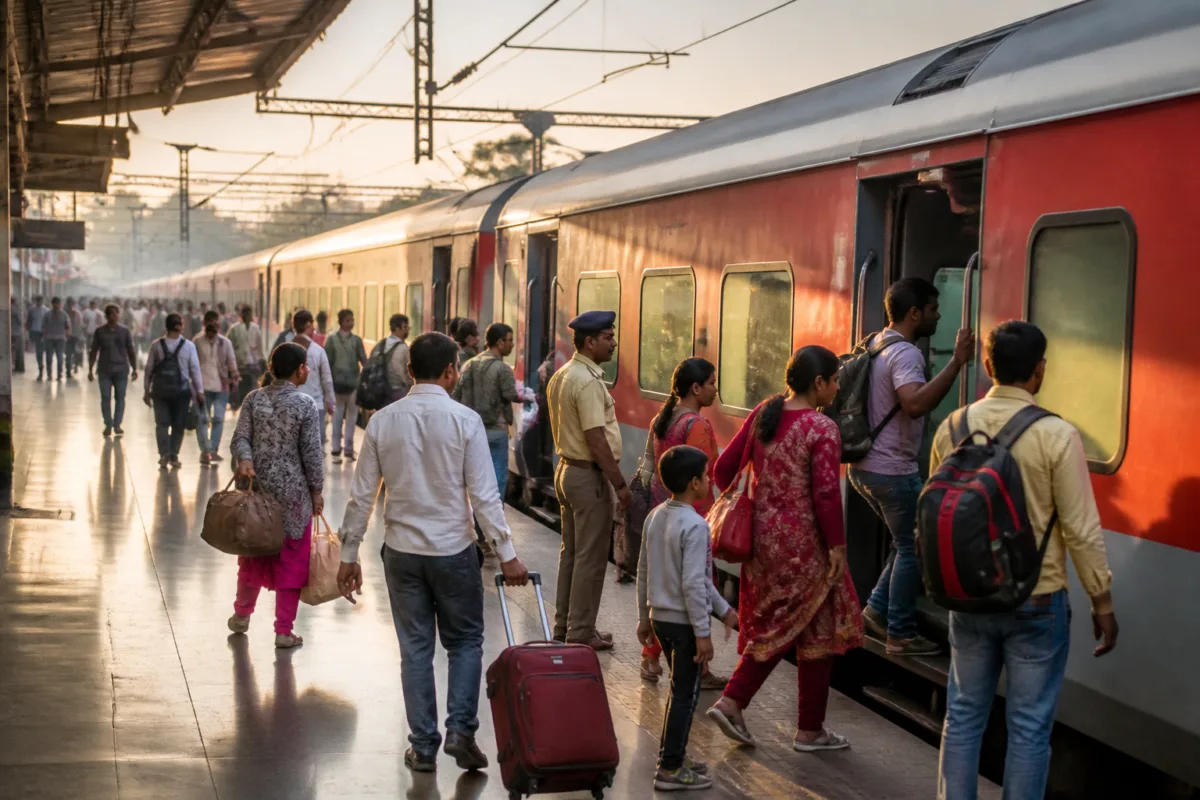
Indian Railways’ annual passenger traffic is projected to reach around 820 crore in the financial year ending March 2027, exceeding the 808.6 crore passengers recorded in 2019-20 before the Covid-19 pandemic, according to an Economic Times report citing a Times of India report.
The projection points to a sustained recovery in rail travel and rising demand for passenger services across the national network. A senior Railway Ministry official said the Railways was focusing on increasing train services and improving passenger facilities to accommodate more travellers.
The Railways has added around 2,500 passenger trains over the past five years, the official said. It also operated 18,000 additional services during the festive season, according to the report. These measures are intended to expand connectivity and provide additional capacity during periods of heavy demand.
The projected 820 crore passenger figure would be higher than the pre-pandemic benchmark by about 11.4 crore passengers. It would also mark a significant recovery from the disruption caused by Covid-19, although the report does not provide a year-by-year breakdown of passenger traffic or details on how the projected growth is distributed across routes and regions.
Indian Railways is also expecting freight movement to reach a record level as it seeks to attract more goods to the network. The report does not specify the projected freight volume or identify the infrastructure and operational measures supporting that expectation.
For passengers, the immediate significance of the projection is the pressure it places on train availability, station facilities and service capacity. The Railway Ministry’s stated emphasis on additional services and passenger amenities indicates that demand growth is being addressed through both network operations and facility improvements. However, the available report does not provide details on specific station upgrades, new routes, journey-time changes or the funding behind these measures.
The projected figure remains an estimate and will be assessed against actual passenger traffic by the end of the financial year. Its significance will ultimately depend on whether capacity expansion and improvements in passenger facilities keep pace with the growth in rail travel.

