


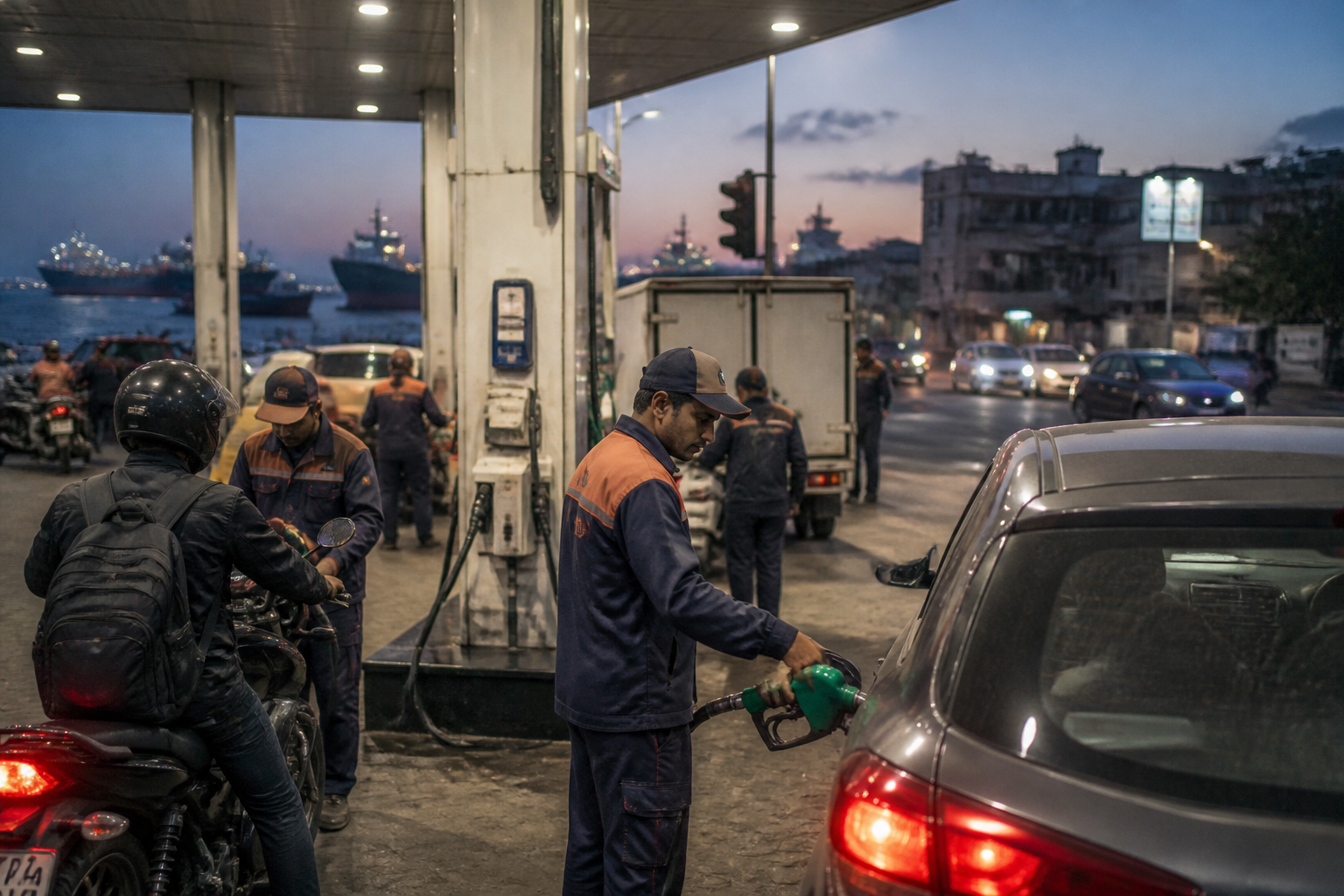
Indian oil marketing companies are losing an estimated Rs 26 on every litre of petrol and Rs 30 on every litre of diesel as the Middle East conflict pushes up crude procurement and shipping costs, according to a Jefferies report cited by the Times of India.
The estimates are based on 15-day average prices and point to a widening gap between what Indian fuel retailers pay to procure crude and what they recover through domestic fuel sales. Jefferies said the procurement cost for Indian OMCs was comparable to an Indian crude basket price of US$125 per barrel.
The report, titled “Energy Market Letter: Volume XXII”, said the steep losses were being driven not only by higher crude prices but also by a sharp rise in freight costs. Shipping costs have increased eightfold since the conflict began and now account for more than a quarter of the landed cost of crude oil imported into India, compared with 3% before the war.
Freight rates rose by a further 8% over the past week, according to Jefferies, adding to the cost of transporting crude to India. The increase is particularly significant for an import-dependent market, where the delivered cost of crude includes both the price of the commodity and the expense of moving it through disrupted shipping routes.
The pressure on Indian fuel retailers has intensified after a fresh disruption to crude shipments from the Middle East. Excluding Iran, oil flows from the region have fallen to around 75% of pre-war levels, compared with approximately 95% at the end of September, the report said. Jefferies attributed the decline to heightened attacks in the Gulf of Oman.
The disruption reverses the recovery in regional oil shipments recorded towards the end of September and leaves importing countries such as India exposed to higher supply and transportation costs. For urban India, where petrol and diesel underpin private vehicle travel, commercial transport and several goods-delivery networks, sustained pressure on fuel marketing margins could increase the economic strain associated with moving people and goods. The supplied report does not state whether domestic pump prices will be revised or how individual OMCs will respond.
Jefferies said refining margins remain elevated, but that benefit is being offset on the fuel-marketing side by the higher cost of crude procurement. The situation means that profitability from refining operations is not fully protecting OMCs from losses incurred when selling petrol and diesel.
The immediate risk identified in the report is therefore linked to the combined effect of crude prices, freight rates and supply-route disruptions. Continued disruption to Middle Eastern shipments could keep marketing margins under pressure even if refining margins remain strong. The next developments to watch are changes in regional oil flows, freight rates and the pricing decisions of Indian fuel retailers.

