


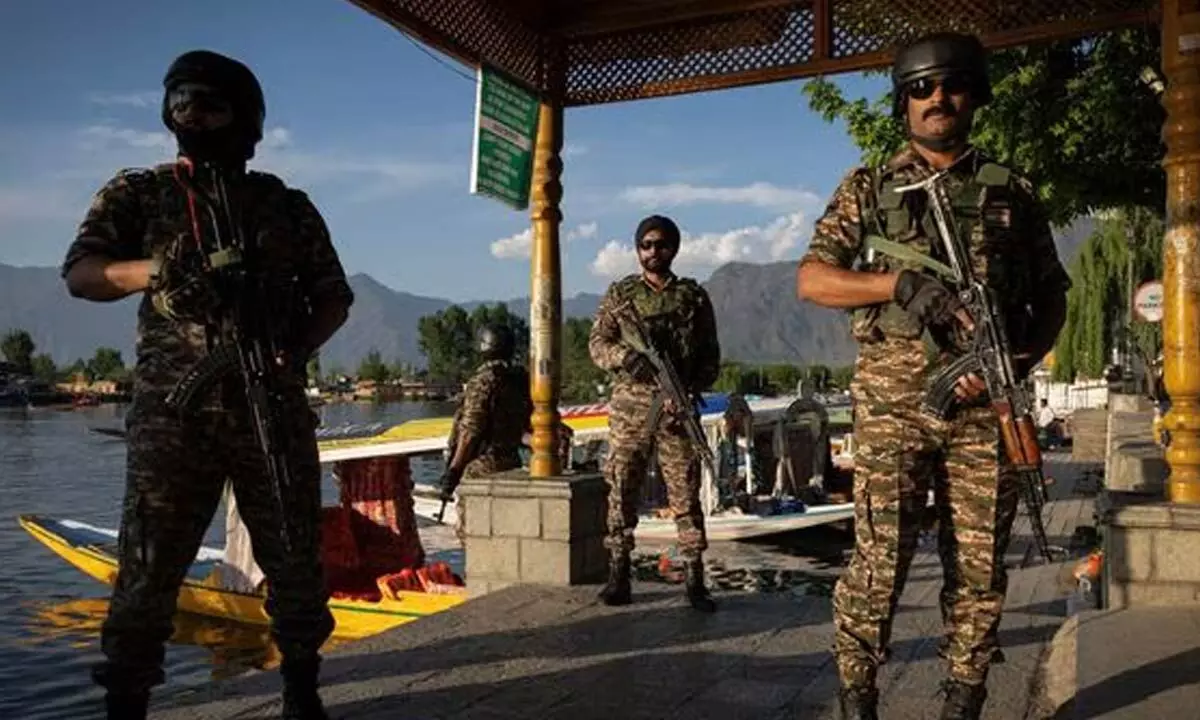
In the wake of the deadly Pahalgam attack, India has firmly communicated to international allies, including the United States, that its military response to terror camps operating within Pakistani territory will be swift and decisive.
This marked a clear escalation in the ongoing tensions between the two neighbouring countries. The incident in Pahalgam on April 22 has significantly altered the security landscape, prompting India to take a more assertive stance regarding cross-border terrorism emanating from Pakistan. Government sources confirmed that following the launch of Operation Sindoor on May 7, India made it unequivocally clear to global capitals that it would not hesitate to take further punitive action should Pakistan continue its provocations.
Prime Minister Modi’s direct conversation with US officials, including Vice President JD Vance, on May 9, further underlined India’s commitment to a forceful response. Sources within the government disclosed that Modi reassured international interlocutors, stating, “If the Pakistanis do anything, they will receive a response more forceful, stronger, and more devastating than anything they do. They need to understand this.” Operation Sindoor, which commenced in the first week of May, served as a clear and unmistakable message to Pakistan. Indian officials stated that the operation was designed not only to neutralise immediate threats but also to signal to Pakistan that India was prepared to go deeper into Pakistani territory if necessary. The operation’s strategic objectives included taking down key military installations within Pakistan’s borders, with the aim of crippling its ability to support terror groups operating in Indian territory.
The Indian armed forces conducted precision strikes on eight critical Pakistani military sites, including air defence systems, radar sites, and command centres. The targeted installations, located in strategic regions such as Rafiqui, Murid, and Chaklala, were significant due to their role in supporting military operations against India. The precise targeting of such facilities resulted in widespread damage, forcing Pakistan to appeal for an end to hostilities. Despite the severity of India’s military response, Pakistan attempted to retaliate by launching an attack on 26 Indian targets, including air force stations in Udhampur, Pathankot, and Adampur, on the night of May 9. However, the Pakistani military’s actions were met with swift counter-strikes by the Indian armed forces, which targeted key military installations in regions such as Sukkur, Rahim Yar Khan, and Chunian.
Sources revealed that radar sites at Pasrur and Sialkot aviation bases were among the key targets of the Indian precision strikes. The retaliatory measures were designed to disrupt Pakistan’s military capabilities and send a strong message that India would not tolerate further threats emanating from across the border. In the aftermath of the military strikes, India engaged in diplomatic efforts to clarify its position. The Pakistani Director General of Military Operations (DGMO) initiated communication with his Indian counterpart to explore the possibility of de-escalating the situation. This dialogue led to a joint statement from both nations, announcing a cessation of military actions on land, air, and sea, effective immediately. This agreement, while significant, marked only a temporary pause in the ongoing conflict.
Meanwhile, the US played a pivotal role in brokering diplomatic channels between India and Pakistan. According to government sources, US Secretary of State Marco Rubio reached out to India’s Foreign Minister to express that Pakistan was open to discussions and willing to de-escalate tensions. This diplomatic intervention came after India’s strikes had forced Pakistan to reconsider its position, with Islamabad seeking a peaceful resolution to avoid further military confrontations. The international community, particularly the United States, has been closely monitoring the situation, given the potential for the conflict to escalate further. However, India has made it clear that its response will depend on Pakistan’s future actions. Official statements reiterated that while India remains open to dialogue, any further attacks on Indian soil would trigger an even more forceful military response.
India’s messaging to both Pakistan and global stakeholders has been consistent and resolute. Indian officials have conveyed that they will not tolerate what they deem as “even-handedness” in the response to terrorism. “We cannot equate the victim and the perpetrator,” one senior official stated, highlighting India’s dissatisfaction with international calls for neutrality in the face of cross-border terrorism. Operation Sindoor is not just a military response but a calculated effort to alter the strategic balance in the region. India has made it clear that it will continue to target terror infrastructure wherever it exists, whether within Pakistan’s borders or beyond. By sending its forces deep into Pakistani territory, India is signalling to terror groups that “no place is safe” for them.
The use of precision weapons and advanced missile systems in the operation demonstrated India’s capability to strike vital targets with remarkable accuracy, further reinforcing the country’s military readiness. This shift towards more robust, preemptive action underscores the increasing volatility of the situation and the growing concern over the sustainability of peace in the region. As tensions between India and Pakistan continue to escalate, the situation remains fragile. Both nations, armed with nuclear capabilities, have the potential to cause widespread devastation should the conflict spiral further out of control. While the recent diplomatic engagements have momentarily eased hostilities, the underlying issues of cross-border terrorism and territorial disputes continue to plague the region.
The international community now watches closely, with hopes that further diplomatic efforts can prevent the conflict from escalating into a full-scale war. However, India’s resolve to protect its sovereignty and counter terrorism from within Pakistan remains unwavering. As the situation evolves, the world must be prepared for the possibility that the region’s stability is increasingly in jeopardy. India has made it clear that its military response will continue to be as forceful as necessary to defend its borders and citizens.
Also Read : BLA Targets Security Infrastructure in 39 Balochistan Strikes
