


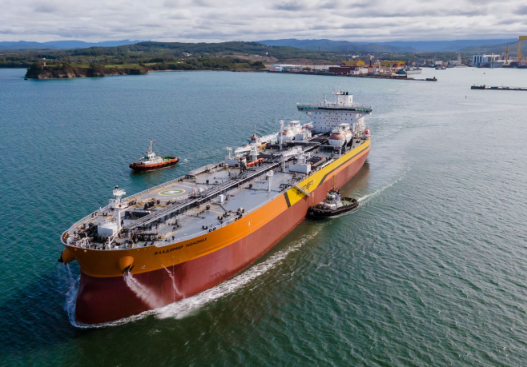
In April, India and Egypt emerged as the primary destinations for Russian seaborne fuel oil and vacuum gasoil (VGO) exports, despite an overall decline in shipments.
Data from LSEG revealed that total exports fell by 10% month-on-month to approximately 3.32 million tons due to maintenance, technical outages, and drone attacks impacting Russian refining capacity. The European Union’s comprehensive embargo on Russian oil products, which came into effect in February 2023, has significantly redirected Russian fuel oil and VGO exports towards Asia. In April 2024, direct shipments from Russian ports to India increased to 0.6 million metric tons, up from 0.4 million tons in March. Conversely, exports to China decreased to about 450,000 tons, down from 660,000 tons in the previous month. These shifts reflect the evolving trade routes as Asian markets become increasingly vital for Russian fuel exports. Fuel oil supplies to Egypt saw a substantial rise in April, climbing to nearly 0.5 million tons from 0.1 million tons in March.
All cargoes were discharged at the Ain Sukhna Terminal, which traders utilise as storage and blending facilities. This increase is linked to Egypt’s preparation for higher power generation demands during the summer season. According to LSEG data, at least 200,000 tons of fuel oil had been loaded in Russian ports so far in May for delivery to Ain Sukhna Terminal. Russian VGO and fuel oil shipments to Fujairah also surged in April, reaching around 260,000 tons, a significant increase from 60,000 tons in March. Conversely, exports to Senegal and Saudi Arabia saw notable declines. Supplies to Senegal fell to about 100,000 tons from 310,000 tons, while loadings to Saudi Arabia decreased to 200,000 tons from 490,000 tons. Approximately 300,000 tons of VGO and fuel oil loaded in Russian ports in April were destined for ship-to-ship transfers near Greece and Malta. Most of these cargoes are expected to end up in Asia, highlighting the region’s growing importance as a market for Russian fuel exports.
Traders have adapted to changing market conditions by using Suezmax and Aframax tankers, typically reserved for crude oil, to transport refined products like diesel. This shift was driven by soaring freight rates for long-range tankers following geopolitical tensions, including Houthi attacks on ships in the Red Sea, which lengthened voyage times and tightened vessel availability.
The realignment of Russian fuel oil and VGO exports underscores the strategic adjustments necessitated by global market dynamics and regional embargoes. As Asia becomes an increasingly pivotal market for Russian fuel exports, India and Egypt’s roles as key importers are expected to grow, influencing trade patterns and pricing structures in the global energy sector.
