


IKEA plans to double its production in India over the next five years, while expanding from textiles, plastics and metal products into wooden furniture, according to the company’s Global Supply Manager Susanne Waidzunas in an interview with PTI reported by Moneycontrol.
The move could deepen India’s role in IKEA’s global manufacturing network, particularly in furniture categories that depend on wood, components, supplier capacity and logistics. Around 95% of the products IKEA currently sources and produces in India are exported, Waidzunas said. The company works with about 70 production partners in the country and sources products worth approximately €400 million annually.
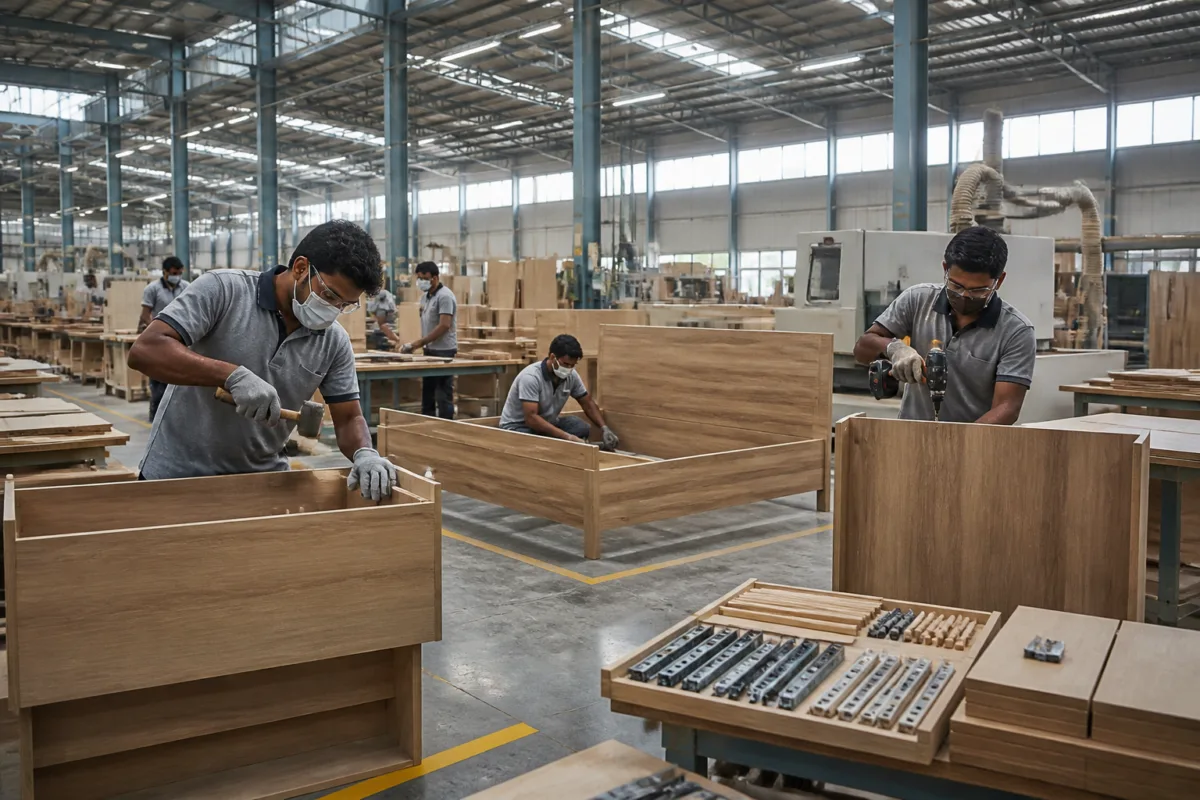
Wooden furniture is a major area of potential expansion. Waidzunas said the category represents about 40% of IKEA’s global sales, and that the company has begun developing Indian manufacturing capabilities for bedroom collections, including bed frames, wardrobes and chests of drawers. IKEA has also introduced coffee tables made from solid mango wood, while bamboo products could eventually expand from smaller items such as chopping boards into furniture, she said.
The company is also examining whether work-chair production can be shifted from China to India. It is considering Indian sourcing for height-adjustable tables and float-glass articles for its office furniture range. These plans remain under consideration, and the report does not specify a confirmed production start date, factory location or investment amount.
For India’s furniture and building-product ecosystem, the proposed shift matters because IKEA is seeking to localise more than assembly. Waidzunas said the company wanted to develop a complete local supply chain, while also seeking temporary support to import certain components, including hinges, during the transition to domestic manufacturing.
She identified raw-material access as a central condition for expansion. Raw materials account for approximately 50-70% of a product’s cost, according to Waidzunas, making the availability of competitively priced inputs important to the viability of local production. Wood procurement is a particular focus: IKEA wants wood from Forest Stewardship Council-certified forests or responsibly managed forests and is in dialogue with the government on the issue, she said.
The company’s approach links furniture manufacturing with forest management, processing capacity and supplier development. Waidzunas cited IKEA’s European operations, where vertical integration from forests and sawmills to board manufacturing and furniture production has helped create what she described as resilient, sustainable and low-cost supply chains. The report does not establish that an equivalent integrated chain currently exists in India.
IKEA also intends to raise the share of locally sourced products for its Indian operations to as much as 50%, subject to the availability of competitive suppliers and manufacturing capabilities. The company has previously started local manufacturing in categories including mattresses, upholstery and bulky furniture. It is working with Indian suppliers on product engineering, production efficiency, transport and packaging to address cost pressures, Waidzunas said.
The localisation plan comes as Indian suppliers face inflationary pressures. According to the company, rising costs are making price reductions difficult, increasing the importance of manufacturing efficiency and transport optimisation. However, the report provides no supplier-level data on costs, capacity or employment impact.
IKEA’s India operations also include a product development centre in Bengaluru, described as its third globally. The centre brings designers, product developers and suppliers closer to factory operations and is intended to support products for both Indian and international markets. This could give Indian suppliers a greater role in product development, although the company has not disclosed how many products or suppliers will be covered.
The company currently operates seven stores in India, including four city stores and three large-format stores in Hyderabad, Navi Mumbai and Bengaluru. It is planning two more stores in Delhi-NCR. The proposed increase in local production is therefore connected to both domestic retail ambitions and exports: IKEA sources products from 55 markets and sells them in 64 markets worldwide, according to the report.
IKEA is also looking to the implementation of the India-European Union free trade agreement, which it believes could create further trade and sourcing opportunities. The report does not provide a confirmed implementation date or details of how the agreement could affect the company’s Indian manufacturing plans.
The next test for IKEA’s strategy will be whether India can provide the certified or responsibly sourced wood, processed materials, components and specialised suppliers needed for larger-scale furniture production at competitive prices. For the company, doubling production is an ambition rather than a detailed investment commitment. For India’s built-environment supply chain, the proposal highlights the importance of linking manufacturing growth with responsible material procurement, supplier capability and efficient movement of bulky products.

