


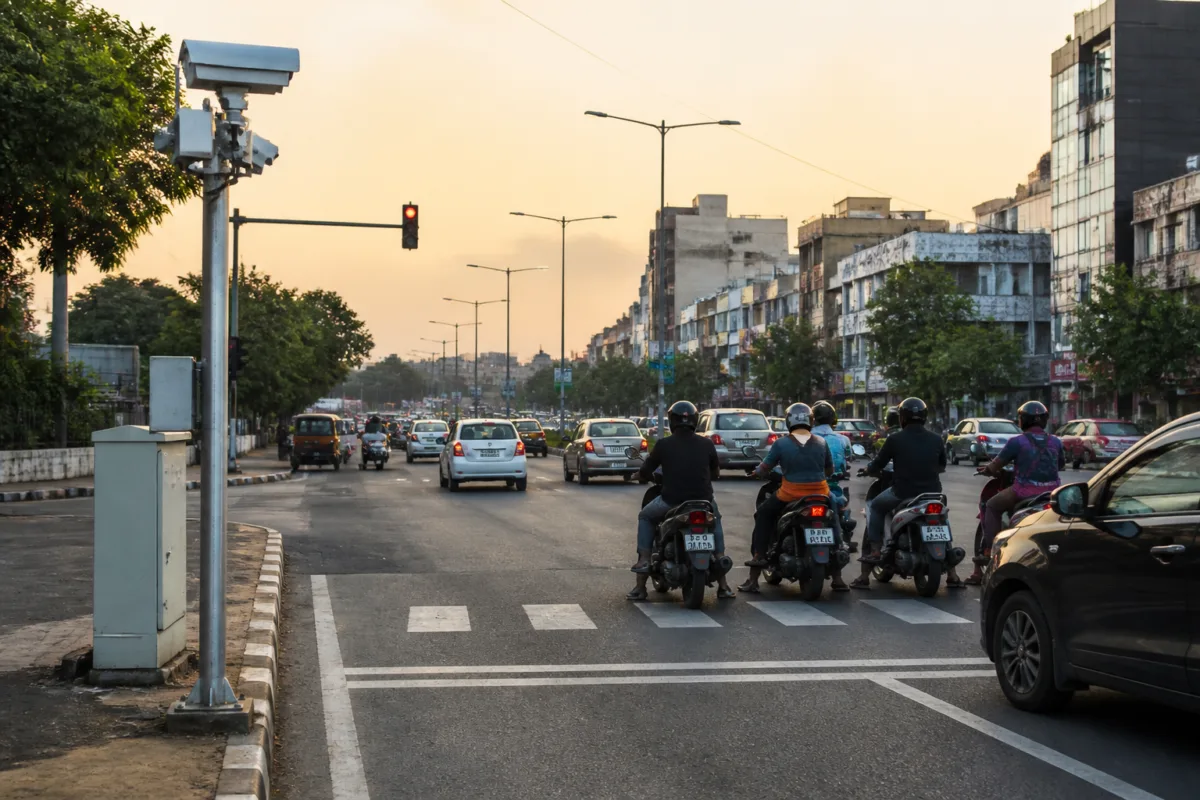
Hyderabad traffic challans are increasingly becoming a digital record of how motorists interact with the city’s road network. Camera-based enforcement means a driver may not be stopped at the location of an offence. Instead, an alleged violation can be recorded, linked to a vehicle’s registration details and communicated later through an e-challan notification.
That shift changes the relationship between motorists and traffic enforcement. The immediate roadside interaction between an officer and a driver is replaced, in many cases, by a chain of cameras, registration databases, digital records and mobile alerts. For vehicle owners, compliance is therefore no longer limited to driving carefully in front of a traffic officer. It also involves keeping registration information current, monitoring challan records and responding through official channels when a penalty appears incorrect.
The issue is particularly important because the system places the vehicle registration number at the centre of enforcement. According to the source report, images or other recorded evidence may be used to identify a vehicle and document an alleged violation. Once the violation is reviewed and confirmed, a challan may be issued against the vehicle’s registration details. The registered owner may therefore receive the penalty notification even if someone else was driving at the time.
This creates an administrative responsibility that is easy to overlook. A vehicle owner who lends a car or two-wheeler to a family member, employee or friend may still be the first person to know about a penalty. If the mobile number linked to the registration certificate is outdated, the notification may not arrive. The owner may then continue using the vehicle without knowing that a challan has been recorded.
The result is a gap between enforcement and awareness. A digital system can identify an offence without requiring an officer to stop the vehicle, but its effectiveness depends partly on whether the relevant owner can be reached and whether the record is understood. The system is therefore not only a policing tool. It is also a public-facing administrative service that depends on accurate data and clear procedures.
Everyday behaviour remains at the centre of the problem. The violations highlighted in the report are not limited to spectacular acts of reckless driving. They include crossing the stop line at a signal, allowing a pillion rider to travel without a helmet, using a mobile phone while driving, driving on the wrong side of the road, exceeding posted speed limits on the Outer Ring Road and parking in restricted areas.
These offences are closely connected to the way Hyderabad’s streets are used. Crossing a stop line can interfere with pedestrian movement and reduce order at junctions. Wrong-side driving and use of service lanes can create conflicts between vehicles travelling in opposite directions. Parking in restricted areas can reduce carriageway capacity and obstruct movement in busy commercial districts such as Ameerpet, Abids and Begum Bazaar. The individual act may appear minor, but repeated across thousands of road users it contributes to congestion and risk.
The source report also points to a specific enforcement challenge on the Outer Ring Road. Wide and open road sections can encourage motorists to treat available road space as permission to accelerate, even though posted speed limits continue to apply. Camera-based enforcement is significant in such locations because the physical appearance of a road can influence driver behaviour, while the legal and safety requirements remain tied to the applicable limit.
For two-wheeler users, the compliance burden extends beyond the driver. A pillion rider must also wear a helmet where required. The report advises riders to avoid jumping signals, travelling on footpaths and moving against the direction of traffic. These behaviours expose riders, pedestrians and other motorists to risk, and can be recorded where camera infrastructure is installed.
The administrative side of traffic enforcement is equally important. Vehicle owners are expected to keep documents such as motor insurance and pollution-under-control certificates valid. Commercial vehicles may also require valid fitness documentation. These requirements mean that traffic compliance is partly a recurring calendar exercise. A vehicle can be used daily without an obvious change in appearance, while an insurance policy, pollution certificate or fitness document quietly moves past its validity date.
This is where digital enforcement can make routine vehicle ownership more demanding. A driver may understand the road rules but still face a penalty because a document was not renewed. The source report recommends setting reminders for renewals and keeping the mobile number and address linked to the vehicle registration updated with the relevant authority. These are basic actions, but they show how enforcement increasingly depends on the quality of the information held by public agencies and vehicle owners.
Unpaid challans add another layer to the system. The report cautions motorists against assuming that outstanding penalties will automatically lapse. Depending on the status of a challan and the applicable rules, pending dues may affect vehicle-related services or transactions. Vehicle owners are therefore advised to check records rather than waiting for a later administrative complication.
The issue becomes more significant during the sale or transfer of a used vehicle. A buyer may not know whether a vehicle carries outstanding challans unless the records are checked before the purchase. The source report advises buyers and sellers to clarify responsibility for pending dues and complete the transfer through the prescribed process. This places traffic records within the wider chain of vehicle ownership, rather than treating them as a matter that ends with the original driver.
The possibility of a Lok Adalat or another officially announced settlement initiative can also affect how motorists respond to pending penalties. However, a concession is not automatic. Eligibility conditions and terms can vary, and the report advises motorists to rely only on announcements from authorised government or police channels. This is important because informal messages and social media posts can create expectations that are not supported by an official decision.
A dispute mechanism is essential in a camera-based enforcement system because the record may not always correspond to the actual circumstances. The report identifies possible reasons for a wrong challan as a misread registration number, incorrect identification or a database error. Motorists who believe a challan is incorrect should review the available evidence and use official Hyderabad Traffic Police channels to seek clarification or report the error.
That process reveals the central institutional question raised by Hyderabad’s digital enforcement model: how does a city balance automated detection with human review and accessible correction? Cameras can expand the geographical reach of enforcement, but a system that produces records must also provide a credible way to examine disputed records. The source material does not establish the scale of incorrect challans or the time taken to resolve them. It does, however, show why the dispute and communication channels matter as much as detection.
The system also shifts some responsibility from the road to the registration database. If contact details are not updated, the city’s enforcement message may not reach the person responsible for the vehicle. If ownership has changed but the transfer is incomplete, the registered owner may remain exposed to notices connected to a vehicle no longer in their possession. If a used vehicle is purchased without checking outstanding records, the buyer may inherit an administrative problem that was not considered during the transaction.
This makes accurate vehicle data part of road safety governance. Enforcement cannot be separated entirely from the systems that store registration, contact, ownership and document information. For motorists, the practical lesson is to treat registration details and challan records as active responsibilities, not paperwork that can be ignored after a vehicle is purchased.
The evidence available in the source report does not provide citywide figures for camera coverage, the number of challans issued, the proportion disputed or the value of outstanding penalties. It also does not establish whether enforcement is uniform across all parts of Hyderabad or whether particular violations dominate the city’s records. Those gaps limit what can be concluded about the overall performance of the system.
What can be established is the direction of change. Hyderabad’s traffic enforcement is described as relying increasingly on cameras and digital challans, while motorists are expected to comply with road rules, maintain vehicle documents and monitor official records. The model is designed to make enforcement less dependent on an officer being physically present at the scene, but it also makes digital communication and accurate registration data more important.
For citizens, the practical challenge is to connect daily driving behaviour with the administrative life of the vehicle. Stopping behind the line, ensuring that every two-wheeler occupant has a helmet, avoiding phone use while driving, following speed limits and respecting parking restrictions reduce the likelihood of a violation. Updating contact details, renewing documents and checking challan records reduce the likelihood that an existing issue will remain undiscovered.
For the city, the larger question is whether digital enforcement can improve road discipline while remaining transparent and correctable. The source material confirms the growing role of cameras, digital records and e-challan notifications in Hyderabad. It does not establish the system’s error rate, resolution performance or broader safety outcomes. Those are the indicators that deserve attention as enforcement becomes more technology-led.

