


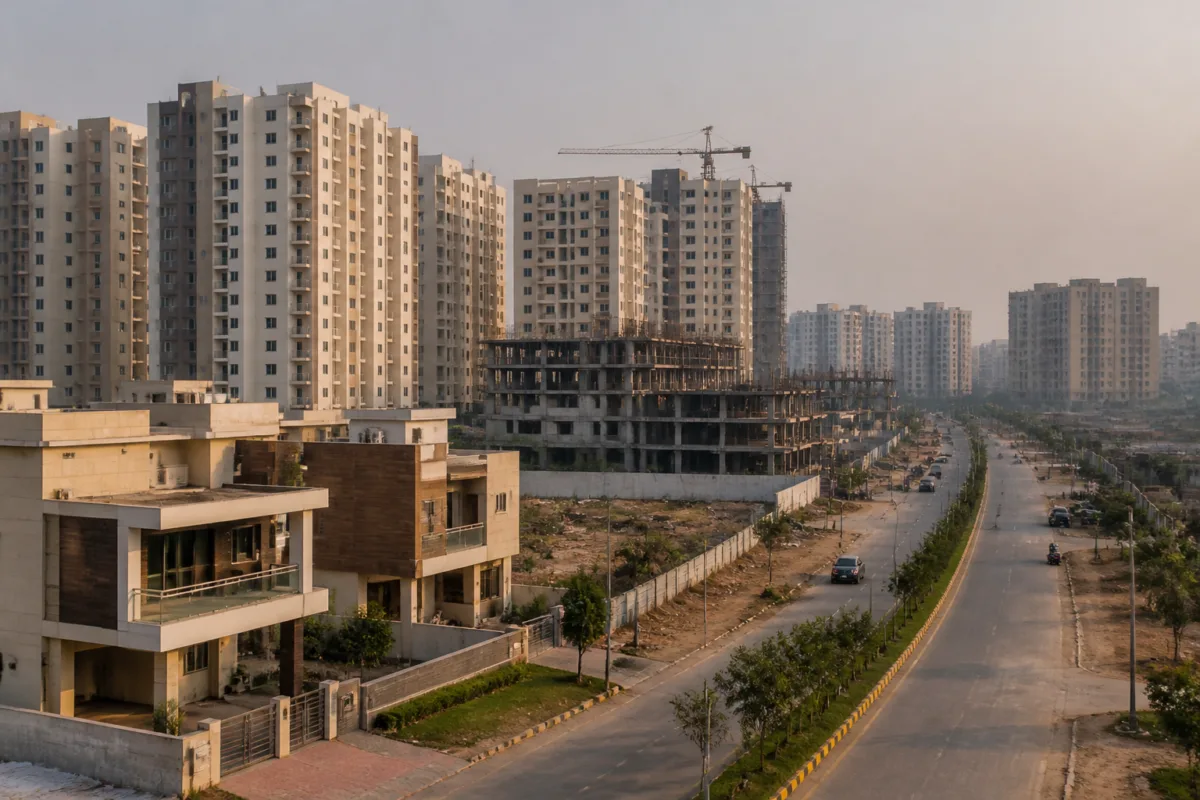
Hyderabad home prices rose 10.5 per cent between July-September 2025 and the same quarter in 2026, even as residential sales declined and properties took longer to clear, according to data cited from CRE Matrix and CREDAI.
The average value of a home in the city increased from Rs 1.94 crore to Rs 2.15 crore over the period — a rise of about Rs 21 lakh. Among major metros, only Chennai recorded a larger increase in average home value in rupee terms, at Rs 25 lakh. Bengaluru followed Hyderabad, with average prices rising by Rs 19 lakh, the report said.
The increase adds to the financial burden on prospective buyers, particularly those purchasing with housing loans. A higher property price can raise the upfront contribution required from a buyer as well as the size of the loan needed, although the report does not provide data on mortgage rates, household incomes or the distribution of prices across different parts of Hyderabad.
Builders and other industry participants cited rising land costs as the main factor behind the increase. They also attributed additional pressure to the Iran-US war, saying it had made logistics and transport more expensive. These explanations are industry claims reported by Siasat and are not separately quantified in the available data.
At the same time, Hyderabad recorded 13,270 home sales in July-September 2026, down 13.5 per cent from 15,349 units in the corresponding quarter of 2025, according to CRE Matrix’s India Residential Market Snapshot. The report also said that homes were staying on the market for longer. At the current sales pace, the city would require about 10.6 quarters to clear its unsold housing stock, compared with 7.9 quarters a year earlier.
The combination of rising prices and slower sales points to a more cautious housing market. Buyers appear to be facing higher asking values while taking longer to commit, while developers are operating in a market where inventory is moving more slowly. The available report does not establish whether the slowdown is concentrated in particular price segments, locations or project types.
For Hyderabad’s housing market, the figures highlight a widening tension between property valuations and near-term purchasing capacity. Prices have continued to rise, but the fall in transactions and increase in the estimated time needed to absorb unsold homes indicate that demand has not kept pace with the increase in average home values. Further segment-level data would be needed to determine how the trend is affecting affordable, mid-income and premium housing separately.

