


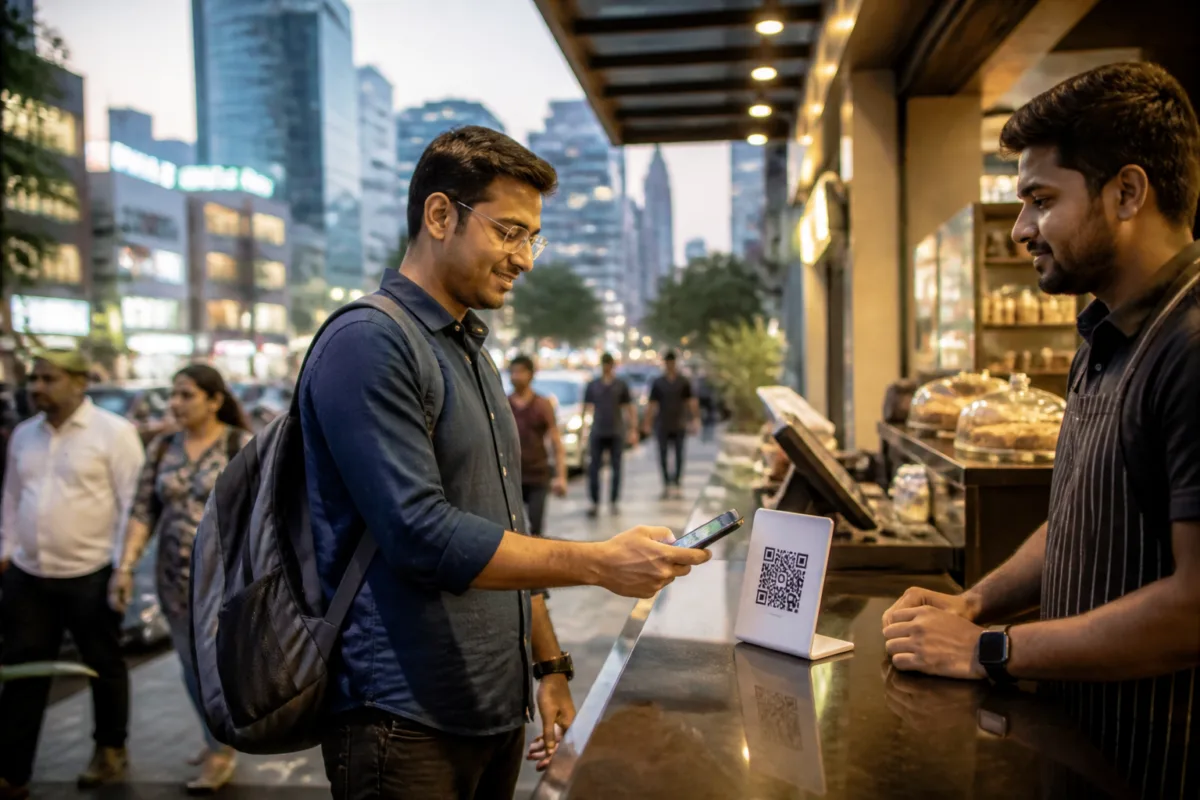
Hyderabad’s digital payments boom is no longer limited to the replacement of cash at shops and restaurants. According to the How Urban India Pays 2026 report by Amazon Pay and Pahlé India Foundation, 76 per cent of spending in the city is already digital, while salaried professionals are using digital platforms across payments, savings and rewards. The evidence points to a wider change in how the city’s formal consumer economy operates: digital transactions are becoming part of everyday urban routines, and payment applications are competing to shape what users do after the payment is complete.
That distinction matters because the spread of digital payments is often measured as a technology-adoption story. Hyderabad’s reported numbers suggest that it is also a story about the organisation of urban consumption. Dining out, travel and routine purchases are increasingly connected to app-based payment systems. For consumers, the immediate benefit is speed and convenience. For platforms, each transaction creates an opportunity to influence future spending, savings and platform loyalty.
The report’s findings place Hyderabad among India’s digitally habituated urban markets. The phrase is significant because it describes behaviour that has moved beyond occasional use. A digitally habituated consumer does not necessarily need to be persuaded to use UPI for a particular purchase. The payment method is already available, familiar and embedded in the consumer’s daily choices. The competitive question therefore shifts from whether people will pay digitally to which application they will use, what additional features they will adopt and what value they receive in return.
The strongest evidence of this shift comes from Hyderabad’s salaried professionals. Compared with the national benchmark, salaried professionals in the city are 16 percentage points more likely to use UPI for eating out and travel, according to the report. These are categories where payments are closely connected to the pace and convenience of urban life. Eating out and travel involve frequent, relatively visible transactions, and both can benefit from quick settlement between consumers and businesses.
This does not establish that digital payments have replaced cash in every part of Hyderabad’s economy. The supplied report does not provide a complete transaction breakdown by neighbourhood, income group, merchant category or payment method. It does, however, indicate that digital payments have become particularly established among salaried consumers and in lifestyle-led spending. That distinction is important for understanding the limits of the data. A citywide figure of 76 per cent of spending reflects the report’s stated metric, but it does not by itself describe how evenly digital adoption is distributed across households and businesses.
The report also identifies a connection between payment activity and financial planning. Hyderabad’s salaried professionals are 13 percentage points more likely than the national benchmark to use auto-saving features. This finding suggests that digital platforms are being used for more than the settlement of individual purchases. They are also becoming a place where users organise recurring financial behaviour.
Auto-saving changes the role of a payment application. A basic payment tool is used when a transaction occurs. An auto-saving feature creates a continuing relationship between the user and the platform. It can turn an application used for spending into one used for managing money. The report does not specify the products, balances or savings outcomes involved, so it cannot establish whether these features are improving household financial security. It does show, however, that the boundary between payments and personal financial management is becoming less distinct for the users measured in Hyderabad.
This has an institutional dimension. Payment platforms are not simply digital pipes connecting buyers and sellers. They are private interfaces through which consumers encounter transactions, rewards and financial features. Their design choices influence what users see, which benefits are promoted and how frequently they return to the application. As adoption matures, the platform’s value is likely to be assessed less by basic access to UPI and more by the quality and relevance of the wider experience.
Hyderabad’s position in the report’s cashback findings makes that competition visible. The city ranks first nationally for cashback-driven app-switching, with 50 per cent of consumers identified in the report’s metric. The finding suggests that digital familiarity does not automatically create loyalty to one platform. Users who are comfortable with digital payments may also be willing to change applications when rewards or other benefits offer a stronger immediate value.
This creates a different kind of urban market. Once the payment system is accepted as routine, platforms compete for attention at the point of transaction and beyond it. Cashback can influence the choice of application, while auto-saving and other features can encourage continued engagement. The result is a payment environment in which convenience, incentives and financial tools are combined within the same consumer relationship.
The reported pattern also highlights an important difference between infrastructure adoption and platform dependence. UPI has created a common digital payment layer that allows consumers to make transfers across participating applications. But the application used to access that layer remains a point of competition. A consumer may be comfortable with digital payments in general while remaining flexible about which provider receives the transaction. Hyderabad’s cashback-driven app-switching finding captures that distinction: adoption of the system can be high even when loyalty to an individual platform is weak.
For the city’s merchants, this environment changes the practical meaning of accepting digital payments. A merchant may gain speedier settlement and a payment option that fits customer expectations, but may also operate within a market shaped by promotions and competing applications. The supplied report does not provide merchant-level evidence on transaction costs, settlement times or the distribution of benefits. Those unanswered questions matter because a payment system can be convenient for consumers while producing different operational effects for small businesses, large retailers and service providers.
The report also does not establish whether the 76 per cent digital-spending figure includes all forms of digital payment or how the metric was calculated. Nor does the supplied material provide the sample size, survey methodology or geographic coverage used for the Hyderabad findings. These limits do not cancel the reported trends, but they define how they should be read. The findings are best understood as indicators of consumer behaviour within the report’s methodology, rather than as a complete account of every payment made across the city.
Even with those limits, the findings reveal how urban technology becomes ordinary. Digital payments are most consequential when they disappear into routine: the restaurant bill, the travel booking, the everyday purchase and the recurring saving action. At that point, digital infrastructure is no longer experienced as a separate technology project. It becomes part of the operating system of urban consumption.
Hyderabad’s salaried professionals appear to be at the centre of this transition in the report. Their higher use of UPI for eating out and travel, greater use of auto-saving and responsiveness to cashback indicate a consumer segment that values convenience but also compares platforms for additional benefits. The pattern presents the city as a mature market for financial applications, while also showing that maturity does not mean the end of competition. It changes the basis of competition.
The wider urban question is whether digital payment growth will remain concentrated in convenience-led consumption or develop into a more inclusive financial service environment. The supplied evidence cannot answer that question. It does not cover access gaps, digital literacy, cybersecurity, failed transactions, cash-dependent users or the experiences of informal workers and smaller merchants. Those are essential dimensions of the city’s payment economy but are outside the findings presented here.
What the report does establish is narrower and more useful: Hyderabad has a digitally confident consumer segment in which digital spending is deeply embedded, UPI use is particularly strong in eating out and travel, auto-saving has a stronger reported presence than the national benchmark, and cashback can influence application choice. The next phase of the city’s digital payments journey will therefore be shaped not only by adoption, but by how platforms connect payments with savings, rewards and other financial functions. The evidence available so far describes that transition as an emerging market behaviour, not yet as a complete measure of financial inclusion or citywide economic transformation.

