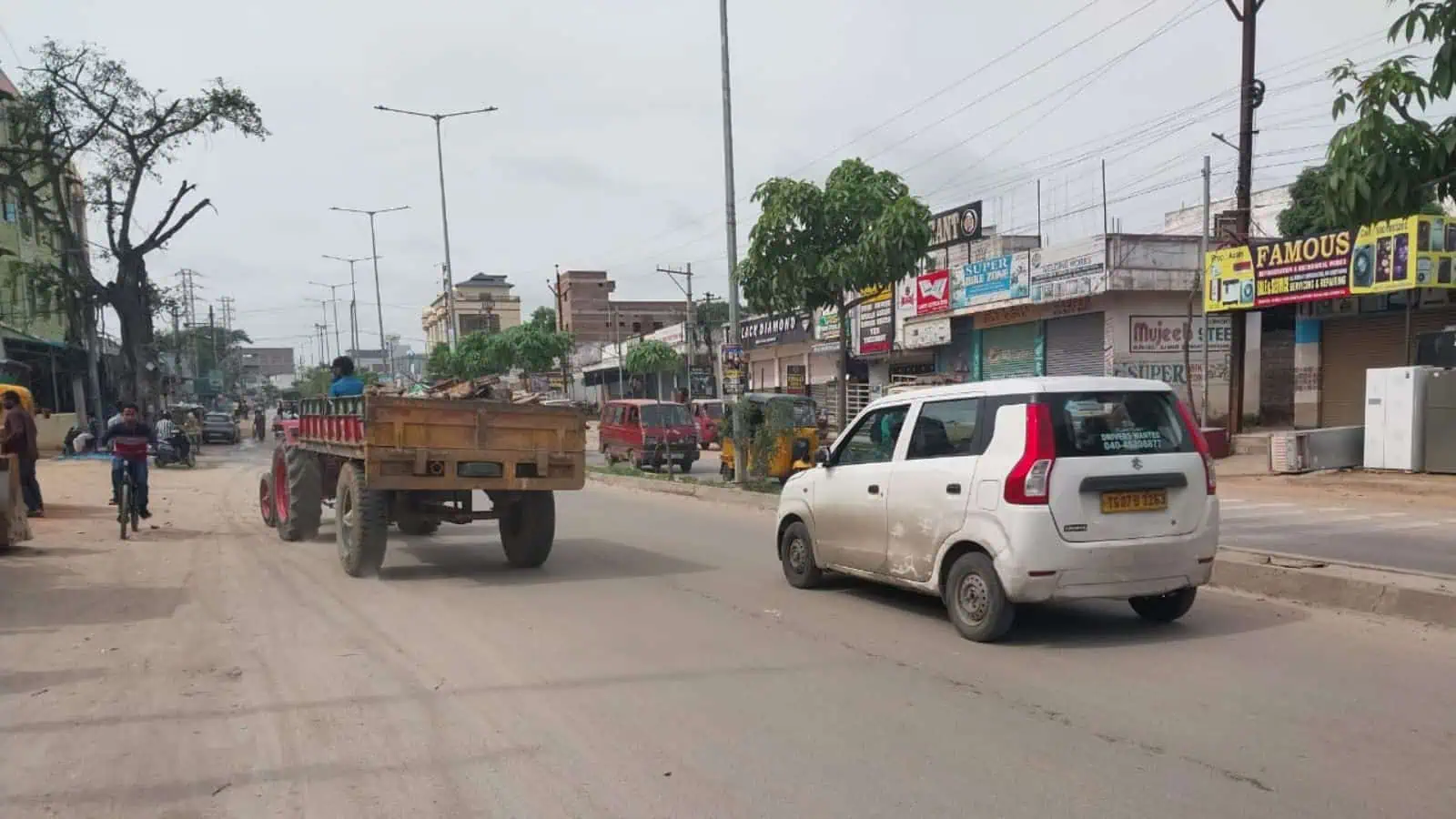
A key road connecting Barkas with Pahadi Shareef in Hyderabad is facing renewed safety concerns, with accumulated roadside silt and weak street lighting affecting visibility. The problems are particularly significant for two-wheeler users and night-time traffic. The route also carries commuters travelling towards the airport and the Pahadi Shareef area, making basic road maintenance important for both mobility and public safety.
The Barkas Pahadi Shareef road is used throughout the day by local residents, commuters and airport-bound travellers. Sections of the carriageway have reportedly developed layers of silt because of inadequate sweeping. Loose material on the road can reduce tyre grip, particularly for two-wheelers. The risk becomes greater during and after rainfall, when road surfaces can remain wet and visibility can fall. Residents have called for more regular mechanical and manual sweeping. Clearing accumulated material would be a relatively basic intervention, but one that could improve road safety without requiring major reconstruction. Lighting is another concern along the route. Several curves and junctions reportedly remain poorly illuminated, making it harder for motorists to identify approaching vehicles and negotiate turns safely.
The issue has wider implications because the road serves mixed traffic. Two-wheelers, cars and other vehicles share the same corridor, while pedestrians and local residents also depend on it for daily movement. A previous report on the same stretch in August also highlighted inadequate lighting, potholes, missing warning signs and safety concerns around sharp curves. This suggests that the challenges are not limited to a single maintenance issue. The concerns highlight a wider challenge for expanding urban areas: road safety depends on routine maintenance as much as major infrastructure projects. For a corridor carrying traffic towards Rajiv Gandhi International Airport and Pahadi Shareef, functioning streetlights, visible road markings, clean carriageways and appropriate warning signs are basic components of a safe transport network. There is also an economic dimension. Poor road conditions can increase travel uncertainty, vehicle damage and accident risks. For workers, residents and businesses that depend on reliable movement, these costs can accumulate over time.
Recent municipal records also indicate road and drainage maintenance work under the road-safety programme in the Barkas area, showing that maintenance activity is being planned in the broader locality. The immediate priority for the Barkas Pahadi Shareef road is routine upkeep alongside targeted safety improvements. Regular sweeping, functioning streetlights and clear warnings at curves and junctions could address several concerns raised by road users. For Hyderabad’s expanding southern corridors, a people-first approach to infrastructure will require maintenance systems that keep pace with traffic growth. Preventive work can reduce safety risks before they develop into larger and more expensive urban problems.