


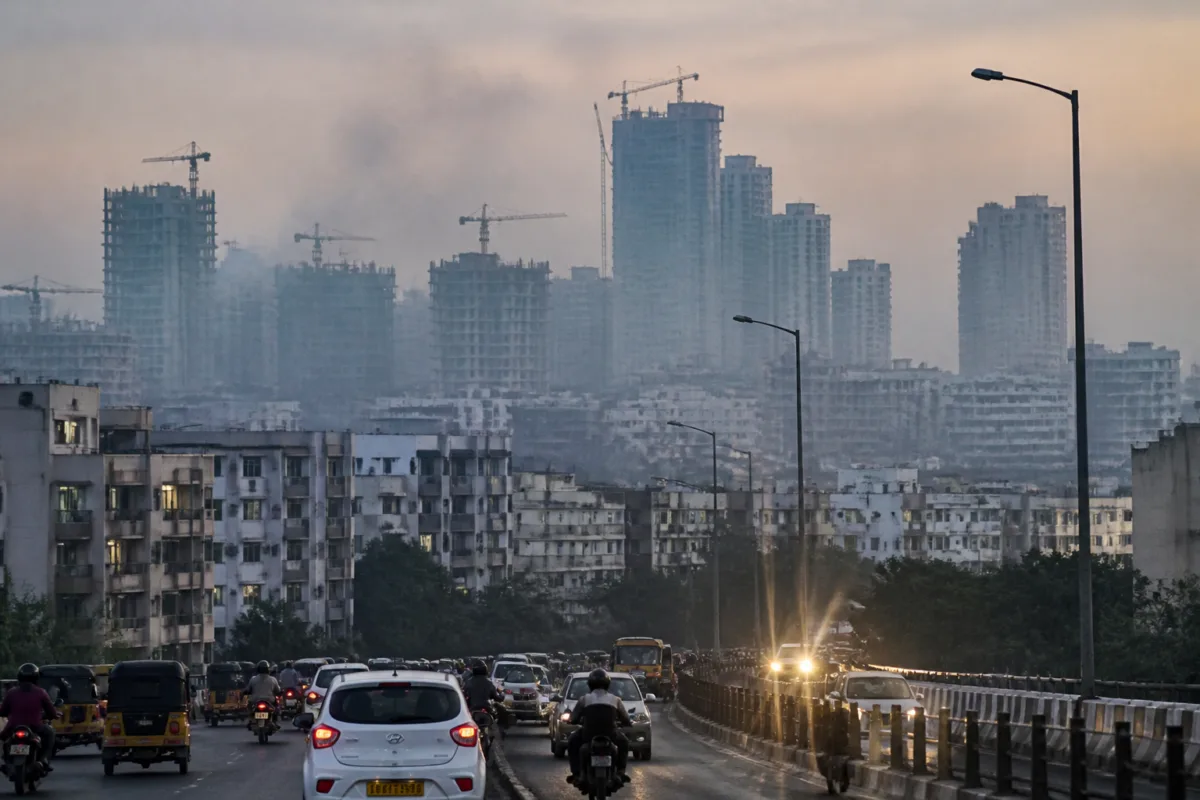
Hyderabad’s air quality deteriorated after heavy Diwali firecracker use, with the city’s Air Quality Index recorded at 160, a level experts described as unhealthy, according to a report by Deccan Chronicle.
The increase was observed after a sudden rise in air pollution linked to fireworks. Readings varied considerably between monitoring stations, while pollution levels typically climbed after dark, the report said. The variation indicates that residents in different parts of the city may have experienced substantially different air conditions during the post-Diwali period.
Hyderabad recorded an AQI of 292 after Diwali last year, making this year’s reported figure lower by comparison. However, the current reading remains a concern because it follows a rise in pollution over the festival period and comes on top of the city’s continuing exposure to emissions from traffic and construction activity.
The report noted that air quality in Hyderabad’s IT corridor had frequently remained between 100 and 170 during the preceding months. That pattern points to a broader urban pollution problem beyond the short-term effect of fireworks. While firecrackers can cause a sharp, temporary increase in particulate pollution, vehicle movement and construction are described as persistent sources affecting the city over a longer period.
Doctors cited in the report warned that pollution levels could remain elevated or worsen in the days following Diwali. They advised residents to stay indoors during peak pollution hours and to use N95 or N99 masks when going outside.
The health implications are especially relevant for people with respiratory conditions, older residents and children, although the supplied report does not provide a station-wise breakdown or pollutant-specific readings. The reported AQI figure also does not establish how long the elevated conditions will last in each part of Hyderabad.
The uneven readings between monitoring stations highlight the importance of local air-quality information in a city where traffic intensity, construction activity and neighbourhood-level conditions differ widely. A single citywide number can indicate the scale of the problem, but it may not fully reflect conditions experienced near major roads, construction sites or densely populated areas.
For Hyderabad’s urban administration, the post-Diwali increase also brings attention to the distinction between episodic pollution and everyday emissions. Fireworks created the immediate trigger in this case, while traffic and construction remain longer-term contributors identified in the report. Doctors’ advice to limit outdoor exposure during peak pollution hours and use high-filtration masks remains the immediate precaution cited for residents.
The next indication of whether conditions improve or deteriorate will come from air-quality readings in the days after Diwali, particularly across the city’s different monitoring stations.

