


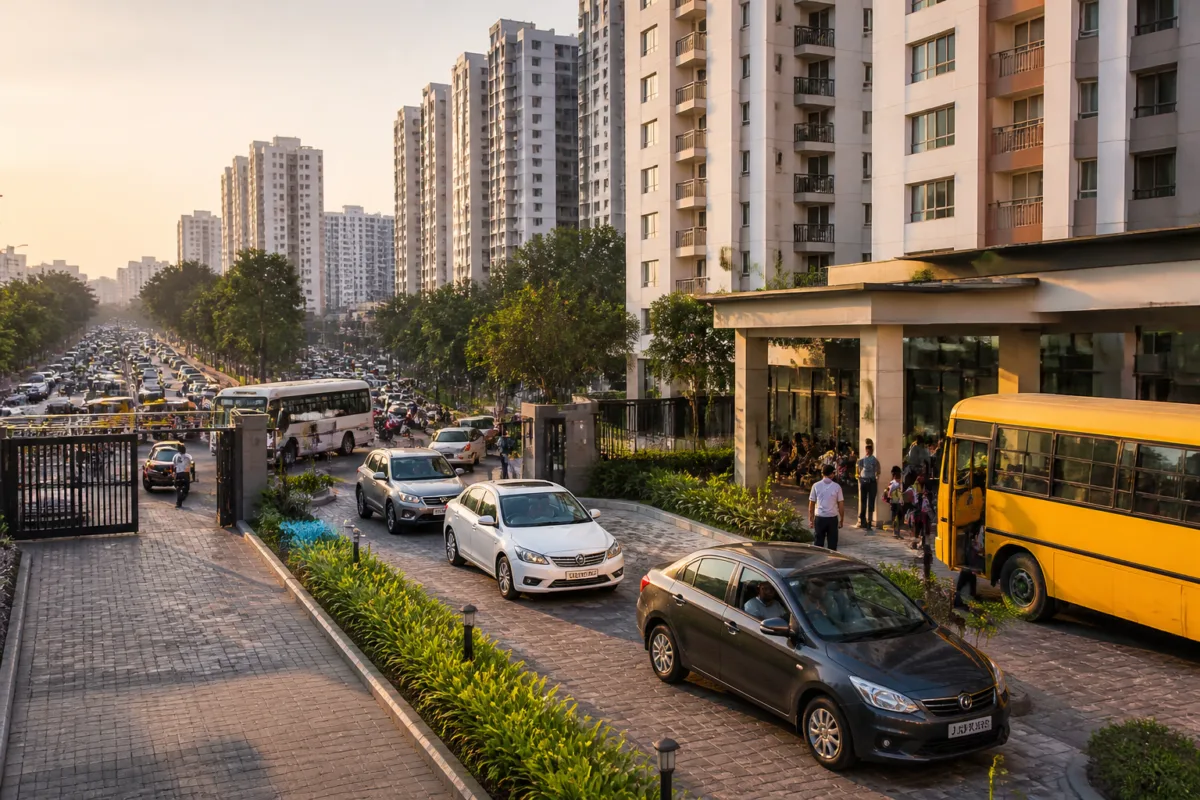
Hyderabad’s proposed apartment traffic plan could require large residential complexes to create dedicated internal pick-up and drop-off zones, as the Hyderabad Metropolitan Development Authority moves to reduce roadside congestion caused by cabs, company vehicles and school buses.
The proposed change would apply to large apartment communities built in the future. HMDA is preparing amendments to its building bylaws, under which developers would have to set aside space within their complexes for vehicles to collect and drop passengers instead of stopping on adjoining main roads.
The move follows an interim traffic study conducted across Hyderabad’s Core Urban Region by the Unified Metropolitan Transport Authority and Lea Associates. The interim report, submitted to HMDA, examined chronic congestion and offered a series of recommendations for improving traffic movement at key locations.
Among the suggestions is the development of around 22 of the city’s most congested junctions. The report also recommends constructing new bus stops and modifying existing ones so that Hyderabad’s Metro, Telangana State Road Transport Corporation bus services and Multi-Modal Transport System services can be integrated more effectively.
Large apartment complexes are significant traffic generators because several transport modes converge at their entrances during peak hours. Residents may use private cars, app-based cabs and office transport, while school buses and other shared vehicles often stop close to gates. Under the proposed arrangement, these movements would be accommodated inside the premises rather than on public carriageways.
HMDA’s proposed amendment would add dedicated private-vehicle pick-up and drop-off areas to the development requirements for future large apartment projects. The authority already applies building regulations covering matters such as cellars, setbacks and parking, although the applicable rules differ between municipal corporation areas and locations under HMDA limits.
The proposed traffic measure therefore links building approval rules with the way surrounding roads function. Instead of treating congestion outside a residential project only as a road-engineering problem, the plan would place part of the responsibility for managing access and passenger movement on the development itself.
However, the proposal has not yet become an enforceable requirement. HMDA is expected to amend the existing bylaws, while detailed guidelines are still to be finalised. The supplied report does not specify the minimum project size that would trigger the rule, the amount of internal space required, or whether the guidelines would apply differently to projects in municipal corporation areas and HMDA jurisdictions.
The interim study’s wider recommendations indicate that the authority is considering a combination of site-level and network-level interventions. Internal drop-off areas could reduce stoppages outside apartment gates, while redesigned junctions and better-linked bus, Metro and MMTS stops would address congestion and interchange problems on the broader transport network. HMDA’s next step is to finalise the detailed guidelines and proceed with the proposed bylaw amendments.

