


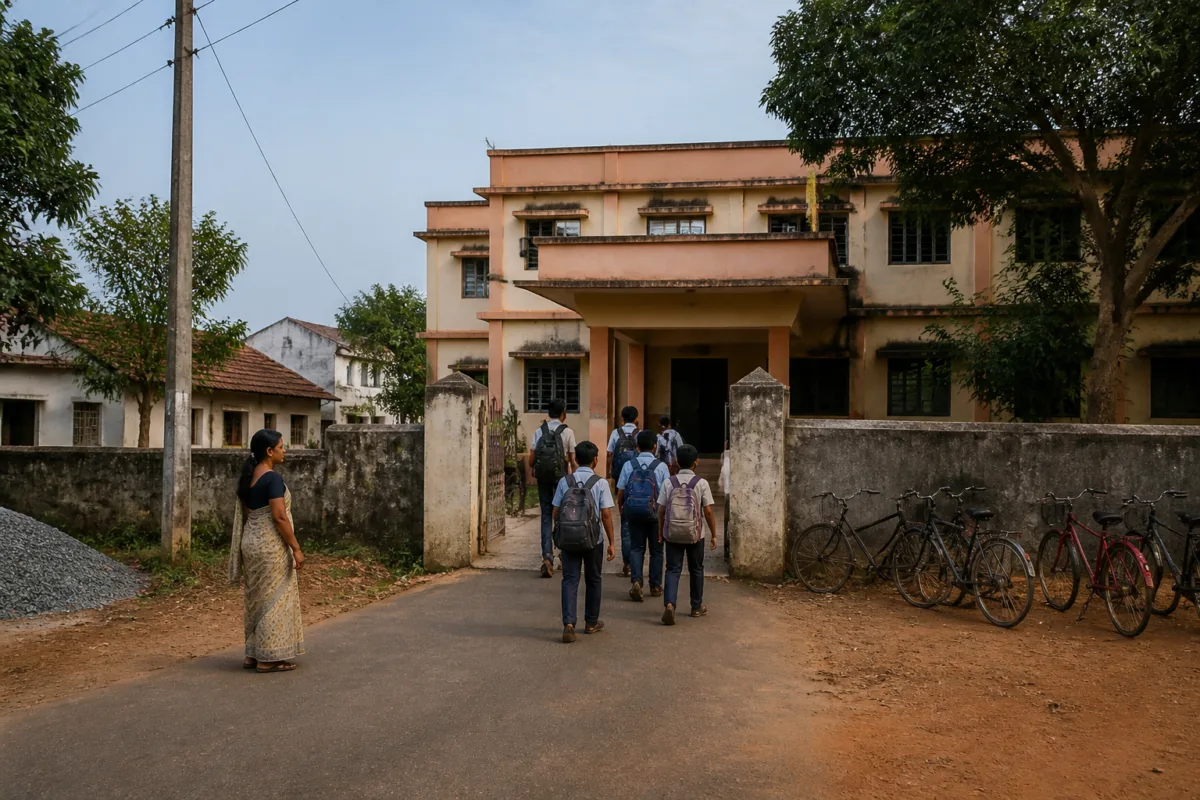
A government student hostel in Kattemalanavadi village near Hunsur is being used mainly for meals rather than as a residential learning facility, according to a member of the Scheduled Castes and Scheduled Tribes (Prevention of Atrocities) Act awareness committee.
The concern was raised during a committee meeting held at the Hunsur sub-divisional officer’s office on Thursday. Committee member Ashok said the hostel had been established to improve the educational outcomes of Scheduled Caste children in rural areas by providing accommodation and an environment for study. However, he alleged that local children were enrolled at the hostel, ate their meals there and then returned home, leaving them disadvantaged in their studies.
Ashok also told the meeting that the taluk Social Welfare Department had not treated the issue seriously. Sub-divisional officer G.D. Shekhar directed Social Welfare Department officer Chandrashekar to ensure that wardens supervise the children, encourage them to remain at the hostel and support their learning. He also called for awareness among parents.
Chandrashekar responded that excessive pressure on children could lead them to leave permanently, creating a situation in which the hostel might have to be closed, according to the report. The exchange highlights the operational challenge facing residential welfare facilities: retaining children in hostels requires supervision and educational support, but also cooperation from families and an environment in which students feel secure.
The meeting also recorded a safety concern at a girls’ hostel. Committee member Rajanayaka said nuisance by miscreants had increased around the facility and that students were being forced to study in fear. Deputy superintendent of police P. Ravi said the police would provide appropriate security and increase patrolling near the hostel.
The report does not provide details on the number of residents, staffing levels, the duration of the alleged problems or the frequency of police patrols. It also does not record whether a formal inspection of the Kattemalanavadi hostel was ordered. These details will be important in assessing whether the administrative directions result in sustained improvements.
Other issues raised at the meeting concerned public facilities and regulation in the Hunsur sub-division. Ashok said construction of an Ambedkar Bhavan at gram panchayat level had remained incomplete for three years. The sub-divisional officer instructed officials to complete the building using panchayat State Finance Commission funds. A Social Welfare Department official said the project had been estimated at ₹20 lakh and that ₹6 lakh had been released as the first instalment.
Committee member Rajanayaka also objected to a liquor shop near a temple in Chamegowdana Hundi village of Saragur taluk. Excise department officer Shivaraju said permission had been granted for a shop located 7–8 km from the temple. Following objections from committee members, the sub-divisional officer directed officials to take steps to relocate the shop.
A separate complaint concerned a liquor outlet beside a school in Kattemalanavadi, where sales during school hours were said to be creating problems. The committee asked the Excise Department to issue strict instructions to the outlet operator.
The meeting further discussed tensions involving the Scheduled Tribe community in Kamplapura village. Committee member Annayya Nayaka called for steps to restore peace, while deputy superintendent of police Ravi said preparations were under way to convene a meeting aimed at building harmony between the two communities.
Taken together, the proceedings point to gaps that extend beyond the physical availability of public buildings. The functioning of a hostel depends on residential supervision, education support, parent engagement and safety around the premises. Similarly, completing a community building requires not only an approved estimate and an initial release of funds but also continued execution and monitoring. The officials’ directions recorded at the meeting offer immediate administrative responses; the report does not yet establish whether those directions have been implemented.

