


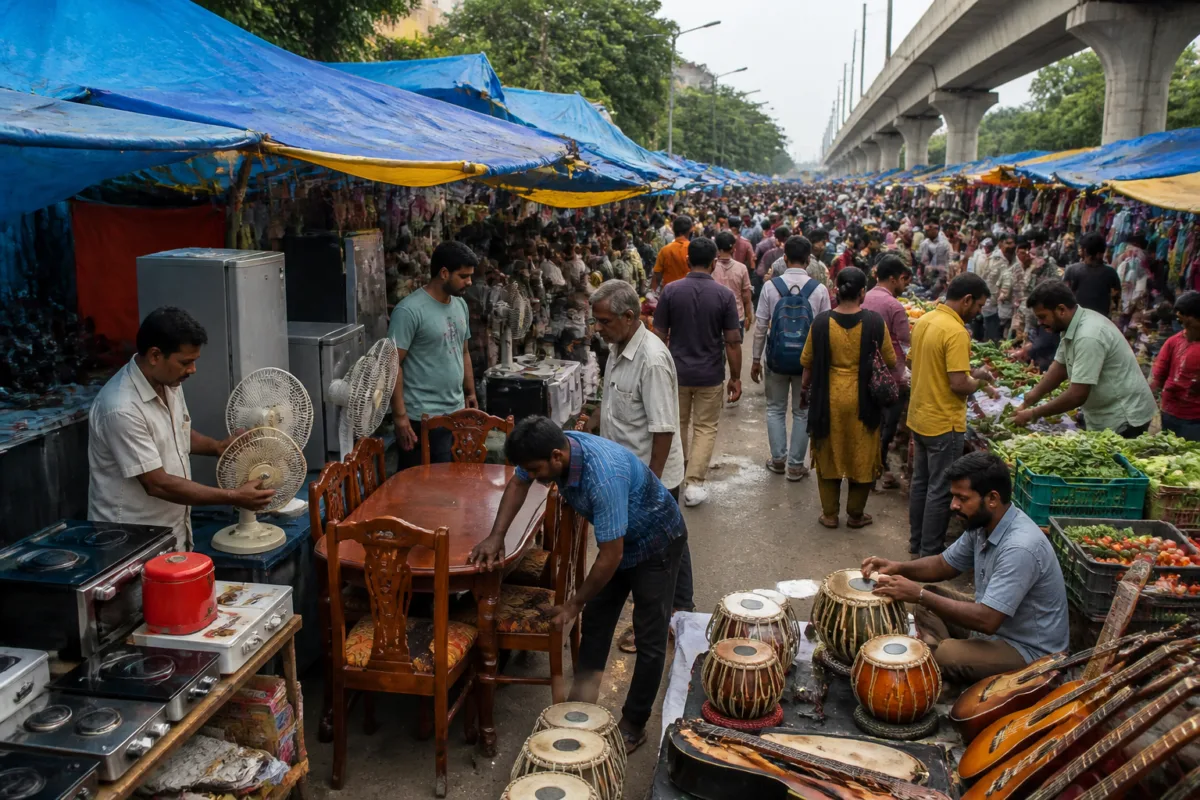
Pallavaram’s century-old Friday market is being reshaped by social media, but its scale continues to depend on the public-space system that supports it every week. Spread across nearly 2.5km along Old Trunk Road in Pallavaram Cantonment, the market has more than 1,000 shops and around 2,500 vendors, according to a Times of India report.
Vendors begin setting up tarpaulins from about 4.30am each Friday. The market sells a wide range of goods, including second-hand electronics, musical instruments, furniture, clothing, provisions, fruits, vegetables and plants. Pets and livestock are also sold, with the report observing country chickens, goats and lovebirds among the animals on display.
The market’s unusual inventory has attracted younger shoppers who discover it through reels and other social media videos. Raghav Shetty, a college student from Bengaluru studying in Tambaram, told the newspaper that he visited after seeing a video about the market. He said he and friends bought an old Fender guitar for ₹1,000 after bargaining, against an initial price of ₹2,000.
The market’s current identity is part of a longer urban history. S P Gandhi, a former member of the Pallavaram Friday Market Association, said it evolved from a cattle trading centre during the 19th-century Nawab era into a general marketplace. Ismail, a trade union leader, said it moved from GST Road to Old Trunk Road 16 years ago and expanded after the shift.
That expansion places greater importance on weekly management of the site. The Pallavaram Cantonment authorities maintain the market and collect stall charges from vendors. Parking is available at ₹20 for two-wheelers and ₹100 for cars. A cantonment board official told the newspaper that the board generates about ₹10 lakh every Friday from the market and uses the money for board development and market maintenance.
The market’s reported footfall ranges from 50,000 to 75,000 visitors every Friday, while festival-season attendance can reach one lakh, according to Ismail. These figures were not independently documented in the report, but they indicate the scale of the public-space and access challenge faced by the authorities and traders.
Monsoon conditions remain a major operational weakness. Ismail said footfall falls by about 20,000 during the rainy season. The market’s reliance on tarpaulins and its spread along a road corridor make weather protection and surface conditions important to vendors and visitors, although the report does not detail drainage, pedestrian-safety or traffic-management arrangements.
For traders, the market’s survival depends on adapting to changing demand while retaining its historic character. Gandhi said it should be preserved with proper regulations in the coming years. The immediate urban question is therefore not only how the market attracts new shoppers, but how its management can support a large weekly congregation while protecting the public-space and commercial traditions that have allowed it to endure.

