


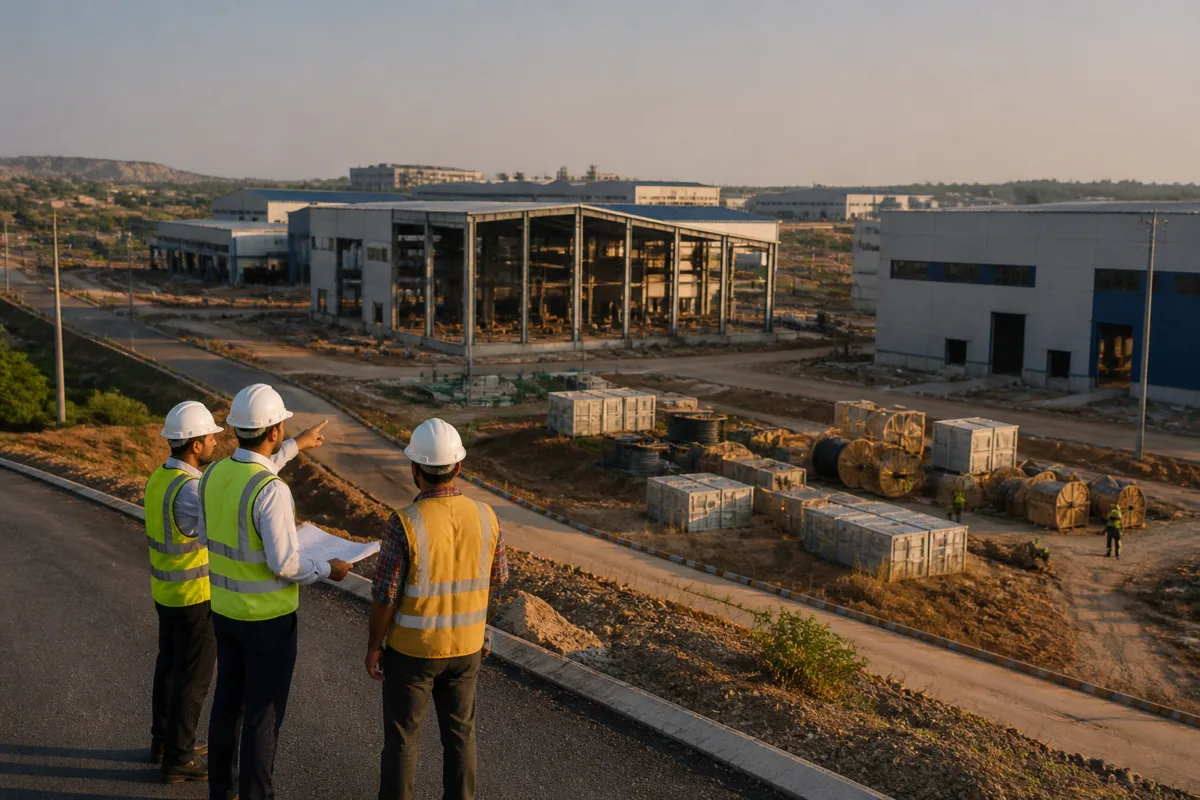
The Department of Telecommunications (DoT), in collaboration with the Madhya Pradesh government, has distributed letters of intent (LoIs) to 25 companies for investment in the telecom manufacturing zone in Gwalior, while announcing a second phase for the project.
The telecom manufacturing zone is planned as an integrated cluster for manufacturing, research and development, innovation and technology partnerships. Its proposed focus areas include mobile devices, telecom equipment, components, optical fibre, passive infrastructure and next-generation 5G and 6G technologies.
According to the report, Phase II is expected to cover more than 450 acres, attract nearly Rs 35 billion in investment and have the potential to generate over 10,000 jobs. These figures represent projected outcomes rather than completed investment or employment.
Companies expected to establish facilities include Tejas Networks, VVDN, Optiemus Electronics, Syrma SGS Technologies, Dixon Technologies and Brandworks Technologies. Tejas Networks has proposed an initial investment of Rs 1.5 billion for research and development, testing and assembly units, with around 300 jobs. VVDN has proposed Rs 5 billion and 700 jobs, while Syrma SGS Technologies has proposed Rs 2.5 billion and 500 jobs.
Dixon Technologies has proposed Rs 2 billion and expects to create 3,000 jobs. Other companies listed as having committed investments include Intellicom Communication, MV Electrosystems, Samriddhi Automations and Neolync. Under Phase I, HFCL had proposed an investment of Rs 7 billion, with the potential to create more than 2,000 jobs.
The Madhya Pradesh cabinet has approved 170 acres of land for the project, according to the report. The state chief minister described it as the first zone in India dedicated to the telecom sector.
A special purpose vehicle has been formed to oversee the project, with the Madhya Pradesh government holding a 51 per cent stake and DoT the remaining 49 per cent. The project is intended to strengthen domestic supply chains, reduce import dependence, support indigenous product development and encourage exports.

