


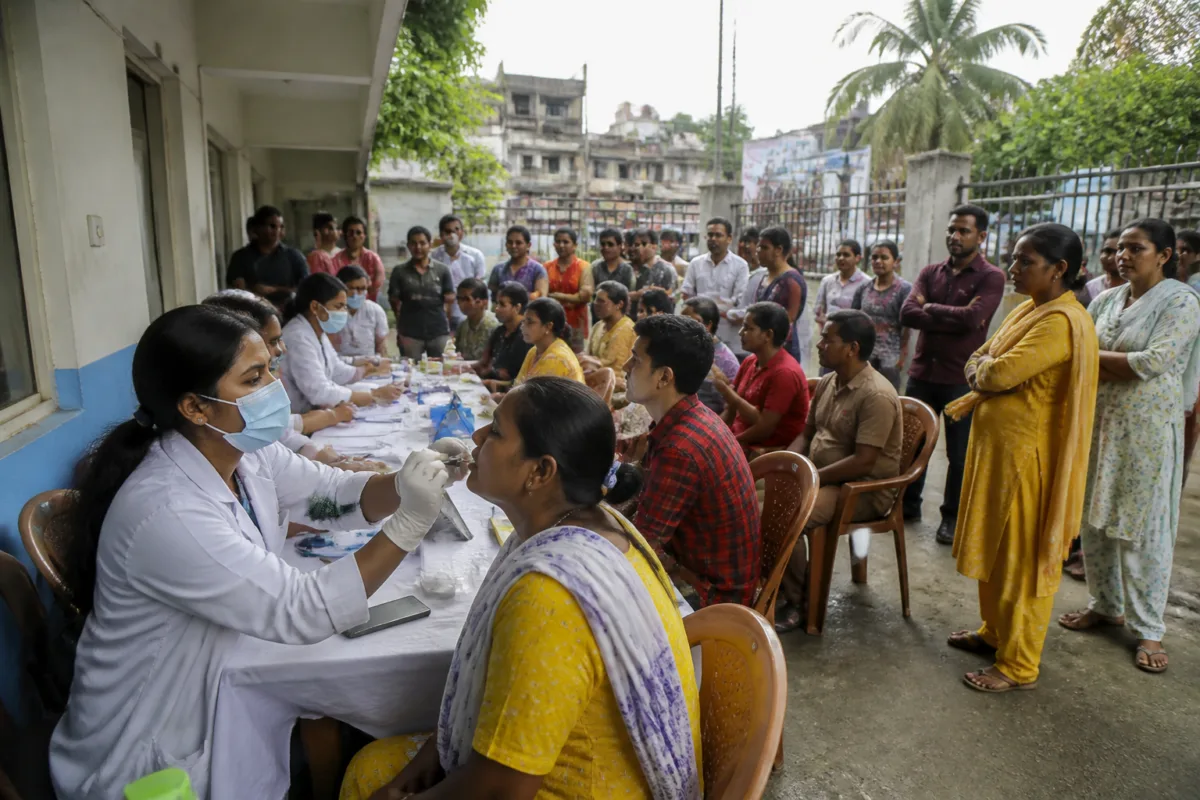
The latest National Cancer Registry Programme data place Kamrup Urban, which includes Guwahati, among northeastern districts facing a particularly high lifetime risk of cancer. The estimate that one in four men and one in five women in the district could develop cancer before turning 75 is not only a medical warning; it is also a test of how cities organise prevention, screening and access to care.
The figures were reported from the latest Indian Council of Medical Research population-based cancer report released in October. They identify Kamrup Urban alongside Papum Pare in Arunachal Pradesh, East Khasi Hills in Meghalaya and Aizawl in Mizoram as districts with elevated cancer risks. In several districts across the region, the data indicate that one in four men and between one in four and one in six women could develop cancer by the age of 74.
That geography matters. Cancer risk is not being presented as evenly distributed across India or even across the Northeast. The data point to differences between districts and states, requiring public-health responses that account for local exposure patterns, tobacco use, social behaviour, genetic diversity and the availability of early detection services. For Guwahati, the question is whether the city’s health system can move sufficiently upstream—from treating advanced disease to preventing exposure and detecting illness earlier.
## What the NCRP data show
The reported estimates show that Mizoram and Meghalaya have among the highest lifetime cancer risks for men in the region, at about one in five by age 74. Mizoram also records a one-in-five risk among women. Meghalaya has the second-highest reported risk among women, at one in nine, while Delhi’s reported figure is one in seven.
Kamrup Urban’s estimate is more severe for men than the broader state-level figures cited in the report. Professor Ashok Kumar Das, head of head and neck surgery, said the ICMR report presents an alarming picture for the district, estimating that one in four men and one in five women could develop cancer before turning 75.
These are lifetime-risk estimates, not forecasts that every affected person will require treatment at the same time. They nevertheless show the scale of the prevention and screening challenge. They also indicate why district-level data are important: a state-wide average can conceal much higher risks in particular urban or administrative areas.
The supplied report does not provide the underlying population counts, cancer incidence by site, mortality rates, screening coverage or treatment-capacity figures for Kamrup Urban. It therefore establishes the scale of the reported risk, but not the precise number of people who may need services or the extent to which Guwahati’s existing facilities can meet that demand.
## Tobacco use creates a clear urban policy challenge
The strongest measurable warning in the report concerns tobacco. A comparison of Global Adult Tobacco Survey reports from 2010 and 2017 showed that tobacco use nationally declined from 34.6% to 28.6%. In parts of the Northeast, however, the trend moved in the opposite direction. Assam’s reported tobacco use increased from 39.3% to 48.2%, Tripura’s from 55.9% to 64.5%, and Manipur’s from 54.1% to 55.1%.
The Assam figure is particularly relevant to Guwahati because Kamrup Urban is the district identified with the high cancer-risk estimate. The data do not establish that tobacco use alone caused the district’s reported risk, and the doctors quoted in the report caution against treating the region as uniform. But they do show that tobacco control is not a peripheral health issue for the state. It is directly connected to the conditions shaping the city’s future disease burden.
Professor Das attributed 90% to 95% of cancer cases in the Northeast to environmental factors and 5% to 10% to genetic factors. He estimated that lifestyle choices and tobacco consumption account for 65% to 70% of environmental risks. These figures are attributed estimates from the expert quoted by the newspaper, rather than a separate dataset reproduced in the report. Their policy significance lies in the emphasis on preventable exposure and behaviour, even as the report acknowledges that risk factors vary by region.
For municipal and state authorities, tobacco control therefore involves more than issuing public advisories. It requires sustained enforcement, public education, access to cessation support and integration with primary healthcare. The supplied material does not state how effectively those measures are currently implemented in Guwahati, which remains an important gap in assessing the city’s preparedness.
## Why district-level differences matter
The report resists a single explanation for the Northeast’s cancer burden. Das said environmental factors vary from one region to another and that the factors driving cancer incidence in Kamrup Urban may differ from those in Mizoram. Bibhuti Bhusan Borthakur, director of Dr B Borooah Cancer Institute and a surgical oncologist, also pointed to differences in genetic predisposition across communities, particularly in Arunachal Pradesh, where populations have distinct genetic backgrounds.
Borthakur additionally referred to sexual hygiene in explaining the high incidence of certain cancers in districts such as Papum Pare. He called for primary prevention where cancers can be prevented and early detection where they cannot. His emphasis on hygiene, vaccination, screening and diagnosis broadens the policy response beyond tobacco.
This matters for urban governance because Guwahati functions as a major regional centre, while the report’s data also describe risks across several northeastern states. The article does not provide patient-flow data or referral statistics, so it does not establish how much of the region’s cancer treatment burden is concentrated in the city. It does, however, show why prevention and early detection cannot be separated from the organisation of regional healthcare.
A city’s cancer response depends on multiple institutions rather than a single hospital. Public-health agencies must monitor risk and promote prevention; primary-care facilities must identify symptoms and support screening; specialised institutions must diagnose and treat patients; and authorities must address tobacco and other environmental exposures. The report identifies the need for these functions but does not quantify capacity at each stage.
## From awareness days to routine systems
The findings were discussed by doctors on National Cancer Awareness Day, with calls for healthier lifestyles, better food habits, tobacco control and regular screening. Awareness campaigns can draw attention to the problem, but the data point to a need for routine systems that continue beyond a designated day.
The most consequential shift is from late treatment to prevention and early diagnosis. Borthakur’s formulation is direct: prevent what can be prevented and detect the rest at an early stage. That approach requires residents to have accessible information and screening, but it also requires institutions to provide follow-up after a risk is identified. A screening programme without referral, diagnosis and treatment capacity would not resolve the underlying problem.
The report provides no figures on screening availability, waiting times, cancer-stage distribution or treatment outcomes in Kamrup Urban. Without those measures, it is not possible to determine whether Guwahati’s principal weakness is exposure prevention, early detection, treatment access or continuity of care. The NCRP estimates should therefore be read as a signal for more detailed district-level planning, not as a complete assessment of the city’s health system.
## The larger urban question
Guwahati’s reported cancer risk reveals how urban health is shaped outside hospitals. Tobacco consumption, food habits, environmental conditions, personal behaviour, awareness and access to screening interact across neighbourhoods and communities. A district can record a high projected lifetime risk even when the causes are dispersed among households, markets, workplaces and public spaces rather than concentrated in one facility.
The figures also expose a data-to-action challenge. The NCRP data identify where risk is high, while the expert comments identify several possible prevention pathways. The next administrative question is whether authorities can connect those signals to measurable local action: tobacco-use reduction, vaccination and hygiene promotion, screening reach, referral completion and treatment access. The supplied report does not say whether such indicators are being tracked in Guwahati.
What the available evidence confirms is that Kamrup Urban faces a serious reported cancer-risk burden and that tobacco use in Assam has risen sharply in the comparison cited. It also confirms that doctors see prevention and early diagnosis as essential responses. What remains unclear is how the risk varies by cancer type, neighbourhood, age, sex and socioeconomic group, and whether the city has enough screening and treatment capacity to respond. Those are the areas that future health planning and reporting will need to examine.

