


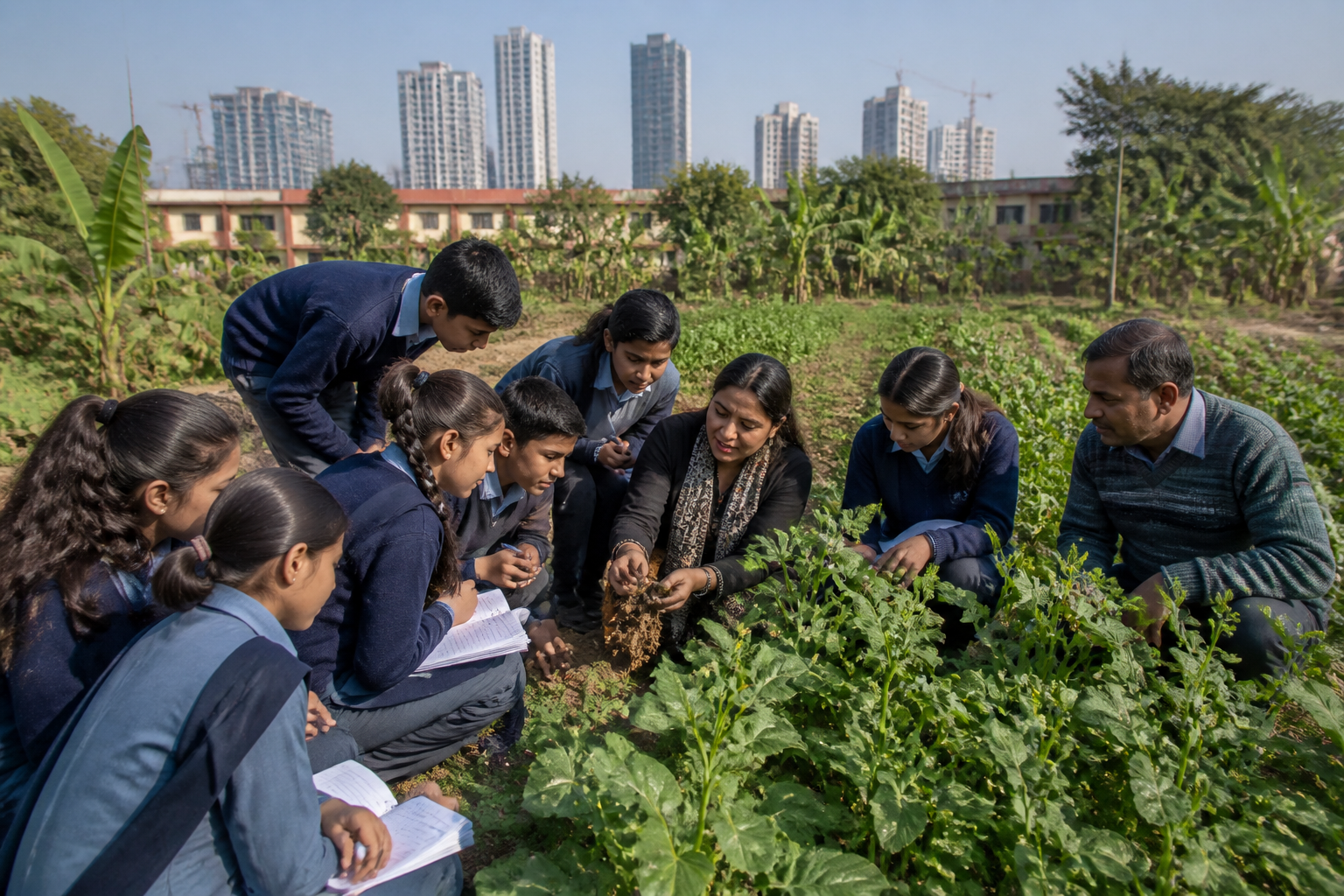
Gurugram’s PM Shri schools are preparing to send students from Classes 6 to 8 to school without their regular bags for 10 days during the 2026-27 academic session, replacing classroom-only learning with field visits, practical activities, expert interactions and project work.
The initiative will divide the 10 days between five outdoor and five indoor activity days. According to a report by Live Hindustan – NCR, the programme is intended to help students understand how classroom learning connects with everyday life, work and future employment rather than remaining limited to textbooks, examinations and marks.
Gurugram has eight PM Shri schools. A total budget of Rs 1.20 lakh has been released for activities in six schools, with each receiving Rs 15,000 for learning resources and programme arrangements. The report identifies the schools covered for planning as those in Chakkarpur, Daulah, Ghamroj Alipur, Sector 4/7, Sherpur and Kharola.
The proposed outdoor activities could take students to nurseries, solar energy parks, biodiversity parks, training centres, panchayats, farms, industrial units, vegetable markets, railway stations, police stations, Krishi Vigyan Kendras and historical or cultural sites. The locations are expected to expose students to the processes behind different forms of work, rather than allowing them only to observe them from a distance.
For a rapidly developing district such as Gurugram, the programme will bring together settings that represent both traditional and contemporary economic activity. Students may learn about farming, animal husbandry and handicrafts alongside industry, technology and public services. The report also says that local farmers, artisans, technical experts and professionals will be invited to interact with students.
The five indoor days are expected to focus on activity-based learning within the schools. Proposed themes include soil and water conservation, food processing, agriculture, pottery, carpentry, stitching, weaving and other traditional skills. These activities are intended to introduce students to practical knowledge and local occupations while helping them understand how different skills are used beyond the classroom.
The initiative will continue beyond the 10-day programme for Class 6 students. They will be required to prepare three projects during the academic session, linked to activities they observe and learn about. The stated objectives include encouraging students to ask questions, gather information, solve problems and present their experiences through project work.
The education department’s plan also includes skill mapping with local industries and vocational education. Its stated aim is to help students recognise farming, craft, industry, services and entrepreneurship as possible future pathways. The report does not provide details on the final list of participating institutions, visit schedules, safety arrangements or the process through which local organisations will be selected. The activities are expected to be organised during the 2026-27 academic session.
