


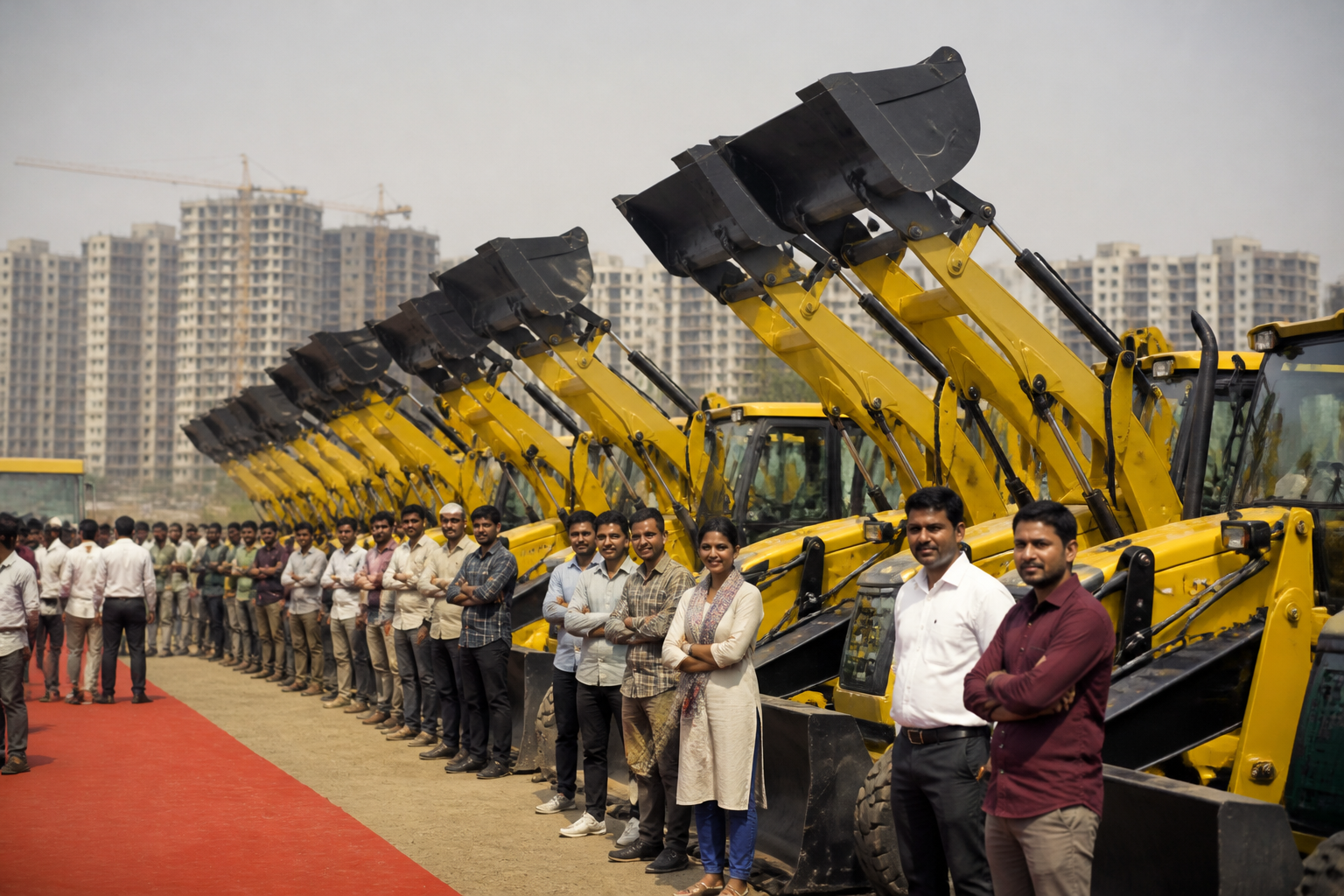
The Bharwad Yuva Sangathan distributed 221 JCB machines to youth from the Bharwad community in Gandhinagar on Wednesday, presenting equipment ownership as a route to employment and self-reliance in construction and related contract work.
Gujarat Deputy Chief Minister Harsh Sanghavi handed over the machines at the programme. According to the organisation, the equipment has a combined value of around Rs 84 crore, while bulk procurement helped secure a discount of Rs 7.6 crore.
The initiative is aimed at enabling beneficiaries to earn through machine-based work, including construction and excavation-related contracts. Sangathan president Dilip Bharwad said the organisation partners with finance companies and acts as a repayment guarantor for beneficiaries, helping applicants obtain loans despite weak credit histories.
That financing arrangement is central to the programme because the cost of a JCB can place ownership beyond the reach of individual workers and small contractors. By combining institutional support, bulk purchasing and loan guarantees, the organisation says it is helping economically weaker and unemployed youth enter a segment that requires substantial upfront capital.
The organisation said it has distributed a total of 475 JCB machines to members of the community over the past few years. It said the latest distribution would support income opportunities for beneficiaries and contribute to improved livelihoods for their families.
Sanghavi described the programme as a step towards self-employment and financial independence. “The distribution of 221 JCBs will open new avenues for self-employment and financial independence, while access to education and technology will empower the next generation,” he said.
The event also included a ‘Laptop Tula’ programme organised by the Sangathan for Sanghavi. The organisation said laptops would be distributed to students from the community who have performed well academically.
Sanghavi urged the organisation to undertake initiatives that increase youth participation in sports, with particular attention to encouraging girls’ participation. The programme therefore combined construction-equipment financing with education and community-development activities.
The distribution highlights how access to productive assets can shape entry into construction-related work, where equipment ownership may determine whether workers operate as wage earners, machine operators or small contractors. The organisation’s stated role as a guarantor also places it within the financing chain supporting the beneficiaries.
The Sangathan’s next steps, according to its stated programme, include continuing support for JCB access, education through laptop distribution and community initiatives focused on youth development.

