


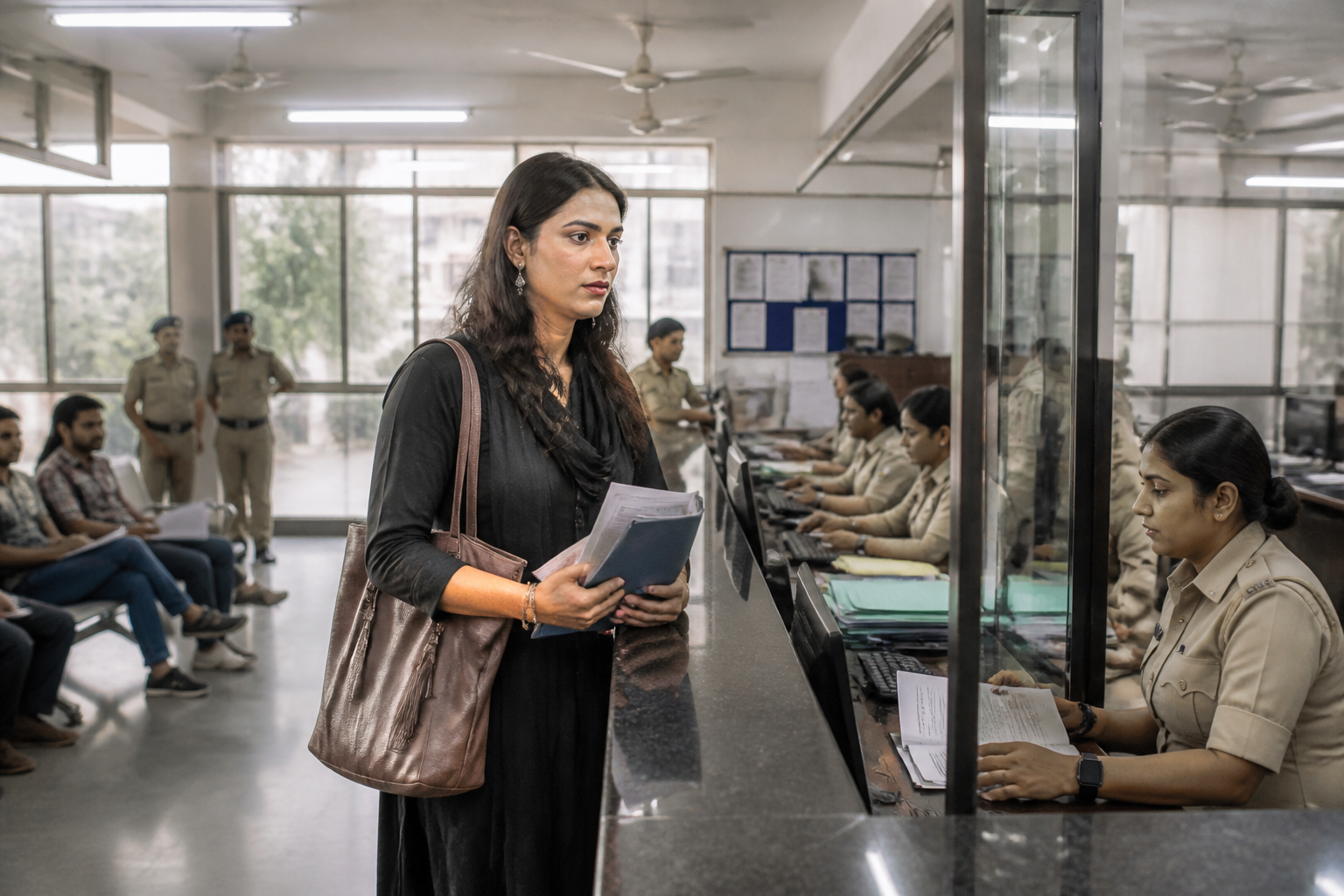
The Gujarat High Court has directed the Gujarat Police Recruitment Board to keep one post vacant in the ongoing Lok Rakshak recruitment process while it considers a petition by a transgender applicant seeking recognition of a separate third-gender category in police recruitment.
The interim order follows a petition filed by a 35-year-old transgender person from Bhavnagar, who applied for the posts of unarmed constable and police sub-inspector. The applicant said the recruitment form provided only male and female categories, leaving no separate option for transgender candidates.
According to the petition, the applicant holds an identity certificate issued by the district collector under the Transgender Persons (Protection of Rights) Act, 2019. However, the applicant’s Aadhaar card records their gender as female. When the applicant contacted the Director General of Police’s office during the recruitment process, they were advised to apply under the gender category shown on the Aadhaar card. The applicant subsequently applied under the female category.
The applicant cleared the physical standard test and the physical efficiency test. They scored 94 marks in the written examination, while the merit cut-off for the SEBC women’s category was 98.5 marks. After the merit list was published on July 11, the applicant approached the authorities, asking that the candidature be considered under a third-gender category rather than under the male or female categories. The applicant said the authorities did not respond, leading to the petition before the High Court.
The petition relies on the Supreme Court’s recognition of transgender persons as a third gender and its directions concerning equality, government employment and education. The applicant has argued that limiting the recruitment form to male and female categories violates Article 14 of the Constitution and denies transgender candidates equal opportunity. The petition also seeks separate and constitutionally appropriate cut-offs or selection criteria for transgender candidates.
The applicant’s lawyers told the court that transgender persons face social stigma and structural disadvantages, and argued that these circumstances require specific provisions, including reservation or a separate quota. They also cited examples from other states while alleging that the absence of a third-gender category and a separate merit cut-off amounted to discrimination.
The High Court has ordered the recruitment board to keep one post vacant until the final hearing of the petition. The respondents have been directed to file their replies before the next hearing, which has been scheduled for January 5, 2027. The interim order does not decide the applicant’s eligibility or the final design of transgender representation in Gujarat’s police recruitment process.

