


The GST Council’s proposed process reforms could alter how small e-commerce sellers register across states, how genuine buyers protect input tax credit and how goods vehicles are stopped in transit. The proposals, reported by Hindustan Times ahead of the Council’s meeting, are significant because they address the operational friction that has accumulated around India’s indirect-tax system: repeated registrations, uncertain credit, low-value litigation and unpredictable logistics checks.
The proposals are part of the GST 2.0 process reforms and are aimed less at changing the tax structure than at redesigning the way businesses interact with the system. That distinction matters. Tax compliance is not only a question of rates and returns. It also determines whether a small seller can reach customers in another state, whether a buyer’s working capital remains locked in disputed credit, and whether a truck carrying goods faces repeated interruptions on an inter-state route.
For cities and urban economies, these are not abstract administrative questions. E-commerce warehouses, delivery networks, wholesale markets, manufacturing clusters and commercial streets depend on the movement of goods through multiple jurisdictions. A registration rule that requires a seller to establish premises in every state can shape where inventory is stored. A logistics check can affect delivery schedules and freight costs. A disputed input tax credit can affect the cash flow of a business that may already operate on thin margins.
The most consequential proposal for small online sellers would allow them to use an e-commerce platform’s warehouse as their registered place of business in states where they do not own or lease premises. The seller would still need a genuine presence in one state, where physical verification and Aadhaar authentication would be completed. Registrations in other states could then be obtained with the e-commerce platform’s consent without further tax-officer involvement, according to the report.
The proposal could enable around 9.5 lakh small sellers to access the national market without establishing physical offices in every state where their goods are stored. It would also seek to create greater tax parity between competing e-commerce business models. The significance of the change lies in recognising the warehouse as an operational node in a digitally coordinated supply chain, rather than treating every storage location as requiring the same physical business presence.
That proposed arrangement would not remove the need for verification. Instead, it would concentrate verification in the seller’s genuine base state and rely on platform consent for additional registrations. The administrative question is therefore being shifted from repeated physical checks to a more standardised relationship between the seller, the platform and the tax authority. Whether that shift works will depend on how the consent mechanism and platform responsibilities are eventually defined, but those details were not established in the supplied report.
A second major proposal concerns input tax credit. Under the current problem described in the report, a genuine buyer can face uncertainty or litigation when an upstream supplier fails to pay tax. The proposed approach would protect the buyer’s credit where the buyer holds valid invoices, while directing recovery action towards the defaulting seller.
This is a direct attempt to separate the compliance conduct of one business from the tax position of another. For companies purchasing from small and new vendors, that separation could reduce business uncertainty and litigation. It could also improve working-capital efficiency by limiting the risk that a compliant buyer loses credit because of a supplier’s default. The proposal does not eliminate the need for documentary compliance; its stated basis is the existence of valid invoices.
The wider institutional issue is that GST enforcement has often been experienced through the relationship between taxpayers and the department rather than through the tax rate itself. The proposed reforms would introduce common standards for raising and deciding tax demands, including guidance on drafting and serving notices, distinguishing fraud from ordinary short-payment, conducting hearings and issuing reasoned orders.
The Council may also consider preventing GST notices where the tax demand is below ₹10,000. According to the proposal cited by Hindustan Times, such cases account for about 20 per cent of all cases by number but involve a negligible amount of tax. The threshold could apply to pending cases at the adjudication or appeal stage as well. For demands above ₹10,000, officers would first send an intimation and provide an opportunity to respond before issuing a formal notice.
This is a shift towards proportional administration. A small-value dispute can consume time for the taxpayer, the tax officer and the appellate system even when the revenue at stake is limited. If the proposal is adopted, the department’s case workload could become more concentrated on disputes with larger fiscal significance. The report also says that when a taxpayer chooses to settle rather than litigate, the payment would be termed a “charge” rather than a penalty, suggesting an effort to distinguish settlement from punitive action.
Registration and return filing are another part of the proposed redesign. The new process would guide applicants through each stage, display only the sections relevant to them and provide a tailored document list. Information from an existing registration in another state could be carried over, while businesses applying for several registrations could complete them together. The system would also determine the appropriate tax office based on the business location.
These changes address a basic design problem in public administration: a process can be legally uniform but operationally difficult if applicants must understand the entire system before they can complete a form. A guided registration process would place more responsibility on the digital interface to prevent errors at the beginning. The report also refers to a unified documentation process, simpler annual returns and a quarterly tax payment option for MSMEs supplying only to consumers.
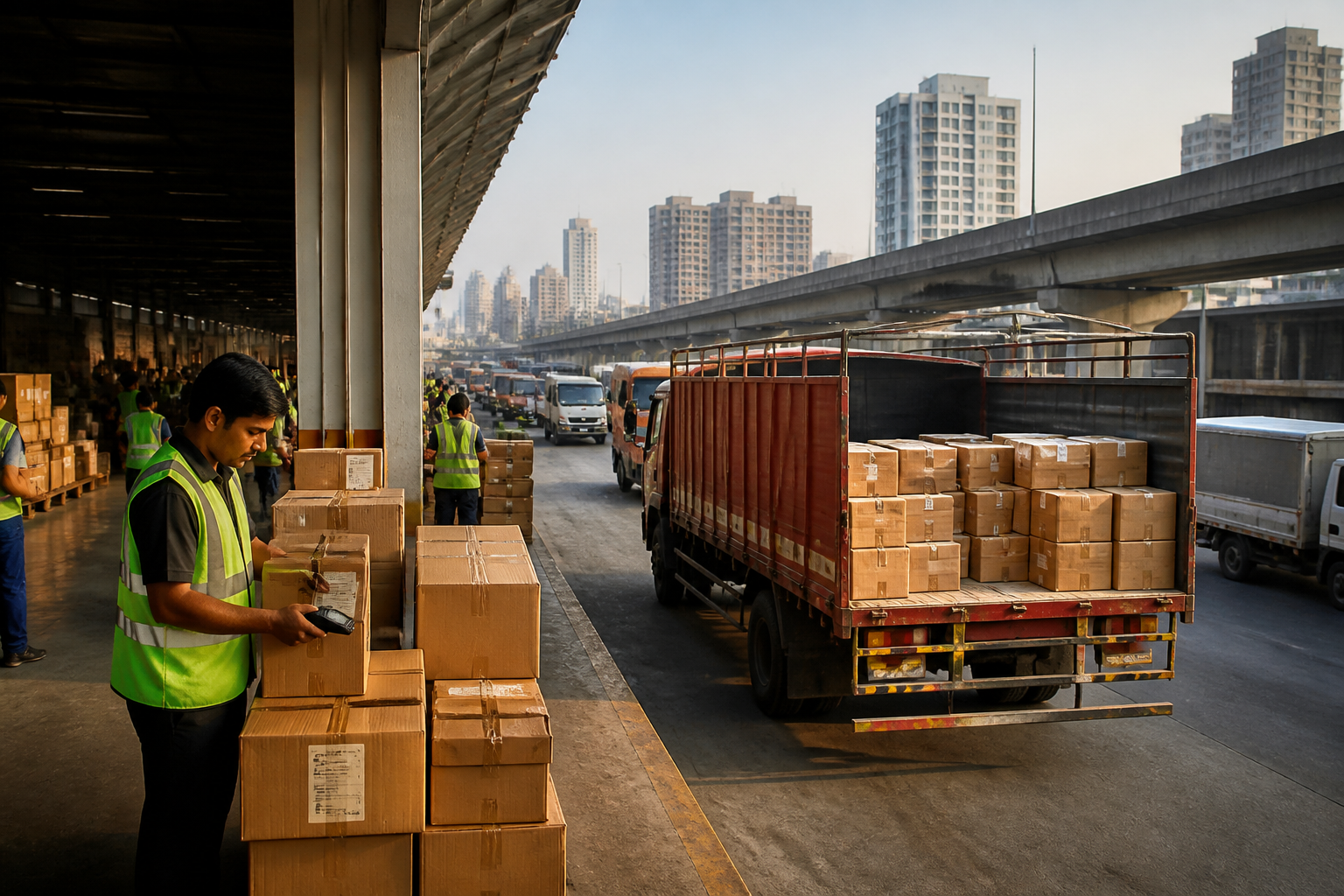
For urban business districts and distribution networks, the logistics proposal may be equally important. The Council is likely to consider intelligence-led transit checks under which vehicles carrying goods could be stopped only with specific prior authorisation from a senior officer and, generally, only by the state of origin. Exceptions would apply where documents are missing or tax is payable by the buyer.
The stated objective is to reduce repeated stoppages of vehicles crossing state borders, cut transit times and freight costs, and make the movement of domestic and export cargo more predictable. This directly connects tax administration with the functioning of roads, freight corridors, warehouses and delivery systems. A truck’s delay at a border or on a state route is not merely a tax event; it can affect inventory planning, delivery commitments and the utilisation of urban storage space.
The proposal also includes a possible single 5 per cent GST rate without input tax credit for the delivery of goods ordered through e-commerce platforms. Other issues on the Council’s agenda include clarifying the export status of services supplied through an Indian company’s overseas branch and withdrawing the IGST exemption on imports of gold, silver and platinum by specified banks and nominated agencies. These proposals indicate that GST 2.0 is not limited to small procedural corrections, but spans registration, enforcement, logistics, credit and sector-specific treatment.
The reform process has been built through multiple layers of institutional work. The Centre and state GST officers’ working group has met more than eight times over the past year, while the GST National Coordination Committee has met three times to firm up the proposals, according to sources cited in the report. That working structure is important because GST administration is shared across central and state authorities. A reform that changes registration, notices or transit checks must be capable of operating across those administrative boundaries.
The proposals also reflect a change in the government’s stated compliance approach. A source described the process reforms as taking forward trust in taxpayers and reducing compliance burdens for businesses and traders. Rajat Mohan, managing partner at AMRG Global, said the proposals addressed structural concerns raised by businesses and tax professionals and represented a shift from restrictions and procedural controls towards seamless credit, working-capital efficiency, taxpayer certainty and technology-led enforcement.
The evidence available so far remains limited to proposals that the Council is likely to consider. The report does not establish that the reforms have been approved, provide final legal language, or set implementation dates. It also does not specify how platform consent, physical verification, intelligence-led checks or the proposed thresholds would be administered in practice.
That uncertainty is central to understanding the reform agenda. GST’s next phase will be judged not only by the number of rules removed, but by whether the remaining rules become clearer, more consistent and easier to apply across India’s fragmented business geography. The proposed changes target precisely the points where taxation meets the built economy: warehouses, roads, commercial premises, supply chains and the working capital of businesses serving urban consumers.
The Council’s decision and the subsequent notifications will determine whether these ideas become enforceable changes or remain proposals. The immediate milestones are the Council’s consideration of the package, the final wording of any approved measures and the administrative systems required to implement them.
