


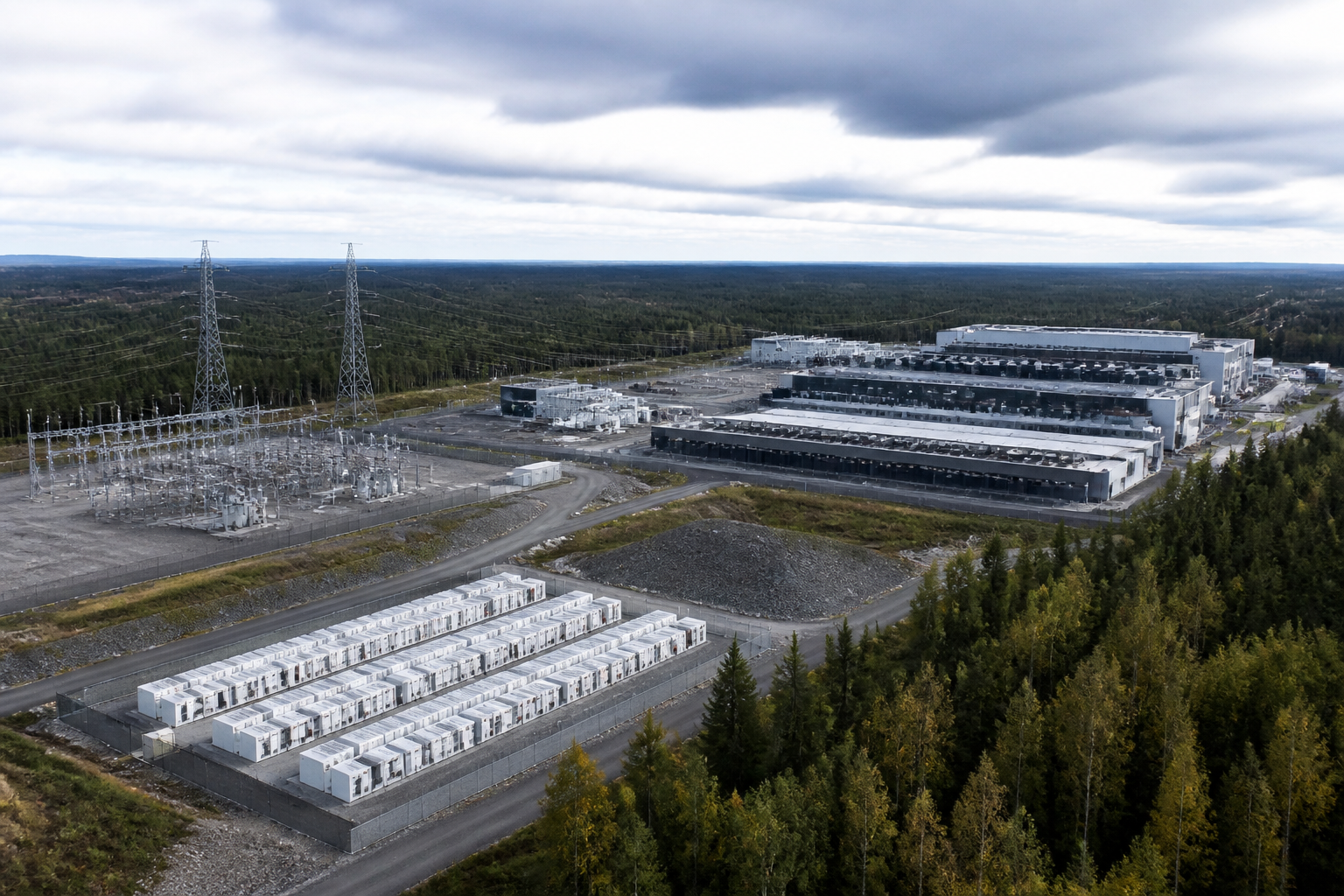
Google’s announced €13 billion investment in Finland is more than a technology expansion. It is a large-scale experiment in how artificial-intelligence infrastructure can be integrated with electricity generation, water systems, industrial construction and regional economic policy.
The investment, equivalent to nearly $15.1 billion, will be made over the next two years, according to the company. It includes three new data centres in Kajaani, Muhos and Vaala in northern Finland, an expansion of Google’s existing site in Hamina in the southeast, and support for energy projects intended to power the facilities. Google has described the package as its largest single investment in Europe.
The announcement arrives as technology companies compete to expand computing capacity for AI. It also comes at a difficult moment for Finland’s economy. The supplied report says the country has been dealing with weak demand, the collapse in trade with neighbouring Russia and fiscal tightening. Unemployment has risen above 10 per cent, described in the report as the highest level in the European Union. Against that backdrop, a major construction and infrastructure programme has significance beyond the data-centre sector.
Google’s project illustrates why AI expansion is increasingly becoming a question of physical infrastructure. The systems that support AI require large buildings, substantial electricity connections, cooling arrangements, water resources, batteries and reliable networks. The investment therefore places the data centre inside a wider urban and regional system rather than treating it as an isolated technology facility.
The locations were selected, Google said, to take advantage of existing grid infrastructure near carbon-free energy sources. The report says nearly 96 per cent of Finland’s electricity is produced from nuclear or renewable sources. Google has also signed a 22-year agreement with Fortum, Finland’s state-owned energy company, to purchase up to 50 per cent of the electricity output from the Loviisa nuclear power plant.
That arrangement shows how the siting of computing facilities can reshape demand for power. A data centre does not simply connect to an available electricity supply; at this scale, its energy requirements become part of long-term generation and infrastructure planning. The agreement with Fortum gives Google a defined relationship with a nuclear power facility, while the company’s wind-power agreements and planned battery storage extend the project into the balancing of the wider electricity system.
At the Kajaani site, Google is expanding energy infrastructure with a 94-megawatt battery system. The stated purpose is to help balance the grid. The detail is important because data centres require dependable power, while renewable generation can vary. The battery system is presented in the supplied material as part of the project’s energy architecture, although the report does not establish how much of the facilities’ total demand it will cover or how the system will operate during periods of peak demand.
Finland’s climate and natural resources are also central to the investment model. The country’s relatively cold climate is described as favourable for data centres because cooling is a major operational requirement. The report also says Finland has abundant fresh water and has developed a closed-loop system intended to reduce water waste. These factors help explain why the investment is being located there, but they also show that data-centre planning depends on the availability and management of local utilities.
Water is often treated as a secondary issue in discussions about digital infrastructure. In practice, it is part of the physical capacity that determines where large computing facilities can be built. The supplied report does not provide the projected water consumption of Google’s Finnish sites, so the scale of the demand cannot be assessed from the available material. It does, however, identify water availability and closed-loop use as elements of the project’s operating model.
The same applies to the heat generated by servers. According to Bloomberg, as cited in the report, the Finnish facilities are expected to have heat-recovery readiness, allowing waste heat to be captured for warming homes. If implemented as described, that would connect the data centres to local heating systems and turn a by-product of computing into a potential urban utility input. The available information does not specify which homes would receive the heat, when the system would be operational or how much heat would be recovered. Those details will determine whether heat recovery remains a design feature or becomes a meaningful part of local energy provision.
This distinction matters because infrastructure integration is not automatic. A data centre can be near a power plant without reducing pressure on the grid. It can have heat-recovery equipment without a suitable district-heating connection. It can use a closed-loop water system without eliminating the need for withdrawals, treatment and maintenance. Google’s announcement identifies the proposed components, but the supplied material does not yet provide performance data for the completed facilities.
The investment also demonstrates the economic logic that governments may attach to large digital infrastructure projects. Google estimates that the programme will support more than 37,000 jobs during construction, including about 16,000 in construction itself. After completion, the facilities are expected to support 7,000 jobs, including positions among suppliers and local services. These are company estimates, and the report does not provide an independent assessment of how the figures were calculated or how employment will be distributed among the three new sites, Hamina and associated energy projects.
Even with that qualification, the distinction between construction-phase and permanent employment is significant. Large infrastructure projects can generate substantial short-term demand for contractors, materials and specialist labour. Once operational, data centres generally require a different employment structure, with jobs extending through suppliers, maintenance, energy services and local businesses. For a country seeking stronger economic activity, the timing and duration of these effects are as important as the headline investment value.
Finland’s response reflects that national economic dimension. Prime Minister Petteri Orpo called Google’s decision a “clear testament to our strengths”, according to the report. Google said the investment demonstrated Finland’s leadership in responsibly building AI infrastructure. These statements frame the project as both an industrial policy opportunity and an endorsement of Finland’s energy, climate and institutional conditions.
The institutional model described here involves several layers. Google is the investor and operator of the computing facilities. Fortum provides the long-term nuclear power relationship. Wind-power agreements and battery storage address additional energy requirements and grid balancing. Local and national authorities provide the planning and economic context in which the sites are developed. The supplied material does not identify the specific planning approvals, public subsidies, land arrangements or local-government obligations attached to the projects, leaving those parts of the implementation framework unclear.
That missing information is important for evaluating the public value of the investment. The announcement provides a headline capital figure, projected employment numbers and a description of energy and water systems. It does not establish the public cost of enabling the facilities, the terms of any incentives, the expected tax contribution, the infrastructure upgrades required outside the sites or the allocation of risks if construction or operations do not proceed as planned.
The project nevertheless offers a clear data story about the physical scale of the AI economy. One company is combining five data-centre locations or expansions with a long-term power contract, renewable-energy agreements, a 94-megawatt battery system and planned heat-recovery capability. The reported figures show that AI capacity is being built through coordinated investments in buildings, electricity, storage and utilities rather than through software spending alone.
The larger urban question is how communities should evaluate these facilities. The relevant measure is not only how much computing capacity they add or how much capital a company commits. It is also whether their electricity demand fits the local grid, whether water use remains manageable, whether waste heat can be connected to actual users and whether employment benefits continue after construction ends. The supplied material identifies each of these issues, but it does not yet provide the operational evidence needed to judge the results.
Google’s Finland investment therefore marks a shift in the geography of digital infrastructure. Cold climate, low-carbon electricity, water availability, existing grid connections and the possibility of linking waste heat to homes are presented as mutually reinforcing advantages. The model is promising in design, but its public and environmental performance will depend on implementation. The developments to monitor are the construction timetable, the operation of the energy and water systems, the delivery of the projected jobs and the extent to which recovered heat becomes part of local heating networks.
