


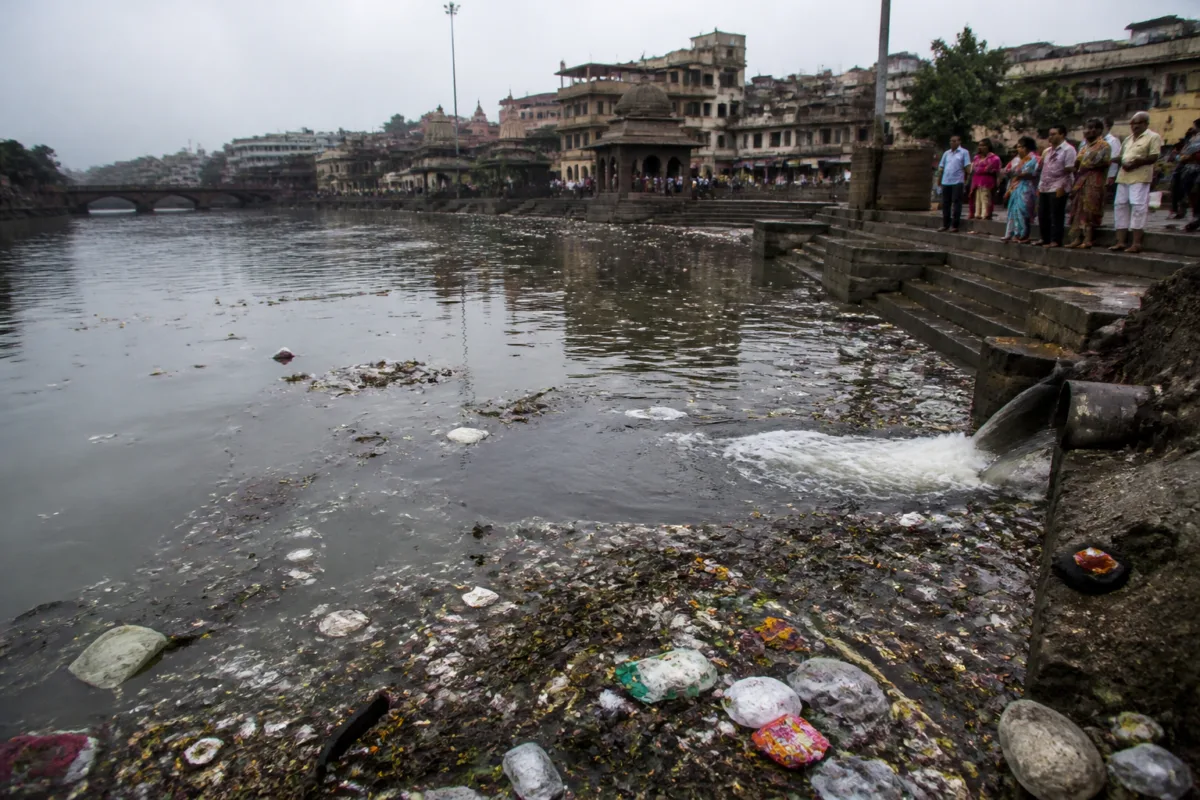
The Godavari river pollution crisis in Nashik has reached a critical level, with Maharashtra Pollution Control Board (MPCB) tests recording zero dissolved oxygen at three locations and biochemical oxygen demand (BOD) several times above the permissible limit. The findings indicate conditions in which most aquatic life cannot survive, days before the city’s Simhastha Kumbh 2026-28 preparations and an urgent Bombay High Court hearing on the river’s condition.
MPCB collected water samples on October 5 from the Godavari-Kapila confluence at Tapovan, the first point downstream of Ram Kund; Takli village, where the Nandini river joins the Godavari; and Nandur Manur ghat on Jail Road. The laboratory reports were received on October 19, according to the report published by Times of India – Nashik.
The dissolved oxygen level at all three locations was recorded at nil, against a minimum expected level of 3 milligrams per litre. Dissolved oxygen is necessary for aquatic organisms to survive. An MPCB official said the readings indicated a massive presence of pollutants and could cause suffocation of aquatic life, effectively creating an anoxic stretch in the river.
The BOD readings were also substantially above the permissible limit of 20 mg/L. The three sites recorded BOD levels of 85 mg/L, 48 mg/L and 52 mg/L, respectively. BOD measures the amount of oxygen required to break down organic pollutants in water. Higher readings indicate a heavier load of biodegradable contamination and place additional pressure on the river’s available oxygen.
The MPCB official said the BOD level was at its highest after the river passed through the Panchavati area, fell sharply at Takli village and rose again near Nashik Road. The pattern, according to the official, indicated the direct addition of sewage and other pollutants at different points along the river. The report did not identify individual facilities or agencies responsible for the discharges.
The findings have also raised concern over the risks to pilgrims expected to take ritual baths in the river. Environmental activist Rajesh Pandit said the river was carrying untreated sewage and toxic waste. The issue is scheduled to come before the Bombay High Court on November 3, when the MPCB report is expected to be presented and action against authorities responsible for pollution may be sought.
The pollution findings come as Nashik and Trimbakeshwar begin preparations for the Simhastha Kumbh Mela 2026-28. The Dhwajarohan ceremony was held simultaneously at the two locations on October 31. The condition of the Godavari places pressure on the city’s sewage treatment and river-management systems as preparations continue.
Nashik Municipal Corporation officials said four new sewage treatment plants were being constructed. The projects are expected to add 409 million litres per day of treatment capacity to the existing 340 MLD. A senior NMC officer said all the works were expected to be completed by March 2027 and that river water quality would improve after their completion.

