


Gujarat Mineral Development Corporation (GMDC) reported a 63.3 per cent year-on-year decline in consolidated profit to ₹170.79 crore for the quarter ended September 2026, even as its total income rose sharply and the state-owned company expanded into a wider portfolio of minerals and energy projects.
GMDC had recorded a consolidated profit of ₹465.75 crore in the corresponding period a year earlier, according to the company’s filing with the BSE. Its total income increased to ₹986.78 crore in the July-September quarter from ₹635.76 crore in the year-ago period.
The results come as GMDC pursues a strategy to move beyond its traditional mining activities and build what it describes as a multi-mineral, multi-geography enterprise. The company said the expansion is aligned with national priorities around energy security and mineral availability for sectors including infrastructure and manufacturing.
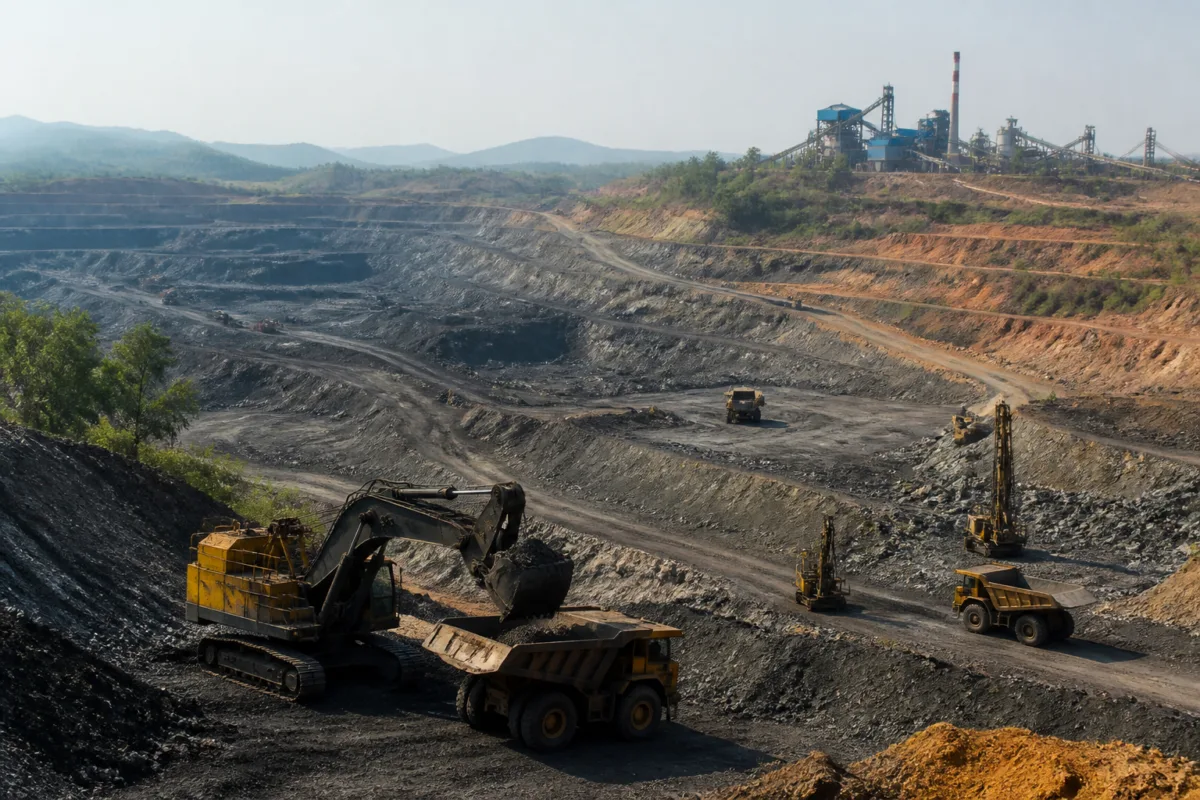
GMDC has expanded its coal operations in Odisha through the acquisition of three major coal mines. The company said the move supports India’s thermal coal supply and strengthens its role in meeting the requirements of core sectors. The filing material did not provide production, acquisition or mine-wise financial details for the quarter.
The corporation is also investing in blue hydrogen production through underground coal gasification at its Burapahar site in Odisha. The technology is intended to access deeper coal reserves while reducing surface-level disturbance and emissions, according to the company.
Underground coal gasification converts coal resources beneath the surface into a gas that can be used for energy and industrial applications. GMDC’s statement linked the Burapahar project to its effort to develop new energy capabilities alongside its mining operations. The supplied results did not specify the project’s investment size, construction schedule, production capacity or commissioning date.
The company is simultaneously developing projects involving copper and rare earth elements at Ambaji and Ambadungar in Gujarat. GMDC said these minerals are important to electric mobility, electronics and renewable technologies, all of which depend on access to specialised raw materials.
Copper is widely used in electrical systems and equipment, while rare earth elements are associated with advanced manufacturing and technology applications. GMDC’s move into these areas places the company within India’s broader effort to strengthen domestic mineral supply. However, the quarterly disclosure did not provide output targets, reserves, project timelines or expected revenue contributions from the copper and rare earth initiatives.
The contrasting movement in GMDC’s quarterly figures — lower profit alongside higher total income — highlights the difference between revenue growth and earnings performance in a mining-led business. The company’s filing reported the two figures but did not state the reasons for the profit decline or identify the cost, pricing, production or operational factors behind it.
For infrastructure and manufacturing, GMDC’s expansion is relevant because mineral availability affects the supply chains supporting energy, construction, transport equipment and industrial production. The company’s current portfolio spans thermal coal, copper, rare earths and a proposed blue hydrogen pathway, but the latest disclosure does not establish how quickly these newer businesses will contribute to earnings.
GMDC’s next milestones will depend on the development of its Odisha coal assets, progress at the Burapahar underground coal gasification site and advancement of the Ambaji and Ambadungar mineral projects. The company has not specified further timelines for these initiatives in the information accompanying its quarterly results.

