


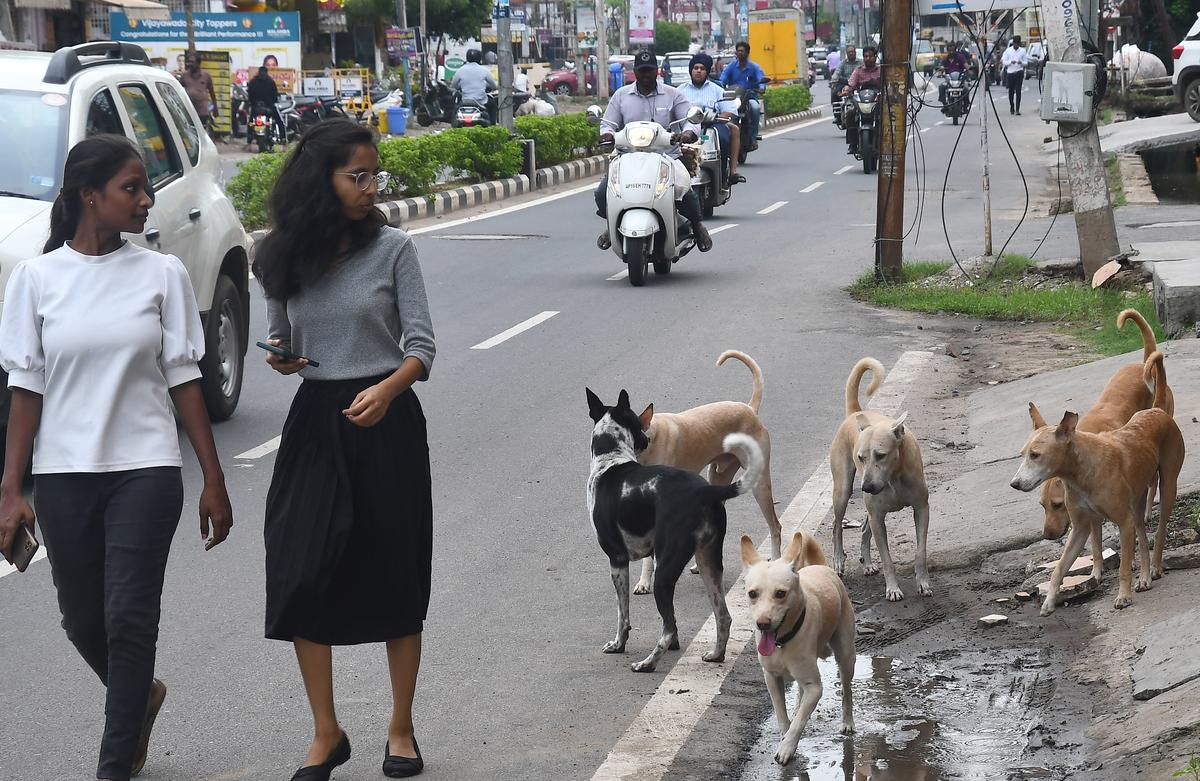
GHMC Petitions HC to Tackle Hyderabad Growing Stray Dog Menace
The Greater Hyderabad Municipal Corporation (GHMC) has approached the Telangana High Court, seeking legal permission to euthanise violent stray dogs, citing escalating threats to public safety. This move follows repeated incidents of stray dog attacks, particularly targeting children and vulnerable communities, raising concerns over the city’s inability to control aggressive strays. GHMC Commissioner K Ilambarithi filed an affidavit before the court, highlighting that sterilisation and vaccination drives alone have failed to curb the menace. The legal intervention was prompted after the court took suo motu notice of a tragic incident in Amberpet, where a four-year-old boy was fatally mauled by a stray dog in February 2023. Despite allocating substantial resources for animal birth control programmes, the civic body asserts that aggressive strays continue to pose life-threatening risks. The proposal has ignited a wider debate on balancing public safety with animal welfare, drawing reactions from residents, activists, and urban policymakers.
While the GHMC has sterilised over 80% of stray dogs in its jurisdiction, one of the highest rates in any Indian metropolitan city, it maintains that sterilisation does not eliminate aggressive behaviour. The corporation has established five animal birth control centres and deployed trained veterinary teams, yet reports of dog attacks, injuries, and fatalities persist. Commissioner Ilambarithi cited international precedents, referencing the UK’s Environmental Protection Act of 1990, which allows the humane euthanasia of unclaimed and dangerous stray dogs. He argued that India lacks a clear policy to deal with aggressive strays, forcing local authorities to rely on limited preventive measures. Beyond attacks, stray dogs also contribute to road accidents, posing a significant risk to pedestrians, cyclists, and two-wheeler riders. The debate has gained traction as municipalities across India struggle with increasing stray dog populations, making Hyderabad’s case a precedent-setting legal challenge.
From a sustainability standpoint, the unchecked growth of stray populations raises pressing urban management issues. Stray dogs, if not properly managed through sterilisation, vaccination, or adoption policies, can significantly impact public health and urban sanitation. GHMC’s struggle mirrors those seen in other densely populated Indian cities, where the co-existence of strays and urban populations creates conflicting priorities. Unlike Bengaluru and Mumbai, which have strengthened adoption and animal shelter policies, Hyderabad relies heavily on sterilisation, which does not address violent strays. Experts argue that a long-term solution should integrate stricter pet ownership laws, responsible feeding regulations, and structured adoption frameworks, rather than resorting to euthanasia as a primary response. Without a sustainable strategy, Hyderabad risks facing a prolonged cycle of stray-related safety concerns that could strain civic resources further.
The legal and ethical implications of GHMC’s request are now under scrutiny, with the High Court granting three weeks for counterarguments from animal rights groups and civic officials. Animal welfare activists oppose euthanasia, advocating for improved rehabilitation measures and stricter feeding regulations to prevent territorial aggression among stray dogs. Meanwhile, concerned residents argue that their right to safety must be prioritised, especially after repeated incidents of fatal dog attacks. The court’s ruling will likely shape future municipal policies on stray management, with national implications for how cities balance humane animal control with public safety. With the case adjourned to February 25, Hyderabad’s stray dog crisis remains at the centre of a critical civic debate, forcing stakeholders to rethink effective and humane urban animal management strategies.
